

Does Auto Insurance Cover Broken Car Windows?
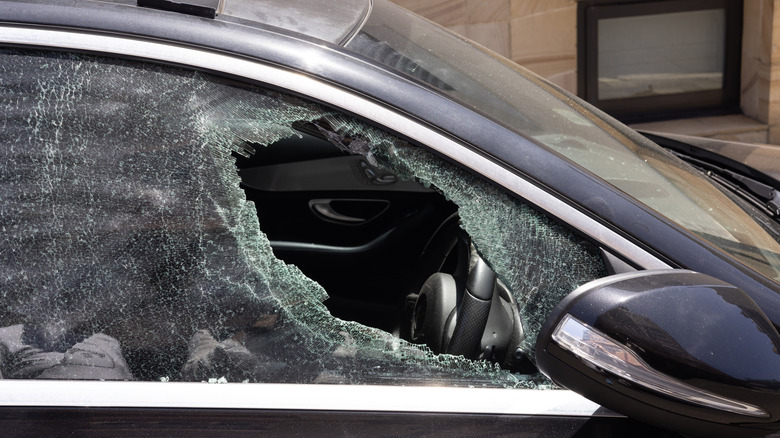
Many American drivers are familiar with having their car windows cracked or broken. Whether it's due to rock chips, hail damage, or vandalism, a broken window is an almost unavoidable part of car ownership. According to the American Automobile Association, "glass and windshield damage accounts for 30% of all car insurance claims in the United States." This poses a question: does auto insurance even cover broken car windows? For basic coverage (namely, if you only have liability coverage), insurance typically does not include broken car windows.
If you have a full-coverage policy – one that covers liability, collision, and comprehensive damage — then windows are usually included, though you'll still owe the deductible. This means that if your deductible is higher than the repair cost, then it might not be worth it to even file a claim. Insurance is becoming so expensive that some drivers are cutting or dropping car insurance altogether. Knowing the difference between these insurance types will help you make a sound financial decision while ensuring your coverage.
Car insurance types that decide what gets covered

The three main car insurance types you'll encounter are liability, collision, and comprehensive coverage. Having liability coverage means that the insurer will pay for damages or injuries you cause to other people or their cars. It doesn't cover damage the other way around so you'll have to cover the expenses out of your own pocket if your window is broken. Collision coverage takes it to the next level. As the name implies, it will usually cover collision damages to you and your car, regardless of who's at fault. If the damage occurred outside of a collision — for example, if your car was vandalized — collision coverage won't pay for it. This is where comprehensive coverage comes in. It covers damage from just about any source, including, theft, hail, or road debris.
For collision and comprehensive coverage, you'll still need to deal with a deductible. This refers to the amount you need to cover before the insurance pays up. The idea behind deductibles is to lower your overall rate, and in some cases, an insurer can waive it. The higher the deductible, the lower your monthly payment, and vice-versa. Liability coverage is mandatory in all U.S. states (except for New Hampshire), and it usually isn't tied to deductibles. Meanwhile, collision and comprehensive insurance don't have any state requirements, and you'll have to go through deductibles to get any use out of them. Regardless, it's important to know the difference, as not knowing the essentials can often be a basis for some of the worst car insurance stories.
When filing a window claim actually makes sense

Now that you're familiar with basic insurance types, it's easier to tell when a broken car window is actually worth filing a claim for. However, there are other factors you should also consider. First of all, filing more claims communicates to the insurer that you could potentially be a high-risk policy holder, meaning that your premium could go up. This isn't guaranteed to happen, but since insurance is all about managing risk, filing claims can signal higher overall risk.
According to WalletHub, the average deductible for car insurance is about $500. So, if the damage is lower than (or close to) $500, it makes no sense to file a claim. If the damage is $550, $600, or $650, then it could still be worthwhile to pay for it yourself. You'd only get a small payout from your insurance, and that could lead to higher rates or a loss of no-claim discounts.
The good news is that some states mandate a zero deductible policy for glass claims. In Florida, Kentucky, and South Carolina, if you have a comprehensive policy, there is no deductible you have to pay for glass claims. That being said, even though Florida is a zero-deductible glass state, it is still one of the most expensive states to insure a car. Meanwhile, in Arizona, Connecticut, Massachusetts, Minnesota, and New York, insurers are required to offer (but not automatically include) a zero-deductible glass policy. In all remaining states, a deductible applies unless there is a waiver or the insurer provides optional glass coverage on its own.