

Waymo's Driverless Robotaxis Still Need A Lot Of Human Assistance, But Not For The Reason You'd Expect
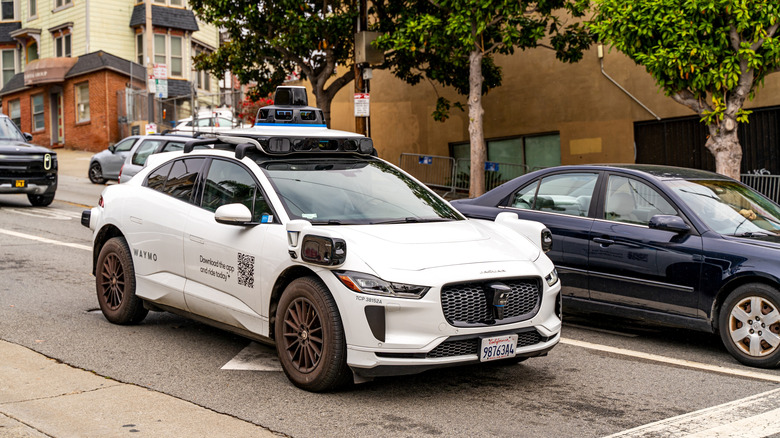
Widespread adoption of robotaxis will likely only make traffic worse, an issue we've been warning our readers about for nearly 15 years. But as we've seen so many times, Silicon Valley's billionaires are happy to make society worse in exchange for some more money or power, so here we are. Tesla would, of course, love for you to believe it's definitely for sure about to solve autonomy, but when it launched its robotaxi service in Austin, it still needed humans in the driver's seat. Waymo's robotaxi tech is much more advanced, but as the Washington Post reported over Christmas, Google's robotaxi division still needs humans to make it all (mostly) work.
Why? Well, apparently, Waymo's passengers are bad about remembering to close their doors after getting out, and because the cars aren't allowed to drive with their doors open, they need someone to come along and close them before they can get going again. Those human door-closers reportedly make pretty good money, too. Using a towing app called Honk, tow truck drivers can get paid more than $20 to close each Waymo door. In the future, Waymo's robotaxis may get their own power-closing doors, but at least for now, it requires actual people to keep the fleet moving.
While Waymo pays people to close its robotaxis' doors, it also employs another method — using a speaker to play a message asking anyone nearby to do it a favor and close the door the rest of the way. If you help out a Waymo that's stuck and begging to be rescued, you won't necessarily get any money (how would Waymo even learn who you are in order to pay you?), but when a robotaxi is holding up traffic, you may be surprised how many people are willing to do Google a favor just to get moving again.
Power failure
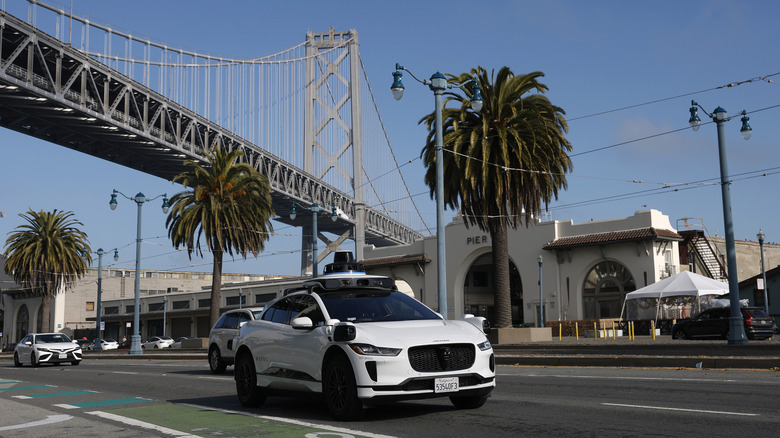
It isn't just open doors that cause problems, either. Sometimes Waymo's robotaxis run out of juice before they can reach a charging station and need to be towed, and sometimes, they just freeze. During a recent power outage in San Francisco, Waymo's robotaxis should have been able to operate like normal, but as a Waymo spokesperson told the Post, "the sheer scale of the outage led to instances where vehicles remained stationary longer than usual to confirm the state of the affected intersections." With so many problems happening all at once, "tow-truck companies in San Francisco received a flurry of requests to retrieve Waymo vehicles." As the Post put it:
Behind the scenes, the company's vehicles in San Francisco sent a "concentrated spike" of requests for help to remote human workers, the company said in a Tuesday blog post. A Waymo robotaxi can navigate defunct traffic signals but sometimes needs to check in with fleet response agents to "ensure it makes the safest choice," the blog post said. The power outage triggered a "backlog" in those requests, causing the vehicles to block traffic.
Additionally, while $20 to close a door may sound like a pretty good deal, that isn't necessarily the case. Waymo doesn't share its stuck robotaxis' exact locations with the rescuers, with one operator telling the Post, "We can spend anywhere from 10 minutes to an hour just looking for the vehicle." Since Waymo also uses all-wheel-drive EVs, the towing companies have to use a flatbed, which normally costs a lot more than the "$60 to $80" that Waymo offers on Honk. Still, no one's forcing anyone to take those jobs.
If you ask Waymo, it will tell you that, overall, issues with riders closing doors properly are pretty rare and city-wide power outages are even more rare, which is probably true, even in California. After all, let's not forget that Enron intentionally caused California's energy crisis and the ensuing blackouts. If anything, the 2001 blackouts demonstrated a need for more regulations and government oversight, not less. But those issues do still occur, and every time they do, it's a good reminder that even the most advanced robotaxis in the U.S. still need human help in order to operate.