

Do Subaru Boxer Engines Require Any Special Maintenance?

All internal combustion engines require some kind of maintenance. (If that's news to you, your car probably needs to be inspected by a mechanic.) But there are different types of internal combustion engines out there. They come in a variety of cylinders, with different types of fuel injection and even different piston orientations.
Piston orientations are what make some engines unique; Subaru is known for its horizontally opposed layout. Also known as "boxer" engines – because the pistons move in and out like a boxer's punches — this setup allows Subaru to mount the engine lower in the car because it is wider than it is tall, making it flatter than a typical V setup. This helps lower the overall center of gravity, which can improve handling. Because of this configuration, it shouldn't be a surprise that a boxer engine is also referred to as a flat engine, similarly to a flat-six in a Porsche.
But does this layout require any special maintenance? Simply put, no, there's nothing unique about the boxer that requires special maintenance. But you should follow the maintenance schedule, which shows that the engine requires servicing more frequently than you might expect.
Follow the recommended maintenance schedule
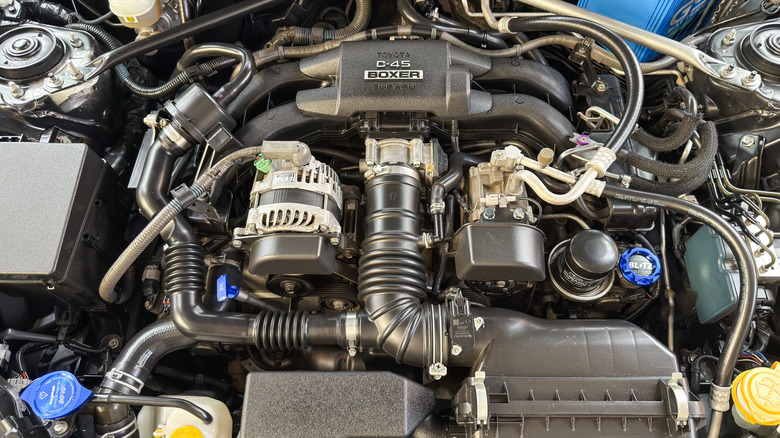
Keeping up with regular maintenance is the key to any vehicle's longevity, and Subaru includes its schedule as part of a warranty and maintenance supplement in the owner's manual packet. This should apply to all Subaru models, but some items might be limited to specific vehicles like the BRZ. Every six months (or 6,000 miles), you should change the engine oil and filter. Yearly, the schedule says to replace the HVAC system's A/C filter. For manual-equipped cars, the guide says to inspect the clutch. On the BRZ, this is also when you should inspect the rear differential gear oil, replacing it every four years.
At 30 months, owners should replace the air cleaner element and inspect the drive belts, fuel systems, and cooling systems. Once you cross the five-year interval — or 60,000 miles — Subaru recommends replacing the spark plugs. At 72 months, it's recommended that you provide a replacement to the fuel filter.
There are occasional fluid changes not directly related to the engine along the way, but most of that maintenance covers changing the oil and filter and rotating the tires. Some cars will let you travel 100,000 miles before changing the spark plugs. Here, 60,000 miles is the only real difference between a Subaru boxer engine and an engine you'd find from Toyota.
Common boxer engine issues
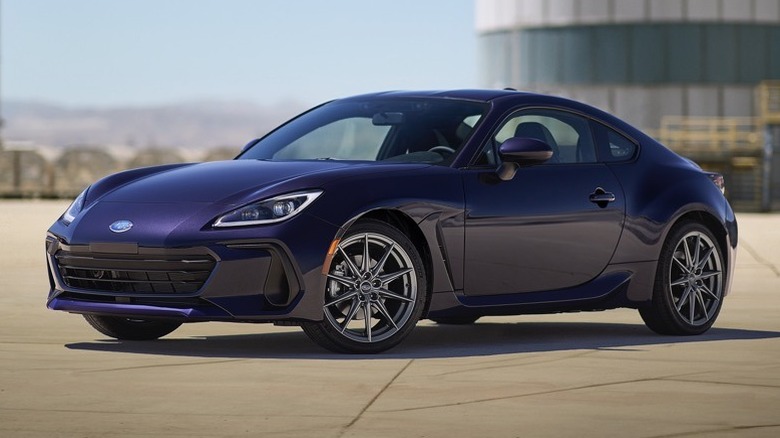
Subaru has been building the same style of engine for quite a long time now, which has allowed the brand to work out many of its kinks. Some owners will talk about premature head gasket failure and excessive burning of oil, but others have reported no issues with newer cars. It's always wise to check your oil level with the dipstick and top it off if necessary. Some oil consumption should be expected on all internal combustion engines, and following Subaru's service recommendations can help stave off excessive oil burning.
While not directly engine-related, there are also complaints about continuously variable transmission (CVT) issues. When CVTs first appeared in some brands, there were problems with their reliability. Subaru even extended its CVT warranty on numerous 2010-2018 models to address concerns. If you are looking at a used Subaru, ask to see its service history and be sure to check for any open recalls. But if it's well-maintained, there shouldn't be any issues. Apart from needing to change the spark plugs more often, the process of maintaining a Subaru boxer engine is similar to any other engine. Its piston layout might be unique, but the maintenance for it is not.