

What Causes Cylinder Wall Scoring (And How To Prevent It)
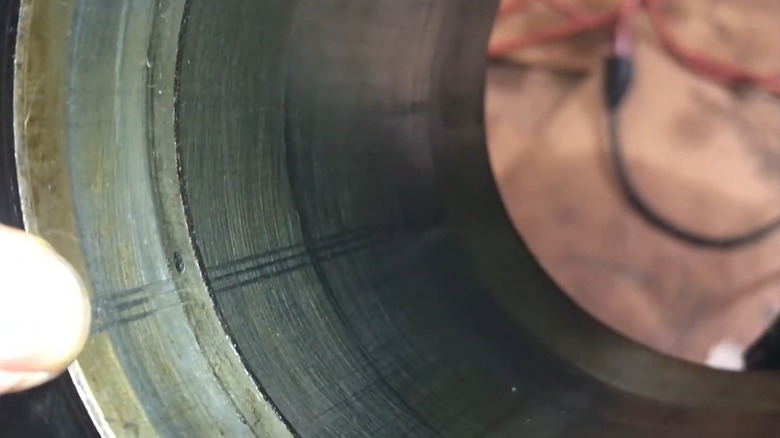
On the outside, as an engine exhibits vibration, drivers might find its revs satisfying. But inside, large metal pieces are moving frantically as each cylinder essentially undergoes a series of small detonations necessary to generate rotational energy. There are supports in place to help maintain order in the chaos, but that doesn't mean problems can't occur. Engine cylinders can misfire, for example, or the inside metal walls of the cylinder can start showing scratches or gouges in their surfaces.
There are a few culprits that could be responsible in this scenario, with the first being oil – or the lack thereof. While a piston moves violently up and down within the cylinder, metal can't rub against other metal, as the friction and heat would lead to seizing. In-between the piston and cylinder wall is a thin layer of oil (at least, there should be) which manages thermals and lubrication. However, compromised piston rings or oil that's simply too old can reduce its effectiveness, leading to direct metal-on-metal contact. These issues are further exacerbated when working the engine hard at high rpm for lengthy periods.
In addition, an engine unable to regulate coolant properly causes temperatures to spike under the hood, which can result in the expansion of some metal components, like the pistons. This reduces that important layer of oil between the piston and cylinder wall, leading to scraping and placing stress on the gaskets. A failed gasket can allow certain engine fluids into the wrong places, further compromising the engine's operation. Fortunately, you can help prevent cylinder wall scoring with some careful maintenance.
Regular maintenance and noticing the signs of a problem early
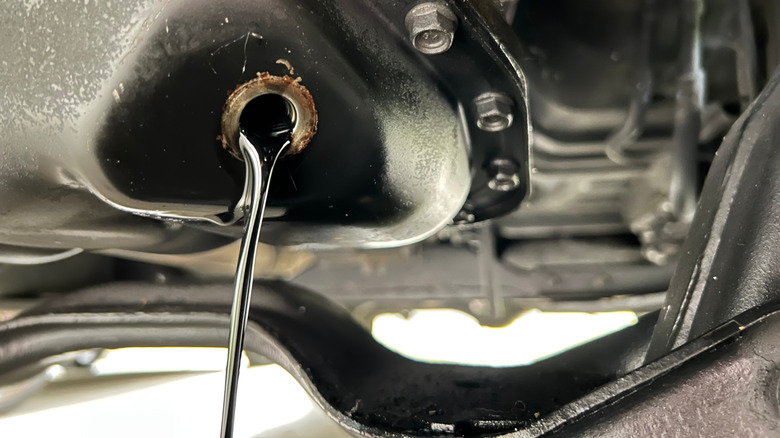
It's probably been recommended ad-nauseum at this point, but automobiles need routine attention and maintenance to keep running their best. Oil changes are one of the easiest ways to keep an engine's internals in good working order (and it's good to remember that used motor oil can be recycled once you're done with it). Through its efforts to reduce friction and lower heat, oil begins to degrade over time, and its performance suffers as a result.
Not only does aging oil fail to perform its duties with gusto, but it also picks up common oil contaminants, sometimes becoming thicker in consistency. This leads to it contributing to build-up on components within the engine, reducing overall efficiency, increasing heat, and potentially causing metal-on-metal friction. In some cases, analysis of the oil can identify traces of other metals, such as iron. This can show how the iron skirt around an aluminum piston may be scoring the cylinder wall in a Porsche M96 or M97 engine, for example.
You'll also want to look out for certain performance irregularities and get your vehicle inspected right away if you spot them. Knocking or clicking sounds during idling or acceleration, a sudden drop in output that sees your engine struggling more often, and smoke emanating from your tailpipe are all immediate causes for concern. While these symptoms don't automatically mean your pistons are grinding against your cylinder walls, it points to issues related to a lack of oil, loss of compression, and engine fluids getting into places they shouldn't be. In some scenarios, these problems are all the result of cylinder wall scoring.
Does a scored cylinder wall spell certain doom for an engine?
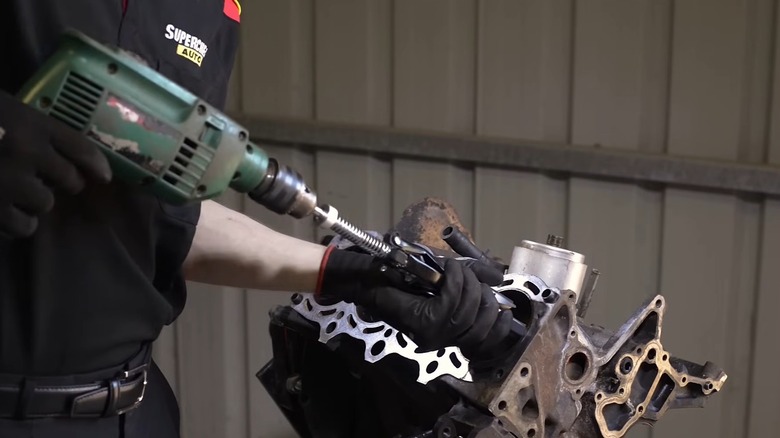
Fortunately, there is a range in terms of the amount of damage scoring causes within a cylinder. This range goes from a simple surface-layer scratch to full-on gouging and deformation. Assuming you have identified the cause of the scoring and corrected it, minimal damage to the cylinder wall can be fixed with honing. By honing your cylinder walls with precision tools, you can remove an extremely thin outer layer of them, helping to smooth any minor scratches. Some enthusiasts assert that these sorts of scratches are only of concern if they offer any noticeable resistance when you brush over them with a finger.
If your scoring goes beyond superficial scratches, depending on the level of damage, you might be able to use a replacement liner to act as a new layer or add larger pistons after boring a larger cylinder diameter. However, if the scoring has progressed to the point of deep grooves, cracks, or even a seized piston, the engine may be too far gone to save.