

5 Smart Maintenance Moves To Make After Your Car Hits 100K Miles
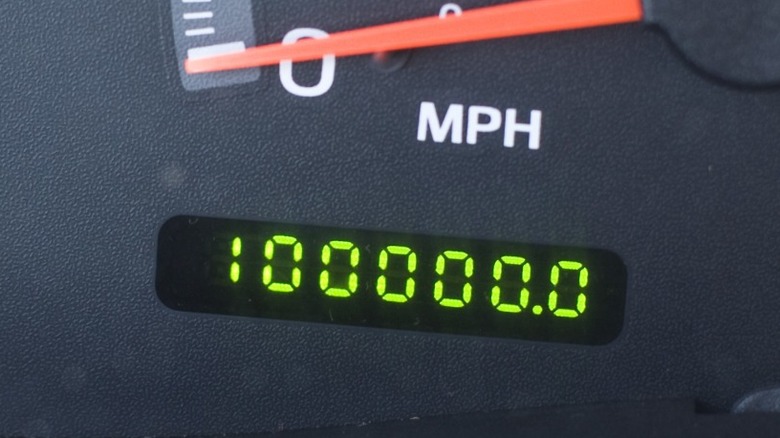
So, you've finally reached six figures. It took a while — probably years — to get to this point, but it's still quite the accomplishment. You should be proud. Unfortunately, we're not talking about your salary, but instead the odometer on your car. You've hit the 100,000-mile mark, and your car is still faithfully chugging along. That's great, but to keep the good times rolling, it's time to take care of some maintenance items and do some checks.
You've been doing oil changes and tune-ups all along, but the regularity of those things now becomes more important. That means this is a good time for a thorough tune-up, changing the filters and spark plugs, and possibly the spark plug cables. Fluids need to be changed as well. That includes transmission and brake fluids, as well as coolant. Think about changing the fuel filter and cabin filter, as well. Any belts and hoses that haven't been changed yet are likely due — they may have become worn, maybe even brittle or cracked. Now is also the time to check your steering components, along with underbody parts like shocks, struts, brakes, and wheel alignment.
Keeping your car running at this point isn't going to take a monumental amount of effort. Cars nowadays often have years of life left in them after hitting 100,000 miles. In fact, some cars and trucks are just getting started at that point. But it will gradually take a little more time and expense to keep it going, and a little maintenance will go a long way. Fortunately, if you're just a little handy with a wrench, you can take care of a lot of things yourself.
Oil changes, tune ups, and other routine maintenance
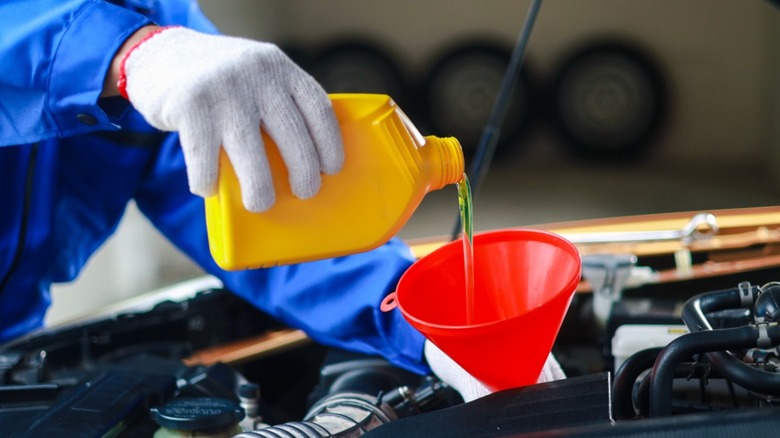
The best thing you can do to keep your vehicle in good shape is to do what you should have been doing all along — that is, keeping up with routine maintenance. We know you've been responsible and that you've kept up with oil changes and tune-ups. But after the 100,000-mile mark, it becomes even more important. It's sort of like how senior citizens seem to schedule their lives around doctor's appointments. After a certain age, that kind of maintenance isn't optional anymore. You may not see the quick lube guy as often as your elderly aunt sees her joint specialist, but you will see him on a regular basis.
Oil changes are especially vital at this stage. Should you switch to the more expensive high-mileage motor oil at this point? The service center managers and oil manufacturers will tell you that you should (we know, shocking). But not all experts agree. Cenex says it's not necessary unless you notice a leak or your engine is rattling. Whichever type of oil you choose, just make sure to change it as often as your owner's manual says to.
Spark plugs should be changed at this milestone, as well. Some spark plugs are actually made to last 100,000 miles, which means you may not have changed them yet. But you'll want to do it now to prevent misfires and to improve your fuel efficiency. It would be smart to change the air filter, too, though you've probably done this a few times since they don't last 100,000 miles.
Change your transmission fluid, brake fluid, and coolant
Everyone thinks about changing their oil, but we rarely think about our transmission fluid until there's a problem. Did you know that transmission fluid breaks down over time? Heat and friction do their job on transmission fluid until it gets to the point where it can't do its job as effectively anymore and needs to be replaced. However, Cars.com says you don't want to flush your transmission fluid when your car has this many miles on it since flushing could dislodge contaminants that could end up clogging the system further down. It's best to just drain and refill the transmission fluid at this point.
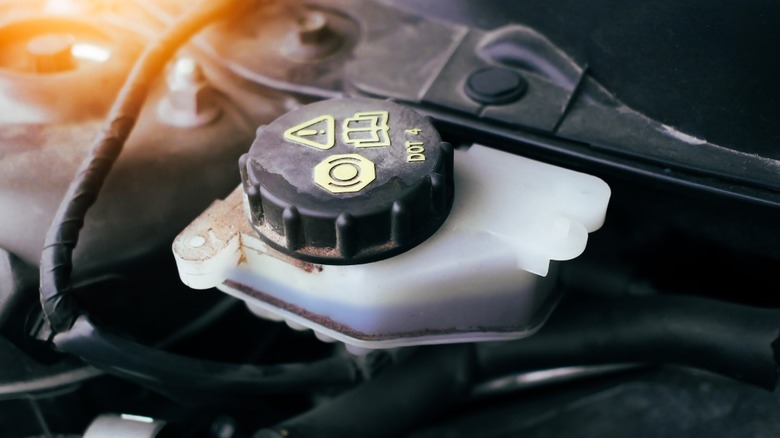
Did you know that your brake fluid also needs to be replaced at some point? Over time, brake fluid absorbs moisture from the air, even in a closed system. That moisture, along with debris that gradually accumulates in the system, interferes with proper function of your brakes, creating that "soft pedal" feeling. A full brake fluid flush will take care of all of that.
Of course, you don't want to forget your coolant, even if it is full. Coolant wears out eventually, becoming less able to prevent overheating. You'll want to protect those head gaskets, so you might want to get your coolant system flushed as well. In fact, depending on the coolant, it's sometimes recommended to get it changed every 30,000 miles. You might also consider replacing other fluids, if you haven't already, like the power steering fluid and the differential oil if you have a rear-wheel-drive or all-wheel-drive vehicle. Remember, just about every fluid in your car will get dirty, wear out, and degrade. Replacing those fluids can go a long way toward extending your car's lifespan.
Replace belts, hoses, and maybe the water pump
If your car has a timing belt, now's the time to change it. A broken timing belt can cause a bent valve or piston, and those are the last things you want at 100,000 miles. Depending on the make of your car, it doesn't take much to mechanically total an engine when it has that many miles on it. If you're replacing the timing belt yourself, now is a good time to replace the water pump, if you haven't had to do that already. It's going to go out at some point. When it does, you're just going to have to take the timing belt off again anyway to get to it.
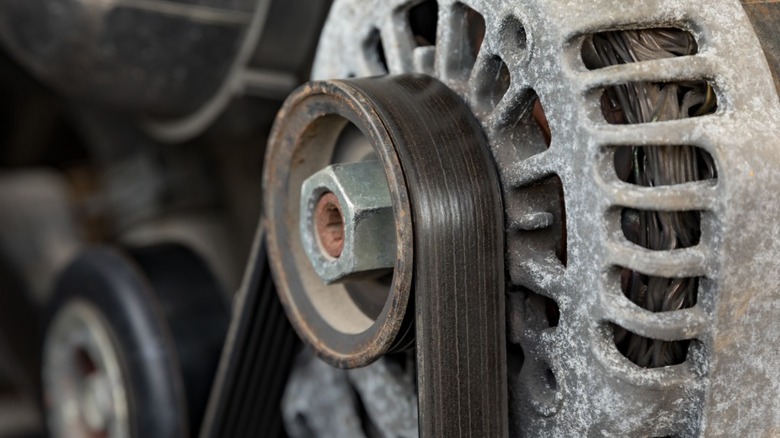
Most gas-driven cars nowadays are equipped with a serpentine or drive belt, which works hard to drive the alternator, A/C compressor, and power steering pump. It should generally be replaced every 60,000 miles or so. That means if you haven't replaced it already, it's overdue. When it fails, it won't cause the kind of catastrophic damage that a broken timing belt will. But it will cause a breakdown, which can be a major inconvenience, depending on when and where it happens. Might as well get in front of that and just install a new one before the old one breaks.
This is also a good time to replace your hoses, if you haven't already — they get dry, brittle, and cracked over time. A coolant hose that springs a leak can cause overheating and loss of antifreeze. You'll want to check other hoses, as well, like the power steering hose and especially fuel hoses and lines, which can begin to leak gas, possibly resulting in a fire. Make sure to tighten any hose clamps while you're at it.
Check out the shocks, struts, steering components, and wheel alignment
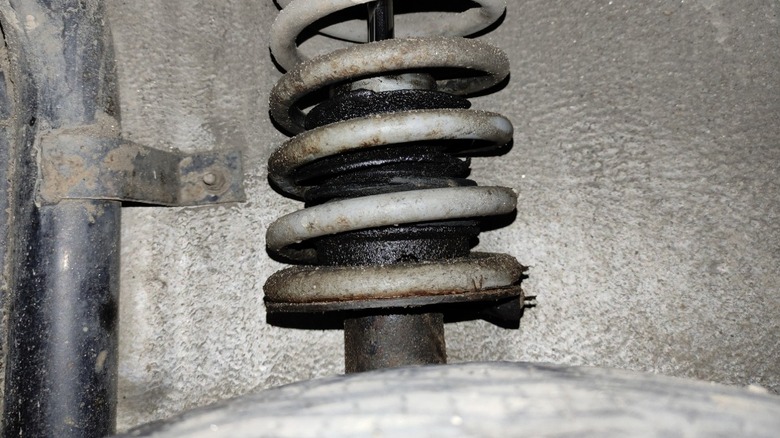
At 100,000 miles, your shocks and struts are due for an inspection, and maybe replacement. Make certain they aren't leaking, which is a sure sign they need to be replaced. Pay attention to how the car handles, as well. Is there a lot of vibration or bouncing? Does it take longer to come to a stop? It could be your suspension.
Your steering components should be inspected at this time, too. Ball joints, tie rod ends, and suspension bearings should all be checked out. Worn ball joints and tie rods can make it hard to steer accurately and cause misalignment, which, in turn, can cause uneven wear on your tires. All of that can be hazardous, which shows why it's important to inspect these parts.
Since you're inspecting your suspension anyway, it makes sense to inspect the tires. As we said, uneven tire wear can be a sign of suspension issues. Even though you have likely replaced your original tires by now, inspect the condition of your current tires to make sure they're still roadworthy. It's also a good time to check your wheel alignment. You would have gotten your wheels aligned when you last replaced your tires, but that could have been knocked out of place in the meantime by a pothole or nasty bump in the road.
While you're under there, you might as well check your brake pads. This gives you an opportunity to see if they've worn thin before you hear the squeal or they start impacting your braking distance. Rotors can be worn thin, get rusted, or warp, so be sure to inspect them.
Wash and wax your car
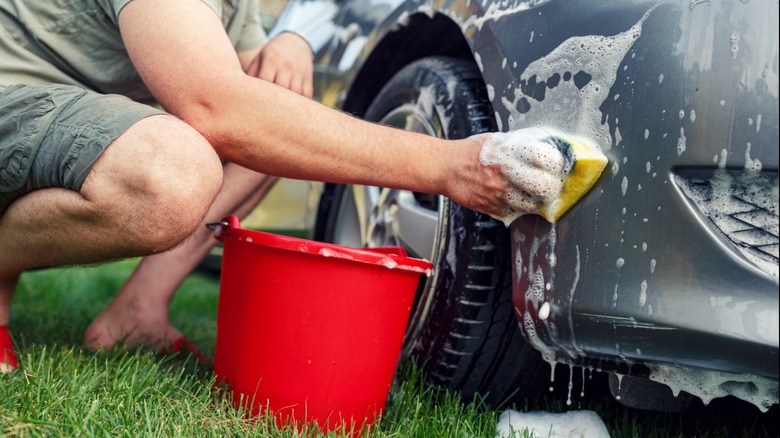
At the 100,000-mile mark, it's a good time to give the old ride a good wash and wax. Now, you might be thinking that we're recommending washing and waxing your car as our last high-mileage maintenance tip because we've run out of ideas for this article. First of all, how dare you. Secondly, this suggestion isn't about making your car pretty. It's about rust and the resale value of your car.
At this point in your car's life, it's especially important to try to prevent rust. Dirt, mud, and road salt are notorious for causing rust. Keeping your car's exterior clean and waxed can help prevent rust from forming. You've also gotten closer to the day when you will need to think about selling your car and moving on to the next one. Keeping the rust off will go a long way towards preserving the resale value of your vehicle. Regularly washing your vehicle is the best way to stay on top of this.
Are all of these suggestions really necessary? You've no doubt heard your friend talk about their cousin's boyfriend who drove their car for 400,000 miles and all he did to it was change the oil every 3,000 miles. We've all heard about that guy. We're not saying your car won't last much longer if you don't follow these suggestions, but they will give you the best chance of keeping your car on the road for another 100,000 miles.