

What The Numbers On A Tire Mean, And How To Read Them Properly
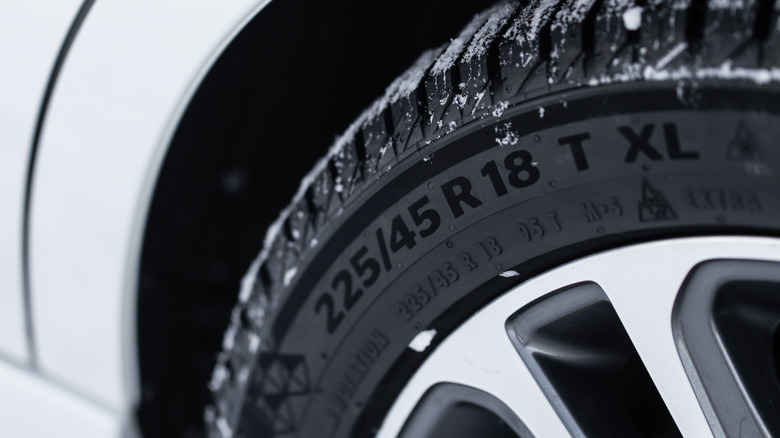
You know it's time for new tires when your car feels like it's hydroplaning on a sunny day. However, the moment you look at the sidewall, all you see are what look like ancient hieroglyphs. The good news? These numbers and letters represent a standardized code telling you exactly what the tire is, what it can handle, and whether it belongs anywhere near your vehicle. Tire makers follow globally recognized formats, and once you learn the pattern, the text suddenly becomes a cheat sheet for safety and performance. Take the common example: P275/40 ZR18 89Y.
The first letter stands for the type of tire. The tire type varies from passenger (P), the most common class for cars, to light truck (LT), special trailer (ST), commercial (C), and temporary (T) for your doughnut spare tires. Drop the letter entirely, and you're dealing with Euro-metric sizing, which follows the same logic but slightly different load standards.
The second group (275) is the width in millimeters, measured from sidewall to sidewall, which is a critical measurement to know if you're considering a staggered wheel setup. The third field (40) is the aspect ratio (or height-to-width ratio), meaning the tire's sidewall height is 40% of its width. Your car's suspension response can change if you install tires with different height ratios, and off-road drivers love fat aspect ratios, thanks to the increased clearance they can provide.
Diameter, load, and speed
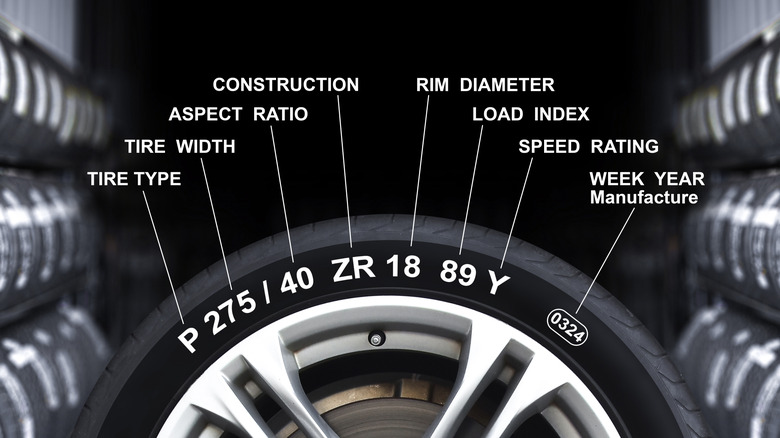
The fourth field (R) shows the tire's construction type. It could be radial, meaning the rubber cords shoot outward at a perfect right angle, or diagonal (marked D), which means the plies are arranged in a diagonal pattern. Belted bias (shown as B) is a diagonal ply tire fortified with a steel belt. The Z you sometimes see next to these letters isn't actually a construction type at all. It's a speed rating, and we'll unpack that soon.
Next is an important one — 18 is the wheel diameter in inches, measured top to bottom or across the wheel's face. Tires don't stretch to fit the wrong rim, so a different diameter means you're also shopping for wheels. A compact car generally uses a 15-to-17-inch wheel diameter, while modern Ford Mustangs can have wheels with diameters between 18 and 20 inches.
The next field (89) is the load index, and it tells you how much weight the tire can carry. A tire with a load index of 89 can support 1,279 pounds. You can check your tire load index using this chart provided by Goodyear.
Finally, the Y indicates the maximum sustained speed the tire is rated for, which, in this case, is 186 mph. When buying new tires, you should always purchase a set with an equal or greater speed rating than your originals. The Z you see before the construction type is also a speed rating (149+ mph). Tires with max speed ratings above 186 mph are required to include ZR as a designation.
Other details you ought to know
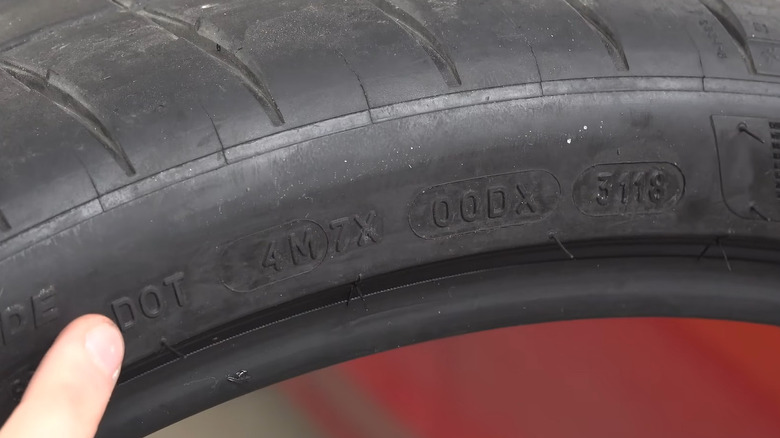
Beyond the primary code, the sidewall hides more information you shouldn't ignore. You'll spot a DOT number, which confirms that the tire meets U.S. safety standards under federal regulations. The last part of that DOT sequence is a four-digit date stamp: the first two digits show the manufacturing week, and the last two indicate the year. A missing DOT number or one that shows signs of alteration is one of the easiest ways to spot a counterfeit tire.
You'll also see maximum pressure and maximum load markings, but these numbers describe the limits of the tire, not those of your car. The psi number that matters for daily driving is found on the sticker inside your driver-side door jamb. Then, there's the UTQG rating, which provides three pieces of information: treadwear, traction (graded AA, A, B and C), and temperature resistance. These ratings are useful when comparing tires within the same brand, but they aren't universal across manufacturers.
Finally, you may see M+S or the three-peak mountain-snowflake icon. M+S simply means the tread is capable of handling mud and snow. The three-peak mountain-snowflake symbol means that the tire meets higher winter-traction standards recognized by tire safety groups. Now that decoding these markings no longer feels like studying for a quiz, you're in a much better position to replace those expired or tired old tires with something safer. And once the new rubber's mounted, treat those fresh shoes right — rotate them and keep them inflated, and they'll return the favor every mile.