

What Happens If You Put Diesel In A Gas Car?

We all make stupid mistakes. As a driver, one of the worst mistakes you can make is topping your car up with the wrong fuel. This is a task we normally complete on autopilot — we've all done it a thousand times before, and so concentration tends to go out the window when completing such a simple job. Sometimes, it's not even the driver's fault — one Colorado gas station allegedly pumped diesel instead of gasoline in 2020.
However, if you're in a different car than usual — perhaps borrowing one from a friend, or in a rental on vacation — it can be easy to reach for one pump when you should be grabbing the other. Or, maybe you're just paying so little attention, you simply grab the wrong one without realizing — stranger things have happened.
Regardless of how or why it has happened, if you've put diesel in your gas car, you need to know what to do about it. The consequences can be pretty dire and very expensive. However, if you notice before cranking the key and act fast by calling a professional to help out, then you might just save yourself thousands. We cover the details below, but if you're reading this in an emergency after just topping up with the wrong fuel, here's the main takeaway — do not start the car.
The mechanical damage diesel causes in gas cars

Before diving straight in with what to do, what not to do, and what happens, it's important to understand some key differences between gas and diesel. The latter fuel is thicker and more viscous, and this is where most of the problems come from.
If you've filled your tank with diesel, as soon as you try to start it, your fuel system is going to suck that fuel through the lines and straight into your injectors. The thicker fuel can cause blockages, both in the lines and the injectors as it tries to pass through a system designed for a much finer fuel. Spark plugs and fuel pumps are also on the hit list here.
If the engine does fire up, the diesel will likely cause damage deeper to your car's internals, namely to the catalytic converter, a device in charge of reducing your tailpipe emissions. So, to tally up the damage from your little mistake, you could potentially be looking at a parts list that includes new injectors, spark plugs, fuel lines and pumps, plus a new catalytic converter — or at least a thorough cleaning if you are able to avoid replacements. Diesel needs cleaning out too, which can be a costly and time-consuming process.
Gas stations take numerous steps to stop this mistake from ever happening
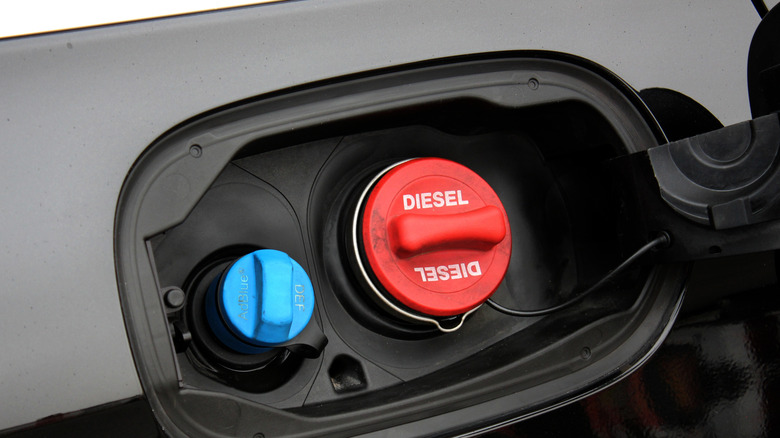
Putting the wrong fuel in is something a lot of folks have done, so it makes sense that gas stations and suppliers would take steps to at least minimize the chances of it happening. Visual indicators at the pump are certainly helpful, such as diesel pumps being green in color instead of black like gas pumps. Physical labels help too, although if you're looking around or fiddling with your car keys, these signs are easily missed.
Another key indicator that you're using the wrong fuel is the smell coming off of it. While gasoline typically has a paint thinner smell to it, diesel stinks of kerosene. If ever there's a stench you don't recognize when you're refueling, let go of the trigger, remove the nozzle, and just confirm you're using the correct fuel before continuing. Also, diesel nozzles are wider than gas nozzles, which makes physically inserting it into your gas car quite difficult — that should send alarm bells ringing.
If you're notoriously haphazard, or perhaps you're transitioning from years of diesel ownership to being behind the wheel of a gas-powered car, then there are a few simple systems you can put in place to avoid filling up with the wrong fuel. For starters, you could always apply a brightly colored "GAS" label to the inside of your filler cap, which will hopefully catch your eye and make you double-check before filling. Secondly, remember to take your time at the pump. Don't get out and start filling up on autopilot. Double-check which pump you're reaching for, and take a second to consider what you're doing before inserting the nozzle and pulling the trigger.
Rectifying your wrong: diesel in a gas car can be a costly mistake
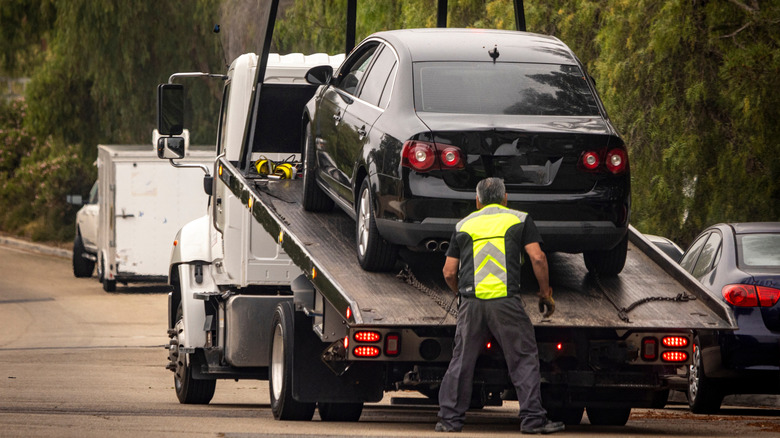
The bills associated with righting your wrong can quickly spiral out of control. Let's assume the best-case scenario to begin with: you've put the wrong fuel in, but noticed quickly and haven't attempted to start the vehicle. Great — your lines, plugs, injectors, and catalytic converter will be free from damage, so it's just the task of cleaning the diesel out that you need to pay for.
First up, you'll likely need to pay for your car to be towed to somewhere where your tank can be drained, so there's $100 or so before anyone's even taken a look. Then, depending on whether or not the tank needs to be removed for drainage, the cost of removing that diesel could easily range between $200 and $500, plus the cost of adding the correct fuel, on top of however much you spent on diesel.
If, however, you attempted to start the car, this same process needs to happen, but in addition to a whole heap of other tasks. The exact costs will vary, but a fuel pump and catalytic converter could easily be $1,000 each, fuel injectors will be hundreds, your fuel filter will need replacing — another $50 to $100 — and then you've still got the clearing or replacement of pumps and lines to consider.
Is gas in a diesel car just as troublesome?
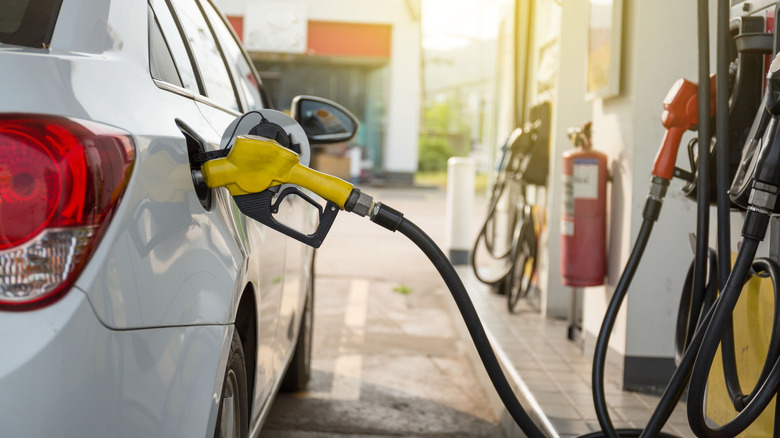
There are numerous mistakes that can ruin your diesel engine, but is contamination with gasoline one of them? In short, yes, putting gas in your diesel car or truck will be seriously damaging, and the consequences can include many of the same issues we've covered above — namely, damage to the fuel system.
Generally speaking, diesel engines are reliable, robust, and can take a beating, but running them on the wrong fuel is going to take its toll. The first thing you might notice is an unusual engine sound, exhaust smoke, and rough running. All of these are signs that you should shut the engine off, investigate and get towed to a trusted, local mechanic.
Once again, ideally you will have noticed your error before you start the vehicle, and the same advice works here. Definitely do not start the vehicle — call a garage, and have the vehicle towed there. Once the contaminated fuel has made its way through the fuel pumps, filters, lines, and injectors, your repair bill is bound to be much higher than it might've been had you left the key out of the ignition.