

What Freeze Plugs Do In An Engine (And Signs They Might Need To Be Replaced)
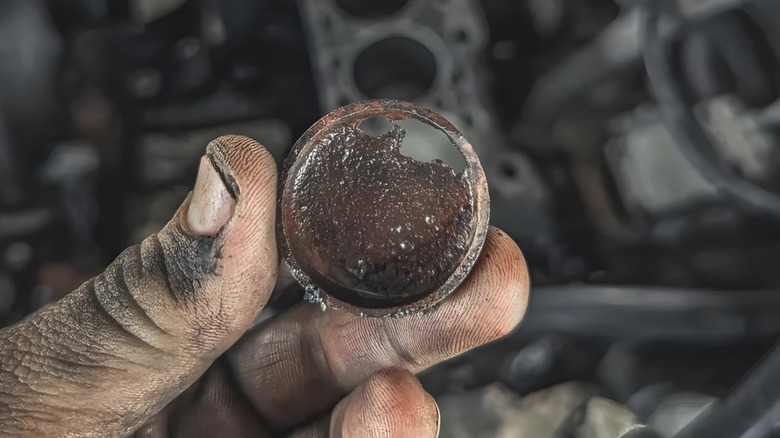
If you've inspected your vehicle's engine block closely, you've likely noticed a few strategically placed metallic discs that look somewhat out of place. The discs are typically cup-shaped plugs, although some automakers and aftermarket examples use different styles. They're used to seal openings into the water jacket of aluminum and cast-iron engine blocks.
This proximity to the engine's coolant system can be credited with the freeze plugs' most common name, and is a leading cause of their failure. Maintaining the engine coolant in your car should be on a short list of car maintenance items you should check on. In addition to maintaining the proper level, a test to verify the proper antifreeze concentration is also important. If the coolant freezes inside the engine block, there's a chance one or more freeze plugs could absorb the pressure of the expanding liquid to save the engine block from cracking. However, the system doesn't always work as effectively as you might hope.
Signs your freeze plugs need to be replaced
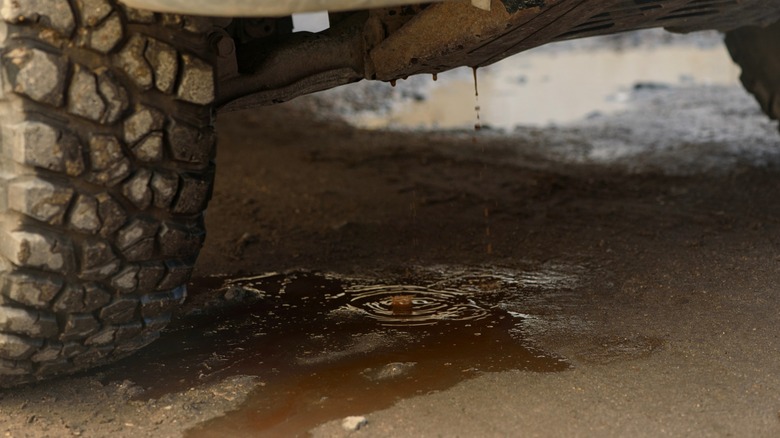
Knowing that freeze plugs are used to prevent engine coolant from leaking out, it'll come as no surprise that one of the first signs of freeze plug failure is often a fluid leak under your car. While coolant leaks can spring from a variety of sources — coolant hoses, radiator, heater core, water pump, etc. — it's important to track them down and make the needed repairs before you're left stranded.
Metal freeze plugs can fail due to corrosion from inside or outside the engine block and from being dislodged by freezing engine coolant or other external factors. To determine if a coolant leak is coming from a freeze plug, you'll need to inspect each freeze plug and the surrounding area, especially the area below the plug. If a leak isn't immediately apparent, locate the coolant leak on the ground and look up, paying attention to any components the coolant may have dripped on.
Of course, if freezing temperatures have pushed a freeze plug from its bore, coolant will run out like it's been poured straight from the bottle. The resulting coolant loss can lead to engine overheating. As a proactive measure, especially if you fear the engine coolant has frozen, inspect freeze plugs to ensure they're still fully seated in their bore.