

Cadillac 500 V8: What Made The Brand's Largest Engine So Interesting
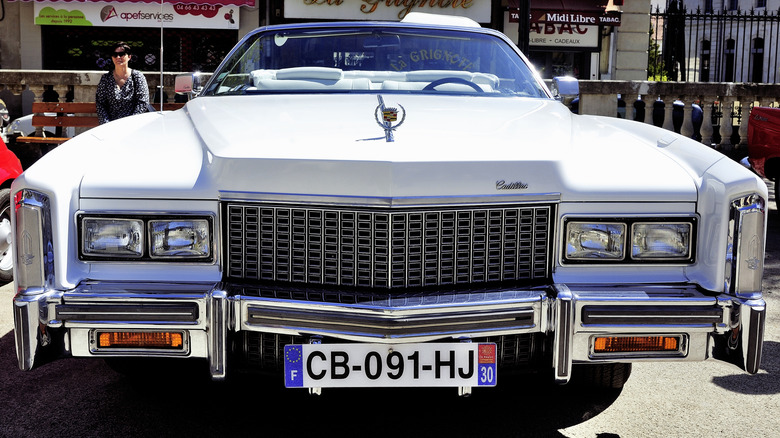
There was a time when Cadillacs were all about luxury and wafting — they were true beacons of excess. The company, although still synonymous with opulence, with the likes of the uber powerful 2025 Escalade IQ and the near-$400,000 Cadillac Celestiq, has clearly pivoted from its glory days of making some of the most coveted gas-guzzling land yachts that money could buy.
The late 1960s and early '70s saw Cadillac's engineering extravagance go into overdrive with the introduction of the 500 V8. The 16-valve 500-cubic-inch big block V8 (that's 8.2 liters in metric speak) still holds the title as Cadillac's largest production engine ever, and it was even the world's biggest, until Dodge swooped in with the 8.3-liter Viper V10 that eventually ended up in the SRT-10 pickup truck.
What makes Cadillac's 500 V8 interesting is actually the story of its downfall. An engine that once towered with its immense 400 gross horsepower and 550 pound-feet of torque became a shadow of its former self, stooping down to a measly 190 horsepower and 360 pound-feet of torque, all in a matter of just 6 years.
Blame the 1970s oil crisis and strict emission regulations
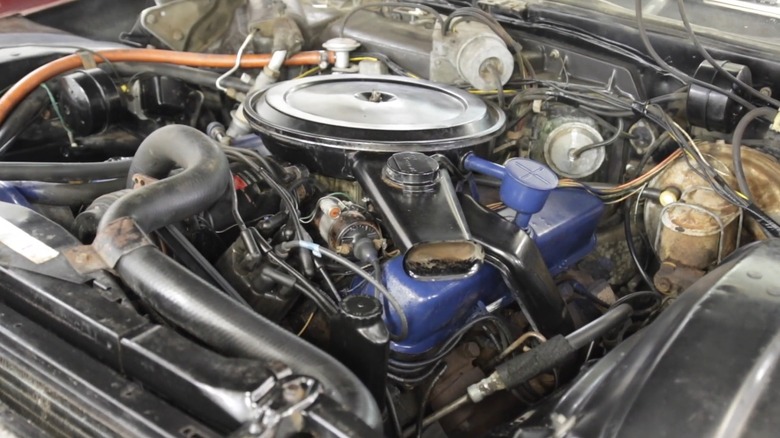
The 500 V8 was born from the 472, with engineers increasing the 472's stroke length from 4.06 inches to 4.304 inches, officially crossing the 500-cubic-inch mark. Although the 472 was good for 375 gross horsepower and 525 pound-feet of torque, the additional crank swing pushed the 500 V8 to 400 gross horsepower and a whopping 550 pound-feet of torque, available from as low as 3,000 RPM.
Clearly, the engine was more about effortless movement rather than outright speed, evidenced by its debut in the 1970 Eldorado luxury coupe. It remained exclusive to Cadillac's front-wheel-driven 18-foot land yacht until 1975, when the company decided to add the mighty 500 V8 to all cars except the Seville. But the actual demise started not long after its debut.
In 1971, right after its introduction, the engine saw its output drop to 365 gross horsepower and 535 pound-feet of torque as GM prepared the engine to accept unleaded fuel. A year later in 1972, the SAE switched from gross to net power ratings, immediately slashing the 500 V8's output to 235 horsepower and 385 pound-feet of torque. While that was at least on paper, things got really bad when the new emission guidelines kicked in, slowly reducing the 500 V8 to 210 horsepower in 1975 and 190 horsepower in 1976. Finally, in 1977, Cadillac shelved the engine and switched to small-block V8s.
From being the flagbearer of large-capacity American engines to slowly fading away into nonexistence, the Cadillac 500 V8 lived a short but storied life. It may not be a collector-favorite, but enthusiasts looking for cheap thrills may find the 1970 V8 and its absolute wallop of torque too good to ignore.