

11 Car Maintenance Jobs That Should Be Left To Professionals
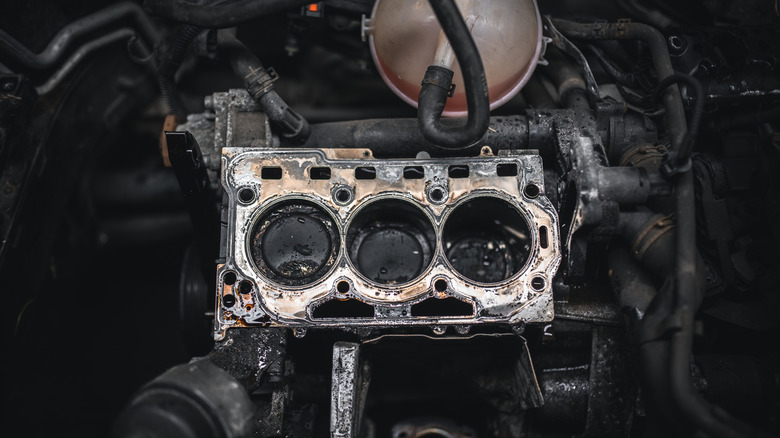
If someone tells you working on cars is easy, ignore them. Those who frequently spend weekends wrenching in their garage, living off Busch Lite and the sole warmth of a flimsy fluorescent light, will tell you without a doubt: If it can go wrong, eventually, it will. Ill-fitting parts, broken tools, stripped threads, and bloody knuckles are par for the course, but that's just half of it. Fully understanding how delicate and tedious certain components are — well, that's the real kicker, and those who are new to DIY maintenance and repair may not be ready to embark on such treacherous journeys.
First and foremost, there's no shame in relating to that sentiment. But if you do, we're going to recommend you put down the gloves for the 11 maintenance jobs we'll be covering today and leave it to a pro. Some of them could be physically dangerous or damage your car, and others are just too complicated (even for seasoned enthusiasts). Learning how to work on cars without killing yourself takes years of practice, and you shouldn't rush the process.
Lastly, before we dive in — no, this list isn't pro-auto shop propaganda attempting to coerce you into spending money. Obviously, many experienced and talented wrenchers aren't officially certified mechanics but are entirely capable of doing all of these jobs themselves. Rather, this is a guide for the novice or intermediate home mechanic who needs to gauge their limits.
Glass repair/replacements

We don't value our car's glass as much as we should. That is, until it breaks. It's one of those components that isn't solely tied to the auto repair industry, and it's so uniquely precarious that even veteran mechanics will often be of no help. There are multiple reasons for this, but chiefly, it comes down to precision. Working with automotive glass takes the hand and eye of a surgeon to get quality results, not to mention, glass requires extremely specialized tools to handle, repair, and install.
Another good reason to stray away is safety. Dropping your aftermarket shift knob on the floor will make you sad, but drop a replacement window, and your garage can become an ocean of prison shivs in need of careful cleanup. It can get worse, though, especially if glass breaks while situated on your car. Improper fitment during installation or repairs could lead to shattering, the aftermath of which may end up burrowed in your carpet and nestled between seats. Speaking of windshields specifically, an ill-fitting piece of glass could also compromise the structural integrity of your car's body in the event of a rollover.
If threats of physical danger don't faze you, insurance and warranty issues surely will. In many cases, car insurance companies and dealerships work with (and recommend) specific networks of glass repair shops, meaning that if you choose the DIY route, it could void the glass damage coverage or leave you without a warranty.
Brakes
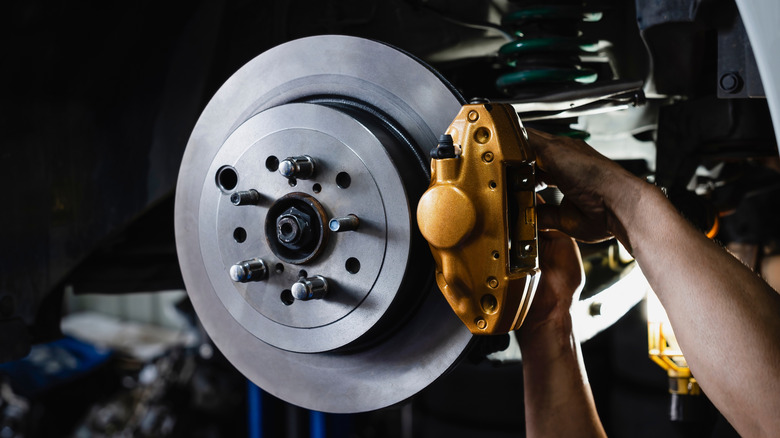
There's always a friend or acquaintance who will quip, "You can just do it yourself, it's super easy –- I've always done it myself!" Don't listen to them, listen to your own gut. If you aren't at the point in your DIY mechanic journey where you trust yourself to repair something as crucial as the braking system, then don't do it, and don't let your non-certified friend do it either.
For starters, not all braking systems are the same, and although your buddy may have done their brakes a hundred times, they haven't done yours. Extra lines, different pad clips, and unexpected electronics (on newer cars) that need careful handling can dramatically change the maintenance process. It's also worth mentioning that having the correct parts is only a small part of the job. There's also safely jacking up the car, bleeding the brakes, and inspecting the parts for additional wear — all things that take time and possibly another person to help you out with.
And then there's the "what if" of it all. What if you accidentally didn't clip the pads down correctly, left a brake line fitting untightened, or didn't catch an air bubble in the system while bleeding? We don't want you to live your automotive life in fear, but if there's one part of your car to be sure of, it's the one that stops it. Safety is paramount, and even small mistakes could lead to losing brake pressure and a nasty accident.
Timing belt/chain service
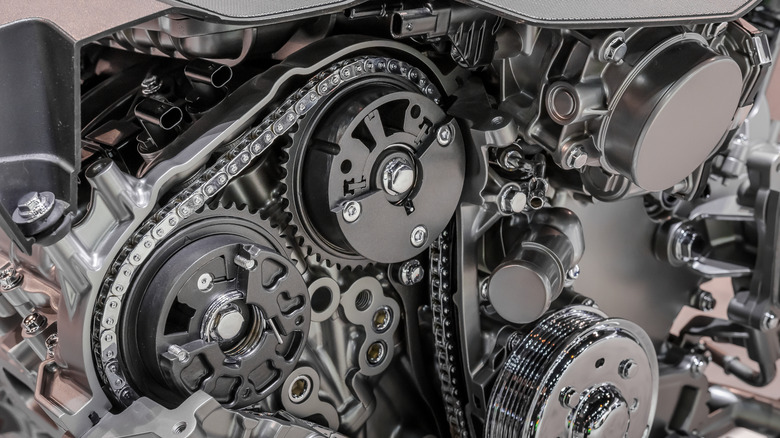
An engine's timing is the fine thread that keeps it on the side of harmonious operation versus mechanical Armageddon. Very basically, the engine timing chain or belt maintains the intervals of your crankshaft and camshaft's rotation, ensuring that valves are opening and closing at the correct time during the combustion cycle. Safe to say, a job done poorly in this department can land you firmly on the Armageddon side of that coin.
It's also important to consider just how complicated a repair like this can be. Depending on make and model, changing a timing belt or chain isn't just replacing that individual part –- it also means disassembling several other complicated components before performing the timing belt service itself. In some cars, it could mean removing numerous components just to get to the timing cover.
Incorrectly installing a guide or tensioner could throw off the timing, leading to misfires and poor performance. But that's if you're lucky. A complete failure of the belt or chain involves valves colliding with pistons, and in a split second, your already complicated repair could turn into an engine swap. What you can do is learn how to inspect parts and determine when a replacement is necessary. You'd be surprised how often major issues can be prevented with a quick look under the hood.
Transmission repair
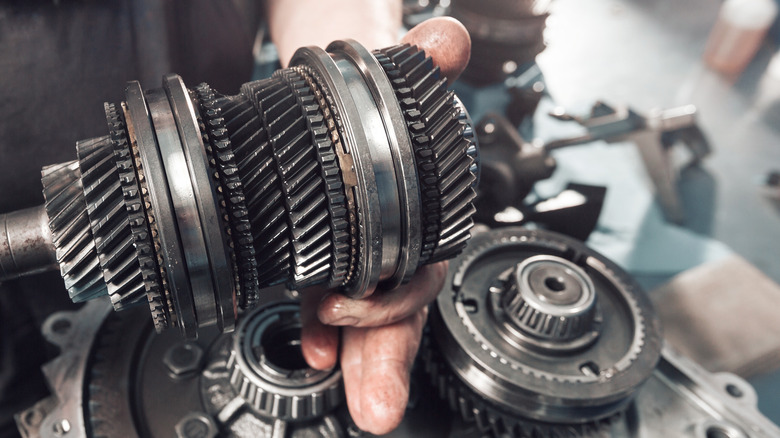
Ask a mechanic what their least favorite repairs are, and we'd wager you'll hear a rant about transmissions. Automatic units are particularly complicated, but in general, any transmission has fluid, sensors, springs, clutches, gears, linkages, electronics, and hundreds of other pint-sized components that can go bad. As one can imagine, repairing, rebuilding, and even simply diagnosing issues in a transmission is an incredibly time-consuming venture, which is why many shops dedicate their service solely to transmission repair.
Considering the sheer number of parts involved in a maintenance job like this, any small misstep can lead to other components inside your transmission failing, landing you back at square one. Compounding issues is usually what leads people to a transmission shop, where their DIY attempt only makes the job that much more expensive and labor-intensive.
If you happen to own a new or used car with a warranty, there's another angle to this that's worth consideration. Attempting to perform the service yourself or even having an unauthorized shop handle the work could lead to the manufacturer voiding your warranty, leaving you to pay full price for parts and labor, even after you wasted your time trying to fix it yourself. The moral of the story is: Automotive gearboxes are extremely complicated, which is why it may not be your mechanic's fault that they can't fix your transmission. So, unless you're the gearbox whisperer, just take it to the right shop.
Bodywork

Bending metal or plastic back into place seems like a straightforward gig, but there is a good reason why bodywork is one of the most expensive repairs to get done professionally –- it's incredibly difficult to get right. Quality bodywork deals with temperature, force, and chemical reactions, all while avoiding damage to other components like paint and glass.
Over the years, the standards have also changed. Newer and stronger body materials have been introduced and are more difficult to source or repair. Plus, the use of sensors in newer cars is off the charts, meaning there are more parts in need of replacement in the event of a collision. And then there's modern safety standards – crumple zones are more intricate and cover wider areas of your vehicle's exterior. Translation: What once was a simple fender replacement becomes a complete front-end rebuild.
Of course, if you have an old beater with a dent that needs some massaging, have at it. But for repairs of a larger scope, particularly for newer cars, the checklist you'll need to complete (including the proper specialty tools, knowledge of the structural rigidity of the car, and skills to successfully work with body panels) is just too much for the average person. It can be pricey, but do us (and yourself) a favor, and spend the money for a job well done.
AC system
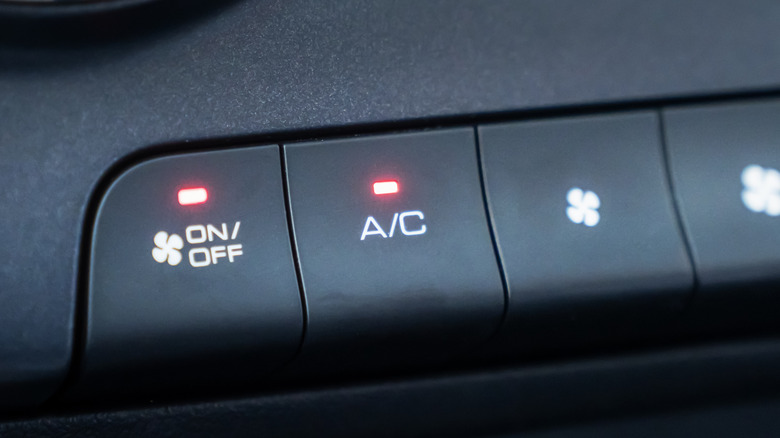
Say you're traveling through the flat part of Texas in the 100-degree summer heat and your AC breaks. Then and only then would a DIY AC recharge kit be fine to use. But in any other situation, we'd recommend you not try to fix the AC unit yourself. Why? Well, refrigerants aren't meant to be refilled — the AC system is closed, and if it's low, there's a leak somewhere that's causing the system to fail. So, unless you're in that hot Texas dilemma we mentioned and trying to avoid surviving summer in a car with no AC, you're probably just wasting money that could be spent toward getting it fixed properly.
So, if you avoid those cheap instant recharge kits and do the full repair at home, you're fine, right? Not exactly. The refrigerant chemicals that your AC uses are toxic, and if handled improperly, things could end up pretty messy. There's no reason to toil about with your AC and deprive yourself of that cool breeze because you're too stubborn to take it to a shop, especially if you live in a warm place.
It's not the most affordable fix out there, with average AC repairs coming in around $400, but as far as creature comforts go, AC is one that you don't want to neglect come summertime.
Electrical work
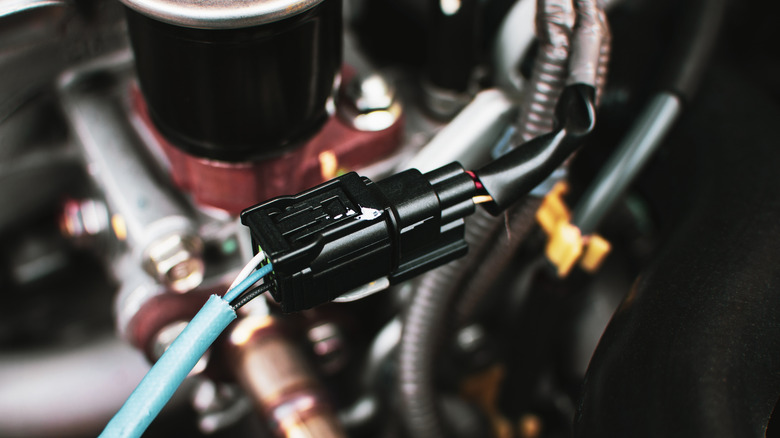
Like glass or bodywork, electrical components and wiring exist in their own industry, outside basic automotive repair. As such, wiring is often a mystery to the average at-home mechanic. For modern cars, forget about it. These machines can't do squat without a computer giving the okay (even though drivers hate all the tech in their cars), and for someone who isn't confident in wiring, you're likely to do more harm than anything else. Older cars can be simpler, but they can also be more dangerous when it comes to faulty wiring.
To be specific, we're not trying to deter you from doing simpler wiring jobs, like head units or aftermarket gauges that use only a few small connections. On older cars especially, those can be figured out with some common sense and a decent online tutorial, but once we get under the hood and mess around with wires that connect directly to your battery (think alternator, starter motor, or fuse box), more serious consequences come into play.
High-amperage components that use your battery's direct current can give you dangerous electrical burns or shocks, and they can even cause fires. But even lesser mistakes like mixing up wires, overloading certain components, and short-circuiting electric systems can leave your car inoperable. By and large, the money you'll spend at the shop for clean electrical work is worth the safety and peace of mind.
Fuel system
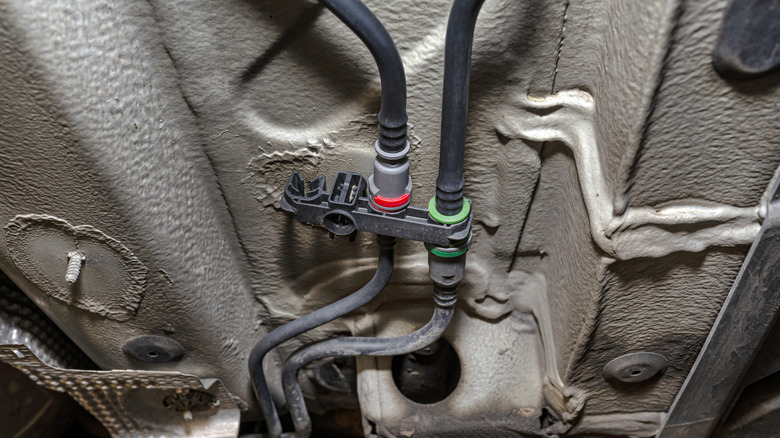
Replacing or fixing a fuel system requires taking several precautions that some folks may not want to risk getting wrong. Let's start with the obvious one. If you've ever done work on your fuel system, you know that fuel spillage is not a matter of "if," but rather "how much." This means that your garage better not have anything that could spark, short-circuit, or superheat that gasoline on your floor.
But spilled fuel aside, the system itself and how it interacts with your engine is quite literally the life-source of your car. Whether it be a fuel pump, replacing lines and fittings, or installing new injectors, getting these maintenance jobs right can make or break an engine. If not enough fuel is being delivered to the cylinders due to a fuel-system issue, and the air-to-fuel ratio is too large, this is called running lean. This can lead to higher combustion temperatures, poor performance, and damage to the engine's internals. The opposite (or running rich) isn't quite as detrimental to your engine, but it will still hurt performance.
Fuel systems are a messy and often complicated job, with several individual parts that, on newer cars, require sensors, computer controllers, and a bunch of trial and error. So, if you have the means to pay a professional, save yourself the headache and do it.
Steering components

Second only to brakes in terms of important vehicle functions, we have steering. It's constantly being used, moving side to side, resisting against the force of the road, and many things can go wrong. Your alignment can get out of whack, the power-steering system could fail, the joints, shafts, and tie rods could wear down and lose precision — really, its just a matter of time before something needs attention. But the fact that it's featured here on this list tells you the average person shouldn't service it at home.
Steering components are harder to access than the lost city of Atlantis. Replacing physical parts like joints or shafts can require heavy disassembly and removal that will cost you more money in tools and a whole lot more time reading service manuals than it's worth.
If it wasn't obvious enough, a poor steering repair or replacement is a massive safety hazard. When the fuel system, electricals, or AC fails, the worst of it could be the car shutting off or its driver becoming increasingly sweaty and uncomfortable. However, when the steering system decides to stop working, the end of that story can become far more serious, especially on highways or in densely populated areas. For this topic specifically, frequent inspection is always a good idea, even if that's as simple as checking power steering fluid and visible wear.
Mounting/balancing tires
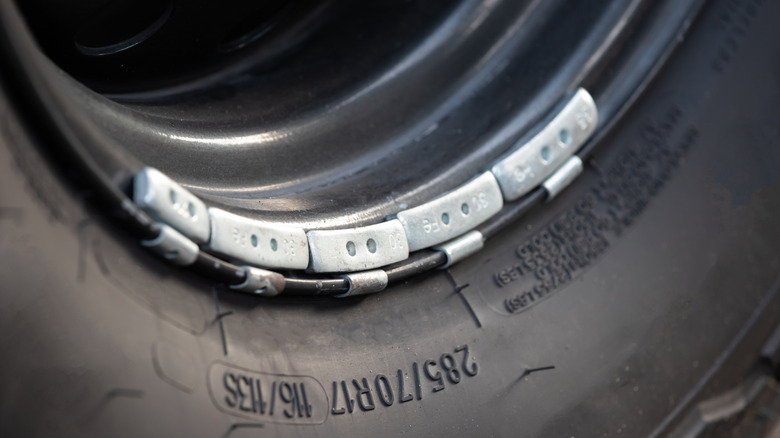
Tire care is one of the best (and most important) car maintenance skills every adult should know, much of which you can do at home, from checking tread depth to maintaining proper pressures. But mounting and balancing is a whole new ball game. If you have a mounting machine at home (or have extensive experience with tires), this list isn't saying anything you didn't already know, but for those who aren't keen on this topic, there are several important things to keep in mind.
A car's tires are designed to rotate with minimal or zero balance resistance, and getting this process wrong can have negative effects of varying magnitudes. Mounting is the simpler process, often involving just a few simple tools and some muscle to wrap the tire around the wheel, but where balancing is concerned, precision is the name of the game.
Professionals rely on specialized machines that read a tire's rotational balance and indicate heavier sides of the wheel and tire combination, allowing the mechanic to add wheel weights that correctly counter the offset balance. You can technically do this at home through several different cheap methods, but the result of a bad wheel balancing job can introduce vibrations that loosen and break suspension components. If your mounting isn't done properly, then not only will your tire be out of balance, but you can risk getting a blowout on the road.
Engine internals
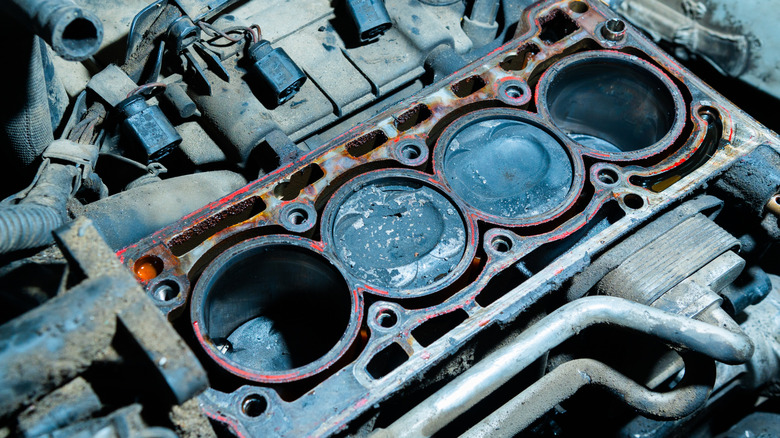
Even enthusiasts with countless hours of experience have, at one time or another, thrown in the towel and paid a professional to work on their engine. Can you blame them? The internal combustion engine, while a world-changing invention, houses hundreds of moving parts that require microscopic clearances and perfect harmony to operate smoothly. Some engine components are simpler than others, and as is the case with most of these maintenance jobs, we trust you to do the easy stuff. But the bigger stuff ought to be outsourced to someone with more experience.
On engine internals, particularly, one poor install is a perfect way to ruin several other parts and possibly the whole motor. Here's just a taste of the items you'd need to comply with: Bearing clearances, head bolt torque specs, piston ring gaps, camshaft orientation, gasket and seal quality, compression ratios, valve spring pre-load, and timing chain guide alignment. The most minuscule miscalculation on any of these parts, and the hundreds more you may encounter, have the potential for devastating engine damage, and trust us, it feels much worse when it's your fault.
Though, before you send your vehicle off to a shop for engine-related repairs, do a little sleuthing. The average auto repair business may not have the resources to give your engine quality services, and while specialty shops will cost quite a bit more, you'll have the confidence that recurring issues won't plague your motor.