

Do Short Trips Really Wear Out Your Engine Faster Than Long Drives?

The basic answer is yes, short trips can cause more damage to your engine than longer drives. While the definition of what's considered a short trip is subject to interpretation, for our purposes, we'll define it as any trip that takes less than 15 minutes or less than 10 miles. Of course, an engine with 10,000 miles of short trips is likely to have less wear than one with 300,000 miles of longer trips, but it may be closer than you'd imagine.
The reason short trips are worse is they don't typically allow enough time for the engine to come to its ideal operating temperature. Internal combustion engines use a multitude of chemicals, as well as electrical and mechanical systems that are designed to perform at their best within a specified range of operating temperatures. When starting a cold engine that's been sitting unused for more than a few hours, the engine oil that provides lubrication to internal moving parts must be pulled from the oil pan and pushed to where it's needed by the oil pump. Cold oil is thicker than warm oil, so pushing it through an engine's oil passageways takes precious seconds.
The various metals inside the engine require optimal temperatures to ensure precise operation. The metallurgy of common modern engines includes aluminum for pistons, cylinder heads, and some engine blocks. Cast iron still appears in some engine blocks, cylinder liners, crankshafts, and camshafts. There are also various internal engine parts made from steel. Each of these metals has differing thermal properties and rates of expansion when heated.
The downside of driving a cold engine
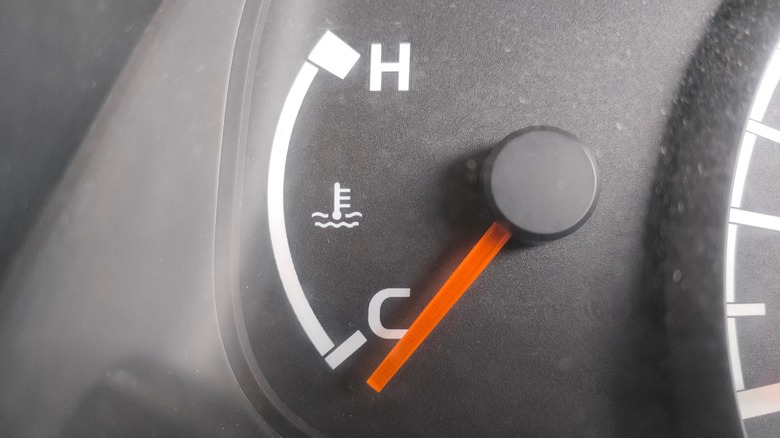
While sluggish engine oil and cold engine parts are issues that typically take only a short time to overcome with the engine running, not allowing your engine to achieve its ideal operating temperature during short trips presents other problems. If you drive a vehicle powered by a diesel engine, the problems, especially those associated with the diesel particulate filter (DPF), can be even worse. The DPF needs to get hot enough to perform its regenerative cycle, similar to the self-cleaning feature of an oven, to clear out the accumulated soot from the filter. Gasoline engines can experience carbon-fouling around spark plugs and intake valves if they don't get warm enough for long enough to burn the deposits off.
That doesn't mean you should let your engine idle for a long time when you start it or leave it idling between short trips. Your car was designed to move, and all systems work best with some exercise. If you live in an urban area with everything you need for your daily life within a few miles -– work, shopping, school, entertainment, etc. –- it may be difficult to justify the occasional 30-minute drive on a free-flowing highway. Then again, it may be exactly what you need to clear your head, and your engine will reap some benefits, too.
Do short trips harm more than internal engine components?
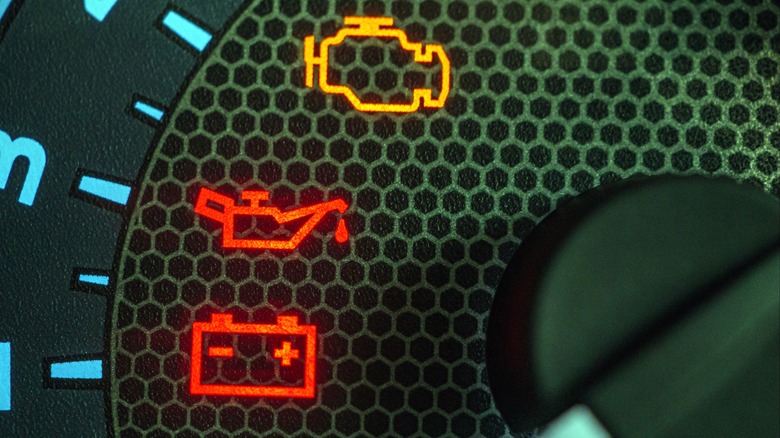
If short trips wearing your engine faster isn't enough cause for concern, they also cause wear to other systems in your car. Short trips require a higher ratio of braking to cruising. Driving a distance of 100 highway miles in a single trip uses fewer brake applications than 25 trips at 4 miles each. While the brake wear benefits of the longer trip can be offset by riding the brakes downhill or screeching to a stop from excessive speeds (situations that could lead to replacing brake pads and rotors sooner than expected), in general, the stop-and-go driving of short trips places more strain on the braking system.
Short trips can also wear out your car battery prematurely, even those in EVs. Charging systems in traditional modern vehicles rely on an alternator, driven by the running engine, to charge the onboard battery that powers the vehicle's 12-volt electrical system. The electric starter motor represents the largest load on the battery when starting the car, but it can also discharge while the car isn't running. A short trip may not provide enough energy from the alternator to fully recharge the battery, causing it to run down over time. An EV battery used for short trips between recharging stays in a shallow charge-discharge state that could result in a loss of battery range over time. Best practices for charging EV batteries dictate avoiding deep discharges while charging to between 20% and 80%, and only charging to 100% for longer trips when necessary.