

The Car Parts You Should Never Use A Clay Bar On
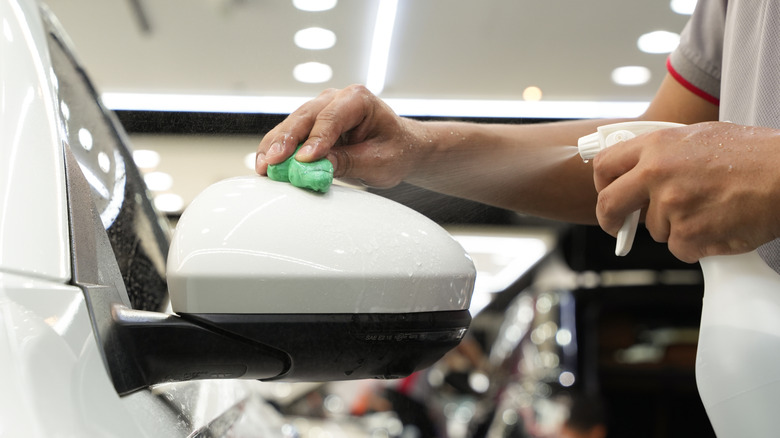
Once you learn how well a clay bar works, it's a tempting tool to use. If it makes paint feel brand-new, why not just use it everywhere? That's because some surfaces don't get cleaner when clayed — they just get damaged or permanently marked. Claying works by shearing bonded contamination off of a surface, which is perfect for smooth, glossy paint. That's also exactly why it can ruin some surfaces.
Matte paint and vinyl wraps top the do-not-touch list. Clay will flatten the texture that gives matte finishes their look, leaving glossy streaks that can't be reversed without repainting or rewrapping your car. Textured exterior plastics like mirror caps, B-pillars, and cowl panels — and soft clear plastics like what you find on headlights — can also haze or scratch easily. Don't use clay on surfaces with damage or oxidized paints, either. The clay will pick up loose paint particles, embedding them and making the situation worse.
Rubber seals and tires aren't good claying candidates, either. They don't benefit from decontamination, and using clay can tear or discolor them. The same goes for unfinished metal, rusted areas, chipped paint, or a peeling clear coat. Clay will only make existing damage worse. Ceramic coatings and freshly waxed or sealed paint also fall into the "hands off" category. Claying removes the coating's protection, so using it on these surfaces is just undoing your own work.
Where clay actually belongs (and how often to use it)
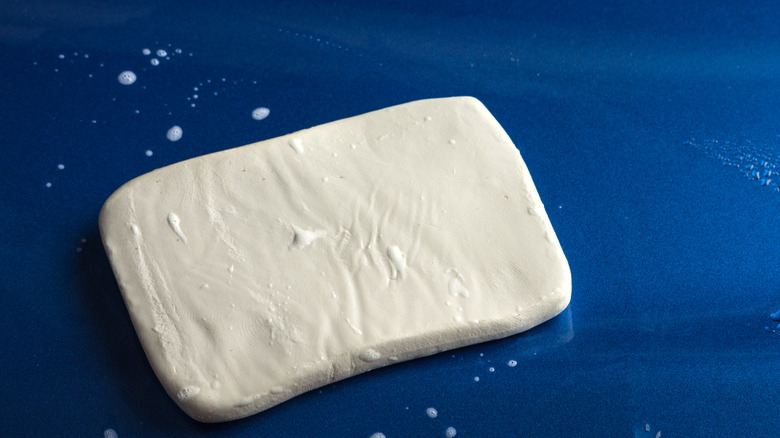
A clay bar is still one of the most effective paint decontamination tools you can keep in your detailing arsenal. Traditional clear-coated paint is its natural habitat. Claying removes embedded dust, industrial fallout, and overspray that washing alone can't touch. This is why most detailing guides recommend claying before polishing or applying new protection like ceramic coating.
Glass is another surface where clay shines. Windshields and side windows collect water stains and road film, worsening visibility and making wipers chatter. Clay can restore smoothness without harming automotive glass when proper lubrication is used. Polished metals – including chrome trims, stainless exhaust tips, and aluminum wheels — respond well to claying because contamination sticks to them just like paint. Carbon fiber panels with a clear coat behave the same way. Paint protection film can also be clayed with the help of some good lubrication.
As for how often to clay, most reputable detailing sources agree it's an occasional process, not routine maintenance. Twice or thrice a year is typical for daily drivers. If your paint feels smooth after washing, put the clay down. Over-claying doesn't make your car cleaner. It just gives you more work fixing what you didn't need to touch.