

7 Cheap Used Cars That Aren't Worth The Trouble

Even as the automotive industry spends about a $12 billion a year on slick advertising designed by experts to make you lust for this model year's latest opportunity for financial loss, a true automotive enthusiast will look right past all that noise and promptly succumb to the sweet siren song of a budget-friendly used car bargain. Except, it turns out that many of these so-called smart buys are actually just more elaborate ways to set fire to your hard earned-money, though often with some extra steps and a few additional exasperated forum posts, compared to someone who just bought something they saw on TV and ate the depreciation like a proper new car buyer.
Today, we're not going to list out the most quantifiably terrible used car purchases you could make — those are just the top results on your Facebook Marketplace feed right now. Instead, we're going to walk you through a handful of the most seductive archetypes of the used car bargain, from the luxury flagship that was six figures new to the one-owner sedan that's hiding a workhorse history you may not expect.
So, while we're not saying you should never scoop one of these up if the price is right and the automotive stars are aligned, it's probably a good idea to think twice. While you'll still get the smug satisfaction of lecturing your disinterested aunt about how much her 2020 Toyota Camry has depreciated in 5 years, just remember that when your comeuppance (probably) arrives, small DIY YouTube channels are a godsend if you need to learn how to fix cars yourself.
The tastefully modified racer

There is no flavor of used car optimism quite like convincing yourself that someone else's modified tuner is a diamond in the rough. A cheap, tastefully modified Eclipse, WRX, 350Z, or GTI looks like a cheat code — you get the parts you always planned to install, the stance you always wanted, and the vibe of a mid-2000s street racing DVD. The ad may bill the owner as an enthusiast, and that may be true. Just keep in mind that this is also how news outlets occasionally describe teenagers doing donuts in the middle of closed-down intersections during a street takeover.
The problem with modified cars is that it's not necessarily going to be clear from a listing how or when the work was done, and there's a wide spectrum of potential concerns between reputable shops, less reputable ones, and a driveway project cobbled together by amateurs over a long weekend and a couple of cold ones. Those mods may be fine, they may doom your first inspection, or they may make the vehicle genuinely unsafe.
Besides, even if done perfectly, a heavily modified car is clearly a sign of a vehicle that's being pushed harder on the road (or track) than average, which is enough to make you question what mechanical trauma your next ride went through in its previous life. Considering that we've established that it's really easy to over modify your sports car, the best mods may be the ones on that wish list in your heart, just waiting for you to buy the bone stock canvas on which to paint your tuner vision.
The heavily depreciated luxury sedan

Look, we get it. When a BMW 7 Series, Mercedes S-Class, Audi A8, or Lexus LS drops into the price range of an entry-level used hatchback, it feels like a glitch in the matrix. You get massaging seats, air suspension, soft-close doors, multiple screens, and night vision — all features that cost someone's entire salary a decade ago. The problem is that all of those cushy features now belong to you, and they all have the potential to demand your money sooner or later. This will leave you in the unenviable position of choosing between a costly repair that may undue the bargain you scored in the first place and living with the distinctly non-luxury experience of deciding that you don't actually need that heads up display or a working passenger-side window regulator after all.
Part of the premium that the original owner paid when they bought the car is that they were able to fret about complexities like air struts and passenger side infotainment screens under the cozy protection of a factory warranty. So, while you may have the incomparable luxury of a really nice massaging seat, you're not going to have the luxury of that sweet warranty coverage. Air struts leak, electronics modules fail, and turbos wear. Furthermore, none of that even comes close to any of the obscure and expensive components that make these vehicles the luxury flagships that they are.
The bottom line is that, for the most part, there just aren't many shortcuts to living like a rich jerk. You're likely to either pay big now or pay big later (which is why used luxury cars are so cheap).
The multiple-repo buy-here-pay-here special

For the most part, we're talking about very normal, very practical everyday cars. You're not trying to shortcut your way to a "Fast and the Furious" cameo or back into something that looks like your boss's A8 for a fraction of the cost. You're just trying to score a slightly above-average deal on a regular car, right? Not exactly. Like rented furniture and bad medical debt, the only ones in a position to eke out a win in this scenario are the soulless financial vampires who deal in such things. And that's not you, right?
Still, for the sake of completeness, we'll point out that you can enjoy the dubious value proposition of the buy-here-pay-here local vehicle deal from any number of angles. Obviously, you could brave one of these lots themselves, adorned by streamers and LED signs, and often flanked by one or more waving inflatable tube men. You'll quickly learn that, in such places, the real product is the predatory sub-prime financing, not the cars on the lot.
Just remember, these vehicles are the very definition of ridden hard and put away wet, with the same car going through multiple repossessions, each time at a markup. These vehicles rack up hard miles, (indefinitely) deferred maintenance, roadside repairs, and neglect through successive owners. It's a dirty business at its core, built largely on desperation and ignorance, especially considering how few people really understand how repossession works or what to do if it happens.
The one-owner former fleet workhorse
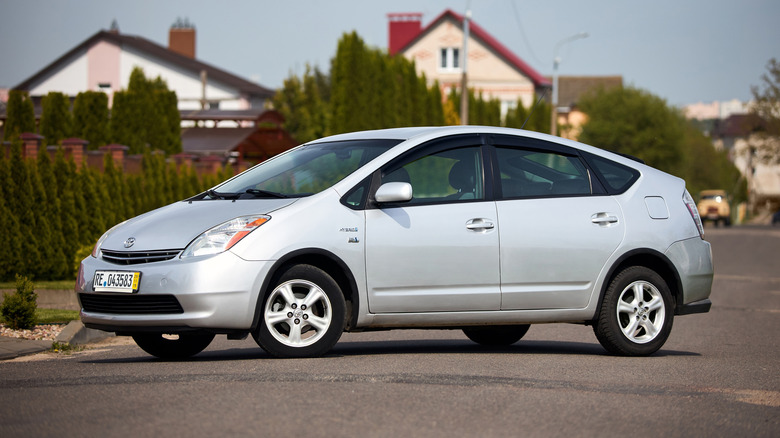
One owner sounds great until you realize that the one owner was a taxi company. Heck, in many cases there's even an excellent track record as far as maintenance goes. What better way to sneak into a lower-than-average deal on your next Honda Accord, Toyota Prius, or Volkswagen Passat?
Fleet taxis do have a reputation for getting lots of mechanical love. It's in the taxi company's best interest to extend the lives of these vehicles as much as possible, after all. But much of what you may get in terms of oil changes and tire rotations is more than lost by the utter indifference to the vehicle shown by literally thousands of passengers. These suckers can rack up a ton of miles. Well-maintained or not, that's going to mean serious mechanical wear and tear, not to mention all the time spent idling in airport pickup areas or stuck in stop-and-go traffic, both of which can cause wear to the vehicle without moving the odometer an inch. You're also likely to start seeing excessive wear on things like suspension components.
But hey, whatever our reservations may be, they have nothing to do with the terrifying, astounding skill of the taxi drivers who point them effortlessly to and fro. Also, do you know who doesn't have a reputation for terrifying, astounding skill? Your friendly local DoorDash/Lyft/Uber driver, who may be dropping their gig economy beater on Craigslist after putting it through absolute hell. These may be tougher to spot, but keep an eye out for the adhesive residue from the rideshare and/or food delivery stickers they peeled off before taking the glamour shots.
The early EV experiment
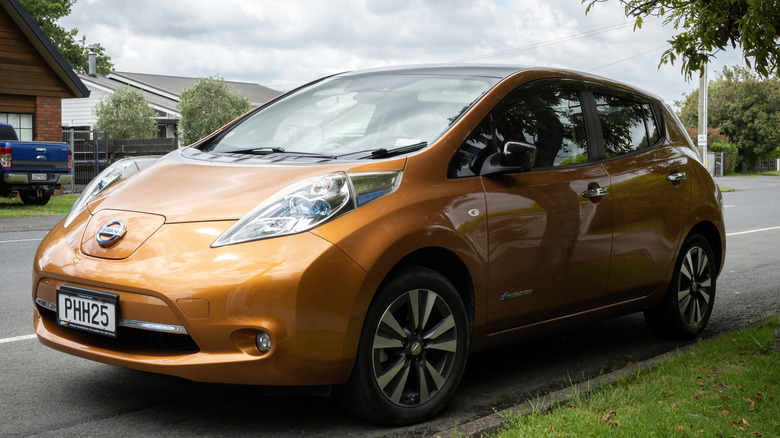
Sticker shock on new EVs with recently evaporated federal incentives makes a $3,000 to $5,000 dollar Leaf look like borderline free transportation. No gas, cheap registration, and all the eco-friendly smugness you could possibly want — it's a slam dunk (at least in theory). Early EVs like the first-generation Leaf were important technological milestones, but that's a reason to make sure they're represented in an automotive history museum, not your garage. The obvious Achilles' heel of an EV is the battery, which can easily run you between $5,000 to $16,000 or more to replace. You probably don't need to break out your car math spreadsheet to see what this proposition does to your dirt-cheap EV's cost of ownership. Even over at Consumer Reports, which helps regular people optimize purchases like this, the sentiment is pretty clear — EVs out of warranty are not a gamble you want to take.
"The sweet spot for a used EV is one that's still under its battery warranty, but that's depreciated enough for significant savings compared to a new one," says its associate director of auto test development. "You should also consider how long you plan to keep the car, and if the savings are worth it compared to buying a hybrid vehicle that may be more reliable in the long run."
So, while it's totally plausible that you can find something that lands in that narrow-ish window, your very inexpensive first-gen Nissan Leaf isn't it. We're not haters, though, just to be clear. In fact, if you're ready to spring for a newer one, we're on the record as saying that the only thing wrong with the Nissan Leaf is the armrest.
The salvage-title dream build
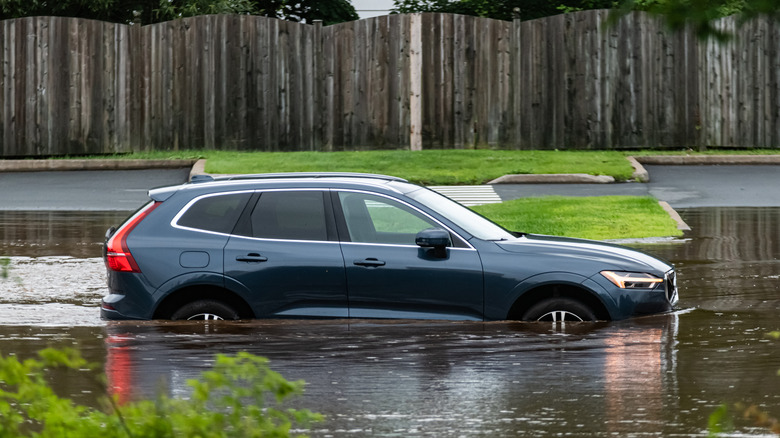
The idea is seductive: Grab a lightly damaged WRX, Mustang, Genesis Coupe, or GTI at half price, fix a bit of bodywork, wrench on weekends, and end up with a track-ready monster for pennies on the dollar. You get the car everyone on your favorite forum owns, at half price, and you tell yourself you will strip it, cage it, and turn it into a track weapon. How hard can some bodywork and a few suspension pieces be? You're handy. Right? Maybe not.
First of all, a salvage title isn't just an indication that your possible new favorite vehicle had a really bad day at some point. Specifically, it means that the insurance company declared it a total loss. Furthermore, you're likely going to need to do some serious work to make it safe and even more to get it through your state's inspection to achieve the coveted rebuilt title classification.
You may find yourself facing insurance hurdles as well as registration challenges, with some states refusing to let you get your car back on the road no matter what. Watch for language like "Certificate of Destruction for Export Only. U.S. Customers — Parts Only. No Title," which means the vehicle is ineligible for any type of salvage title or reconstruction. There's obviously a lot to unpack on this topic, but unless you happen to be a YouTuber who profits from automotive projects going horrifically sideways, there are a lot of reasons why you don't want to buy a rebuilt salvage vehicle. The bottom line is that a salvage-title performance car is only a bargain if your time has no value and your appetite for risk is enormous.
The Craigslist unicorn grandma car
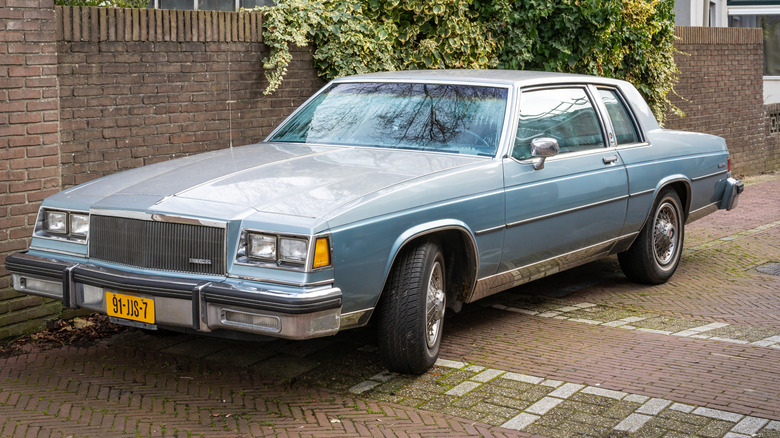
A low-mileage, single-family grandma car is the holy grail of casual used-car shopping. One owner, garaged, rust-free, and it may come with an unexpected Werther's Original in the center console. The nostalgia is strong, with cushy interiors, abundant ashtrays, and a mostly true backstory about how the car only left the garage for church and grocery runs.
Well, a low-mileage, single-family grandma car feels like the ultimate Craigslist miracle. However, exceptionally low-use cars — especially older domestic full-size sedans — hide problems that don't show up in the glamor shots. Long periods of inactivity cause mechanical systems to degrade because they're not being used. Fluids absorb moisture and break down. Rubber parts like belts, hoses, and gaskets can dry-rot. Tires develop flat spots and structural weakening. Brake components rust or seize, and internal corrosion can develop from condensation that never gets burned off. Stored or otherwise infrequently used cars also accumulate exhaust moisture, internal engine rust, and brake/suspension corrosion unless they're driven long enough to reach full operating temperatures.
So, while it's possible that your grandma has something great waiting for you in the garage, going in blind to a Craigslist grandma situation may be more trouble than it's worth. If you want a charming time capsule, great — but if you want cheap, reliable transportation, a long-stored relic probably isn't the move.