

These 10 Cars Lose The Most Value In One Year
Your stingy uncle wasn't wrong when he talked about the immediate drop in value a new vehicle experiences "the moment you drive it off the lot," but that doesn't mean that all cars suffer equally when it comes to depreciation. While you can certainly temper some of that financial pain by buying used and letting some other sucker take that hit (right before they lose your spare key), if you're going to buy new, you should brace yourself to lose about 20% in the first year and another 10% the year after that.
That's some ugly car math, sure, but like any piece of financial analysis that you can explore in the inflationary hellscape of the mid-2020s, there's plenty of room for things to get worse, and in some cases, much worse. That's why we're going to walk you through a guided tour, not just of a bunch of cars whose values take a nosedive before your first registration renewal would be due, but of the sheer variety of factors that can land something on a list like this — from giant trucks priced like luxury vehicles to EVs that look like spaceships but age like smartphones.
So instead of one neat and tidy top-10 list, think of this as a tour through an ecosystem of pain: nine very different vehicles, all spectacularly bad at maintaining the value of what you paid for them, based largely on data from iSeeCars. Their analysis was based on more than 1.6 million new and lightly used cars listed for sale from January through March of 2024, with new cars all coming from the 2023/2024 model years. So while past depreciation certainly doesn't dictate what will happen with the same or similar vehicles in the future (particularly as markets remain unpredictable and weird), you'll notice some themes that are likely to remain sound going forward.
Infiniti QX80: -28.8% after one year
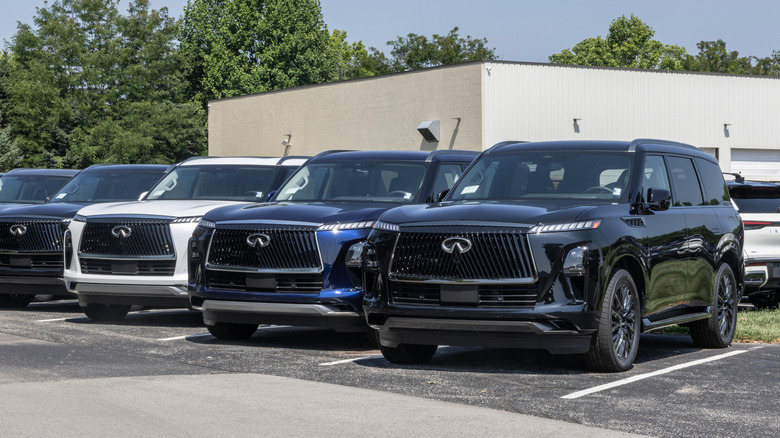
A dated platform wearing a shiny luxury badge, the QX80 is exactly the kind of truck-shaped status symbol that today's used market punishes. The data shows that a one-year-old QX80 quickly fell to 28.8% cheaper than new: about a $24,000 haircut on an average transaction price of just under $60,000.
The problem isn't that it's bad at being a big, comfy SUV. It's that it's been the same big, comfy SUV for too long. While rivals were going through the cyclical dance of redesigns, new platforms, and revised tech, Infinity didn't really do any of that with the QX80. Add in abysmal real-world fuel economy from the 5.6-liter V8, and you've got a truck that's expensive to buy and expensive to drive, all with luxury comforts that are comparable to competitor vehicles a design generation ago or more.
The result? On the used market, that all adds up to serious leverage on the buyer's side. Shoppers see "old tech, bad mileage, massive depreciation" and negotiate accordingly. For the first owner, though, that 28.8% drop is the moment the QX80 stops feeling like a luxury purchase and starts feeling like a very heavy liability, which is why it's among the fastest-depreciating used cars. That said, of course, we're just getting started.
Ram 1500 Classic: -29.2% after one year
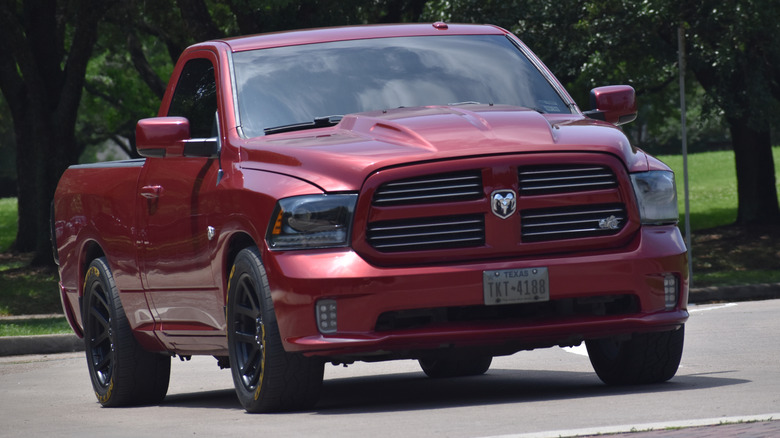
The Ram 1500 Classic is yesterday's truck sold today, and the resale math reflects that. A one-year-old Classic averaged a used-market sale price of $31,969, about a $13,000 hit in the first year for a 29.2% gap.
Part of the problem is baked into the name: "Classic" could also be described as "old generation we're still milking," and while that shtick might play in the showroom, it doesn't do great on the used-car lot. Stellantis keeps the previous-gen Ram on hand as a lower-priced alternative to the newer 1500, which is great for sales volume but brutal for residuals. In fact, despite pickup trucks generally holding their value better than industry average, the Ram 1500 manages to buck this trend, substantively trailing comps like the F-150 and Silverado in long-term value retention, proof that sometimes when the deck is otherwise stacked in your favor, you need to get creative with something like the "Classic" branding to find a way to lose anyway.
In any case, when your one-year-old pickup is visually indistinguishable from a rental-spec work truck, the used market treats it like one. The result: owners who thought they were playing it safe with a "cheap" new truck discover they've picked up one of the cars that lost the most value on the used market in the past year.
BMW 7 Series (including i7): -29.8% after one year
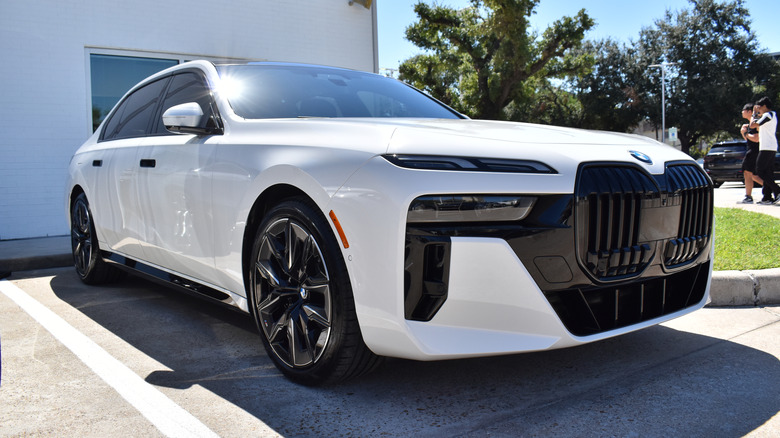
The BMW 7 Series has always been a depreciation champion, and the latest generation is no exception. In the first year, data showed a tech-addled modern 7 Series to lose 29.8% of its value — helped along by a beefy starting sticker price — which means an eye-popping $36,000-plus in depreciation. That's $3,000 a month! Do you know what else you could drive for $3,000 a month? Virtually anything.
So what's going on here? Well, for starters, this isn't really an outlier for the category – luxury German flagship sedans are always going to be luxury German flagship sedans. Even BMW-friendly sources point out that these cars are notoriously expensive to maintain and repair, which is why you've probably heard before the old automotive axiom that there's nothing more expensive than a cheap German luxury car.
The new i7 variant adds another layer of risk: early-adopter EV hardware in a six-figure sedan, sold into a leasing-heavy segment. As three-year leases turn into off-lease inventory and newer tech arrives, the first-year i7 buyer is left holding a car that's both objectively excellent and already yesterday's extravagant status symbol. Add to that the elephant in the room (or should we say the giant oversized nostrils in the grille), and you've also got a luxury experience wrapped in a package that many feel simply doesn't look very good, even if we think the new BMW 7 Series looks great, actually.
Dodge Durango: -30.8% after one year
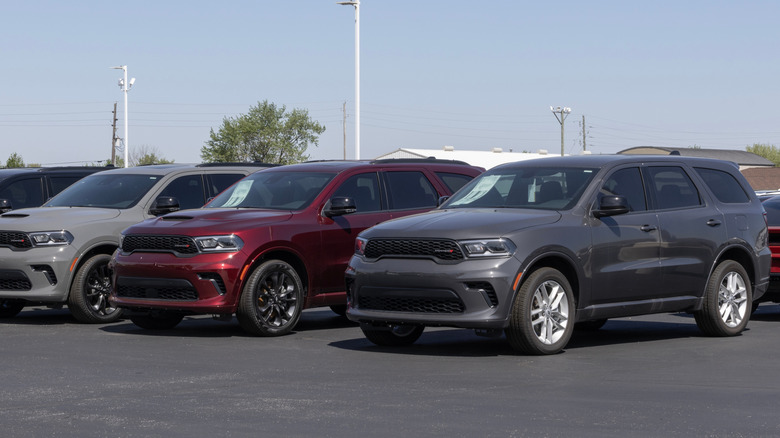
On paper, the Durango still looks like a win: rear-drive architecture, real towing capacity, and optional V8 power. Tap to open the calculator app on your phone, though, and the whole thing becomes a lot less fun. A year-old Durango averaged $43,407, which might not sound completely crazy until it sinks in that this meant a one-year depreciation of 30.8%, with roughly $19,000 evaporating between new MSRP and lightly used resale.
Critics have been circling its weaknesses for a while. The current generation is old by segment standards, and multiple reviews call out poor fuel economy, dated interior ergonomics, and a lack of modern standard safety and driver-assist features. Shoppers comparing similar SUVs and crossovers are likely to cross-shop three-row family haulers like the Kia Telluride and Hyundai Palisade, which offer quieter cabins and better mpg for less money.
While the Durango is perfectly capable for what it is, for a brand whose primary guiding principle seems to be hanging on to big, loud V8s for as long as possible, it's perhaps not that surprising that they would come up short in the grocery-getter resale value department. However, in 2025, Dodge said that 10 more states will allow Durango Hellcat sales, so there's that.
Mercedes-Benz S-Class: -31.5% after one year
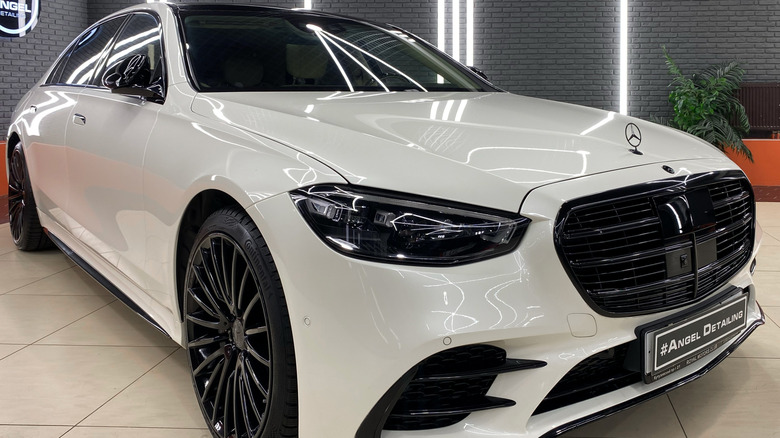
The S-Class is supposed to be "the best or nothing," at least according to Mercedes-Benz. And while there are all sorts of ways to qualify and quantify what exactly "the best" means, we're pretty sure that in terms of depreciation, Mercedes-Benz is comfortable leaving that to friendly rival Porsche. So what does unrepentant luxury and astounding fit and finish leave a flagship among flagships when it comes to resale value? Plummeting by damn near a third in less time than it takes you to go through your yearly vial of ionized fragrance, available through your local Mercedes-Benz dealership, of course.
So on to the math. Keeping in mind that the S-Class's deprecation curve starts dropping from quite a lofty perch, the observed 31.5% deprecation after 12 months set owners back more than $45,000. That said, most people operating at this level aren't in the market for a gently-used bargain, so it's probably safe to assume that most of these that you see around are the product of a $1,399 per month lease payment, which is going to keep them in more or less the latest model in perpetuity, give or take three model years. Still, if you've been itching to get in on a world-class luxury driving experience but want to keep it under six figures, some diligent shopping should get you there for something like $99,598.
Hyundai Ioniq 5: -32.9% after one year
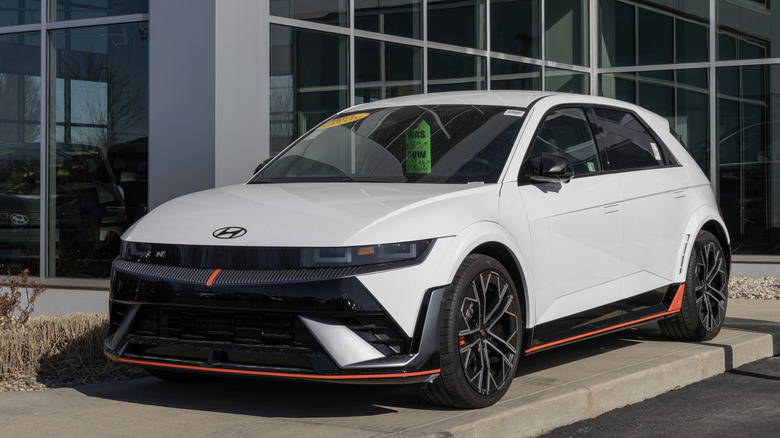
The Ioniq 5 might be the most universally liked car on this list, and that's exactly what makes the 32.9% first-year depreciation witnessed in the study so brutal. Your typical Ioniq 5 driver did nothing to deserve this. They're not being chauffeured in a six-figure luxury car or buying a Stellantis product because they happen to drive past the dealership on their way to work. For a comparatively modest vehicle, that $16,805 one-year depreciation hit must really sting.
Let's see what's going on here. Obviously, this one is going to be a function of being an EV; the list of fastest-depreciating cars isn't exactly littered with Hyundias. Generally speaking, Cox Automotive's EV Market Monitor noted in early 2025 that used-EV prices were down over 10% year-over-year and continuing to fall, as more lease returns and early trade-ins hit the used market. Meanwhile, the resulting dip in used prices for EVs, despite very real concerns about battery longevity, is leading industry experts to start wondering if the best EV deals have shifted from warranty-safe leases to inexpensive used purchases. It's at least something to consider as the current model year ages, as the 2025 Hyundai Ioniq 5 is a good car made even better.
Kia EV6: -33.3% after one year
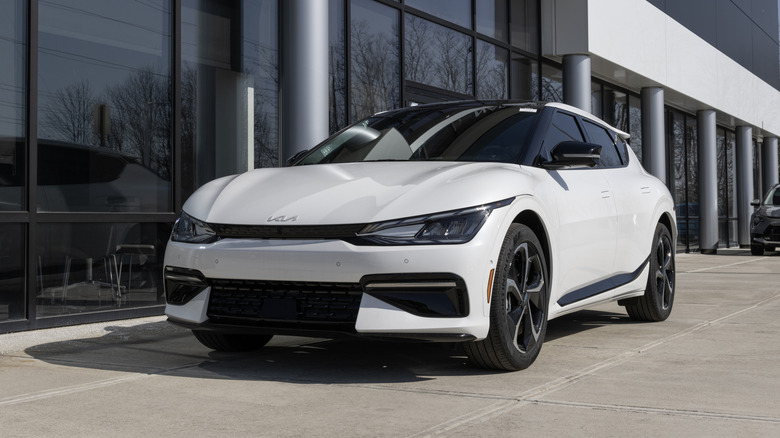
If the Ioniq 5 is the friendly face of Hyundai-Kia's EV push, the EV6 is the sporty one. Still, the two are close enough cousins that it should not be too surprising that they'd end up side-by-side on our list, though the EV6 gets the dubious honor of being the first to crack the ⅓ barrier, with a one-year depreciation of 33.3% for a total average loss in value of $18,081. Furthermore, the Korean automakers were hit particularly hard by the 2025 loss of the EV tax credit in the United States, and the RV6 has been no exception.
Kia has responded the way automakers always do: discounts, low-APR financing, and lease deals designed to keep factories busy. That's great for new-car shoppers in late 2025, but it means anyone who bought an EV6 a year ago is now competing against much cheaper new examples and a swelling wave of off-lease cars. Considering that used EV prices are going down while used car prices generally are on the rise (this list notwithstanding), the math isn't kind on this one. That said, if you're looking for a fun commuter car with an electric boost, the EV6 is well worth considering.
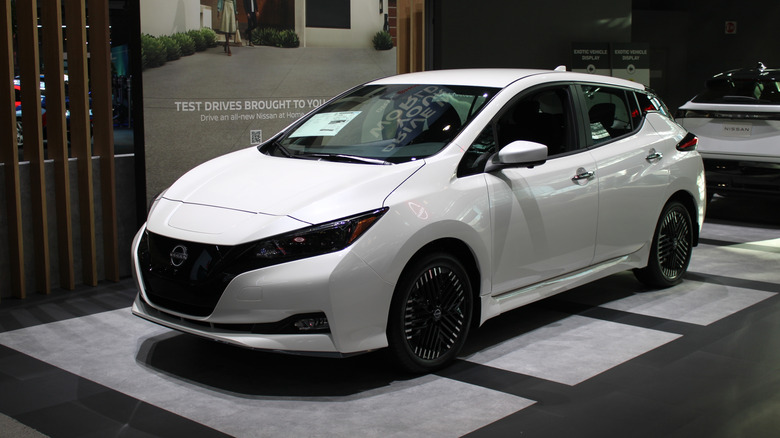
Nissan Leaf: -45.7% after one year
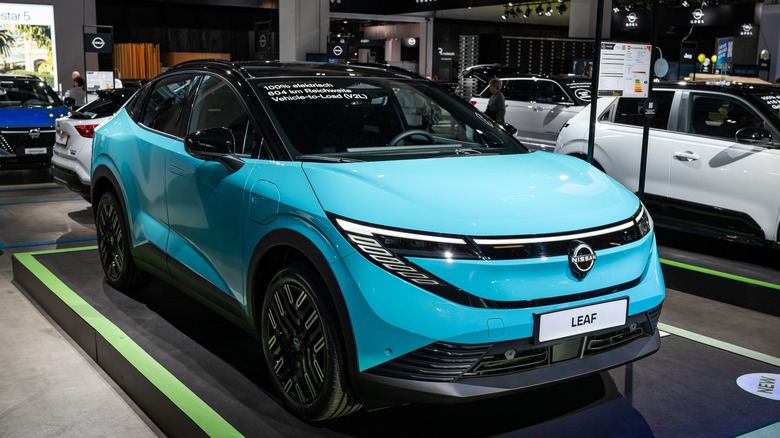
The Nissan Leaf, the charming electric pioneer that came on the scene back in 2010, has become a cautionary tale hidden somewhere in every "just get a deal on a cheap Leaf" car forum recommendation. And while the starting price might be the lowest on our list here, it sits among much pricier company in terms of its ability to set money on fire with the same abandon as your grandfather used to burn actual leaves. We're talking about a 45.7% one-year price gap, destroying almost $16,000 in automotive value in 12 months.
You might chalk it up to the cost of being a pioneer, though at this point most early Leaf innovations have been caught up with by competitors, with some early choices — like the CHAdeMO charging station that's currently being phased out – not getting traction in the long run. At the same time, the Leaf has always been priced as an affordable commuter, not a status symbol, so this kind of depreciation hit is understandably more than what many drivers will stomach for such a vehicle. When new-car incentives or dealer discounts creep up, used values have to move down to maintain the spread. For buyers, it's fantastic, with a genuinely usable EV being available for the price of a beater Civic.
For the original owners, however, that 45% plunge is the price of being a pioneer in a segment where technology and policy are both sprinting ahead. If you're not in the market for a used S-Class, the Leaf is among the fastest depreciating cars, so maybe this is more up your alley.
Mercedes-Benz EQS: -47.8% after one year
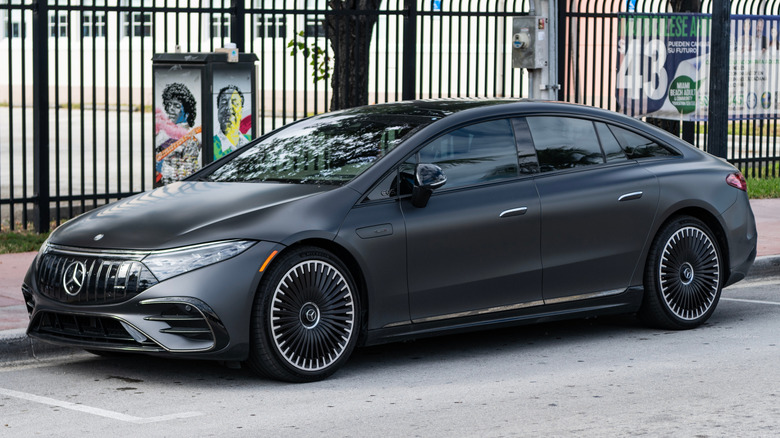
Now we're talking. It's as close as we're going to get to the 50% mark here (at least without cheating a little bit, as you'll see with our last entry). The Mercedes EQS exists at the intersection of catastrophically depreciating electric vehicles and catastrophically depreciating luxury vehicles, somehow combining the worst of both worlds into something that takes the obliteration of automotive equity and elevates it into an art form. We're talking about a $65,143 difference between the average new transaction and a one-year-old used car, meaning that not only could you buy a whole new car for that one-year depreciation cost, you could even buy a different electric Mercedes-Benz!
The EQS launched with six-figure pricing, controversial styling, and a cabin full of bleeding-edge software. As EV demand cooled and new competitors arrived, Mercedes leaned hard on incentives and cut prices again and again, essentially lowering the price floor for the entire lineup before pausing U.S. production completely. So while we were once shocked as we watched the Mercedes-Benz EQS lose nearly $58,000 of its value in two years, the market seems to have responded with "hold my beer" and done all that and more in just 132 months. It's a rare opportunity for a kind of wild buy on the used market.
As for how those who bought them new might cope with such an unprecedented financial catastrophe? If nothing else, they can be thankful that they didn't buy the last entry on our list.
Fisker Ocean: approximately-69% within months
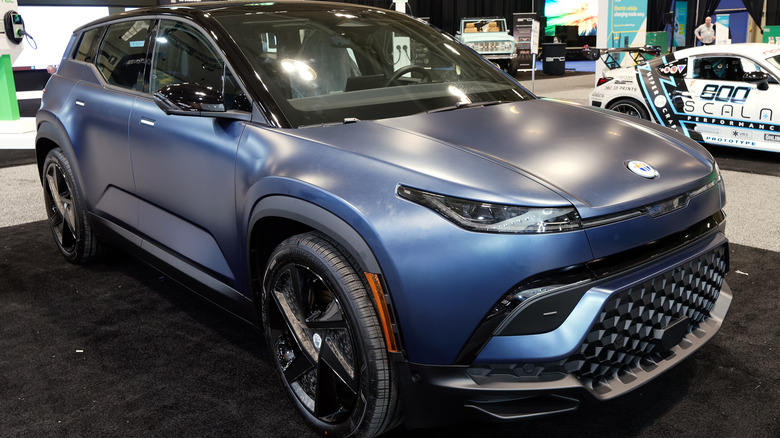
In the film "Brewster's Millions," Montgomery Brewster (Richard Pryor) needs to burn through an extraordinary amount of money in 30 days to earn a $300 million inheritance. If you set that story in the modern day, ignored some of the plot's very specific rules, and gave Brewster access to a Fisker dealership, the movie would be over in about 15 minutes. While every other car on this list depreciated more or less like a car, though perhaps to an advanced degree, the Fisker Ocean represents a true financial catastrophe for anyone unwise or unlucky enough to have taken delivery of one.
One reviewer paid about $69,000 for a new Ocean in January 2024, and then two months later had it appraised at just $21,000, a roughly 69% drop. Under regulatory scrutiny for braking issues, problems with shifting, and the occasional refusal to open its doors, Fisker filed for bankruptcy in mid-2024, leaving the future very unclear for Ocean owners for everything from warranty to service to parts.
With no way to be sure that every existing Ocean wasn't on the verge of being bricked like a stolen cell phone, values plummeted. So while cars like the Mercedes EQS may be a cautionary tale about buying a fancy EV too early, the Ocean is the story you tell to scare people away from betting on unproven startups with your actual retirement money. It didn't just turbocharge normal rates of depreciation; it transcended them to a perhaps unprecedented degree.