

F1 Releases A Flashy Video To Explain Its New 2026 Ruleset, Can't Wait For Teams To Find The Loopholes
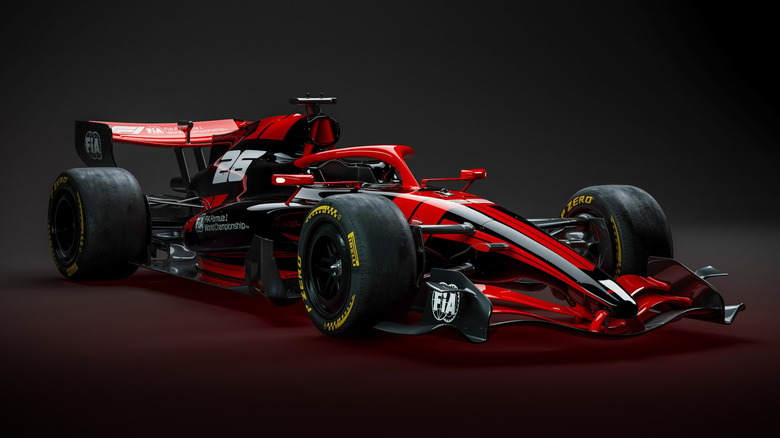
Formula 1 is introducing a new set of regulations next season. As with previous significant shifts in the rulebook, racing will play out slightly differently on track and there's a new dictionary of terminology that fans will need to be familiar with. Formula 1 released an explainer video on Wednesday to break down what's changing in 2026. While small and lighter cars are easy to grasp at a glance, the new active aerodynamics and power deployment rules are far denser topics to chew on.
Formula 1 and the @fia have today revealed the 2026 Technical Regulations.
2026 will see both the chassis and power units updated, in the biggest overhaul of regulations in the sport's history. These changes will shake up the order and create new excitement, while delivering... pic.twitter.com/zRxRl0sI4f
— F1 Media (@F1Media) December 17, 2025
First, the Drag Reduction System is gone. The movable rear-wing flap that has served as an overtaking aid since 2011 won't be used in F1 next season. Instead, every car will utilize active aerodynamics persistently during race weekends. Through movable front and rear wing elements, there will be two distinct aero profiles: Corner Mode and Straight Mode. Corner Mode is the standard, high-downforce profile. Drivers can activate Straight Mode to flatten their car's wing elements for higher top speeds. The low-drag profile can be activated on every lap in designated high-speed track sections, regardless of the car's position relative to other cars. The rulemakers hope that lengthening braking zones will improve overtaking.
F1's new power units will be simpler but not less powerful
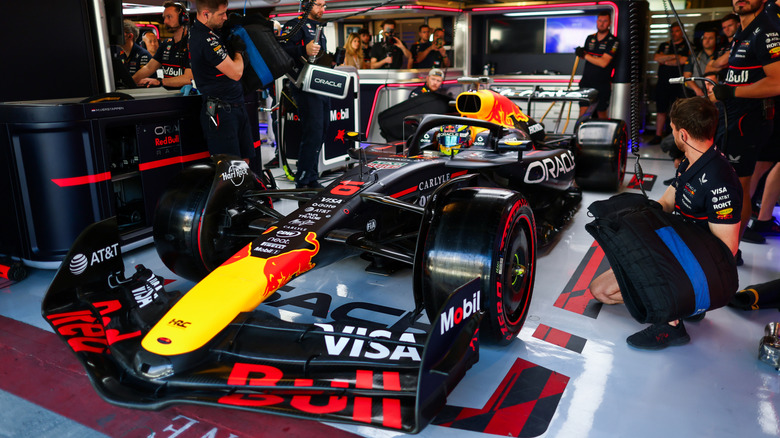
Besides the aerodynamic changes that we can see, there will also be new power units under the engine cover. The teams will still be using turbocharged 1.6-liter V6 engines. However, the accompanying hybrid system will be simpler but three times more powerful. Since 2014, F1 mandated the use of a dual-method hybrid system. The powertrain featured two Motor Generator Units (MGUs) that could harvest and deploy energy.
The MGU-K, for kinetic, is a conventional hybrid system linked to the crankshaft that harvests power under braking. The MGU-H, for heat, was a more complex device embedded within the turbocharger. Alongside the mechanical linkage between the exhaust turbine and the compressor, the MGU-H converted exhaust heat into electricity, which could be used to spool the compressor. The outgoing F1 power units were state-of-the-art in their capabilities, especially given that both MGUs were required to be linked to a single battery. The technical complexity led to astronomic development costs that the manufacturers no longer wanted to pay. The teams successfully lobbied to drop the MGU-H going forward.
With the 2026 power units, the world championship hoped to roughly split the power output 50-50 between combustion and electric power. The ICE will produce just shy of 540 horsepower, while the new MGU-K will generate around 470 horsepower. While the hybrid system might be simpler, energy management will still be vital.
More power at a cost
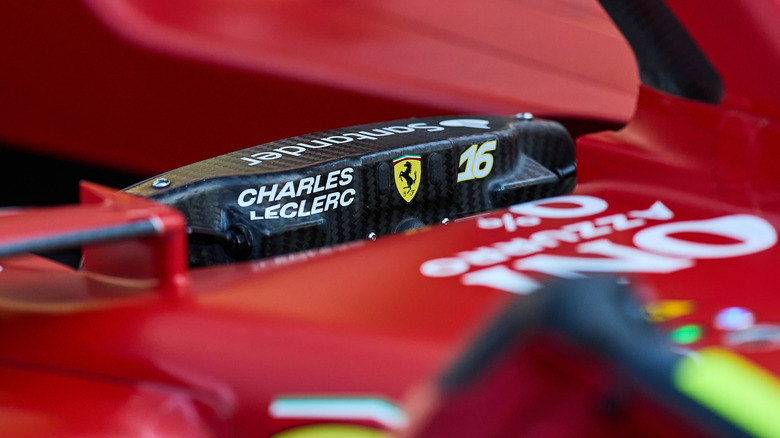
F1's new overtaking aid will be centered around the new beefier MGU-K. The 2026 regulations have formalized the existing button-press ECU override as "Boost Mode," so drivers can access their power unit's full 1,000+ hp output whenever they want. Drivers can use it to both attack and defend. However, it will drain their battery.
The passing advantage will come from the aptly-named "Overtake Mode." Drivers will be allowed to use an extra 0.5 megajoules of energy if they are within a second of the car ahead. The system will be activated at a designated point on the track, similar to DRS, but it will remain active for the entire lap. Rulemakers believe that cars will derate at speeds over 180 miles per hour to conserve energy over a lap. The additional energy will mean that a car could run at full power for longer down straights, using the derate as an opportunity to overtake. In short, a car in "Overtake Mode" will be able to launch a more sustained attack during that lap.
With these changes, along with smaller and lighter cars, there's plenty to be excited for ahead of the 2026 F1 season. Not to mention, Cadillac is joining as an 11th team. The American team will be using a Ferrari power unit as the automaker develops its own engine, but you don't have to look far for a new badge on an engine cover. Audi has taken over Sauber and is ready to race its own turbo-hybrid V6. It's hard to believe that testing is just over a month away.