

Cat-Back Vs. Axle-Back Exhaust Systems: What's The Difference?
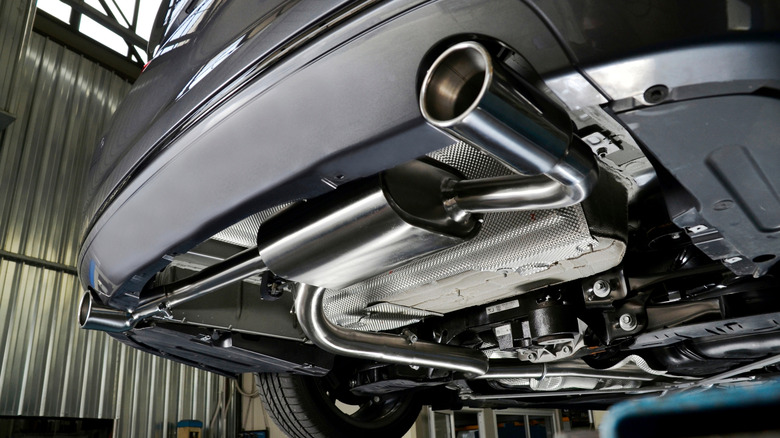
You're looking to add a bit of performance to your vehicle and have decided to switch to an aftermarket exhaust, but the sheer number of terms being thrown around can be confusing. Two you've likely come across are axle-back and cat-back exhausts, both of which modify your car's stock exhaust system. The two names are largely self-explanatory: cat-back exhausts replace the stock exhaust system from the catalytic converter to the tailpipe, while axle-back systems replace only the section from the rear axle on back.
An aftermarket cat-back system improves throttle response, offers power gains, and produces a deeper, sportier exhaust note. Cat-back systems usually feature a larger-diameter mid-pipe to improve the flow of exhaust gases from the catalytic converter. While installing a cat-back system typically requires a few tools and access to a lift, most cat-backs don't need a tune to hit maximum performance. Cat-back exhausts typically add between 5 and 15 horsepower, depending on engine size, and can also reduce weight. Jason Fenske of Engineering Explained demonstrated this by showing that his titanium exhaust weighed roughly one-third as much as the stock system. Titanium also has the benefit of being rust-resistant.
An axle-back system, meanwhile, is largely more show than go. It enhances a vehicle's exhaust note — usually a deep tone — but offers little to no measurable performance improvement, with gains ranging from 1 to 5 horsepower, depending on engine output. An axle-back exhaust, however, is likely to be cheaper than a cat-back system, with the latter typically costing around 1½ times as much.
Are these aftermarket exhaust systems legal?
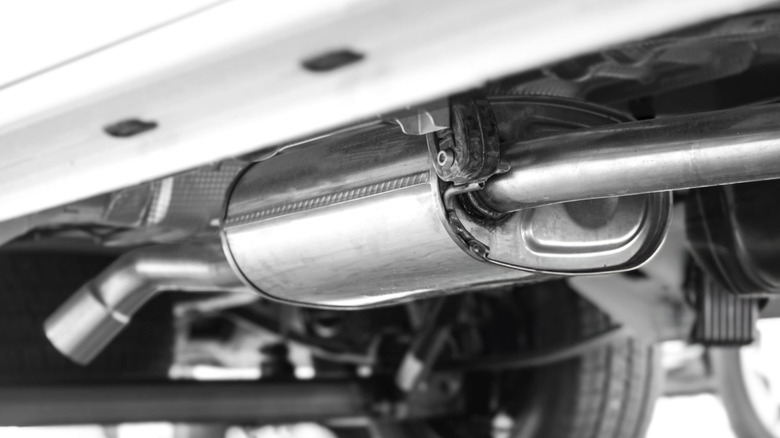
The one question many have before switching to aftermarket exhausts is whether they're legal in all states. Exhaust manufacturers like MagnaFlow argue that axle-back and cat-back exhaust systems won't affect how emissions are measured, as they do not modify the catalytic converter or other emission-control devices.
Before buying an aftermarket exhaust, though, verify whether the part has a CARB EO number, as it indicates that the product has been evaluated by the California Air Resources Board and found to comply with California's strict emissions requirements, which also have been adopted by 16 other states. Using a CARB-approved product ensures that the vehicle can pass inspections and is deemed legal for street use, though the federal government has been trying hard to undo these standards.
Even if they meet emissions requirements, aftermarket exhausts can still fail sound tests, as several states strictly enforce vehicle noise limits, with California, for example, setting a maximum of 95 decibels. An exhaust that doesn't comply with California's sound laws could cost you a fine of $1,000 in that state, and bring criminal charges, too. A few supercar owners have also been heavily fined in states like New York, even while using stock exhausts, which means you could become a prime target in the eyes of the law if you have an aftermarket system.
Aftermarket exhausts can make your car sound and look better, and sometimes provide a small boost in power. But it's important to keep your state's sound and emissions regulations in mind before adding one.