

Why Diesel Fuel Gels In The Cold, But Gas Doesn't
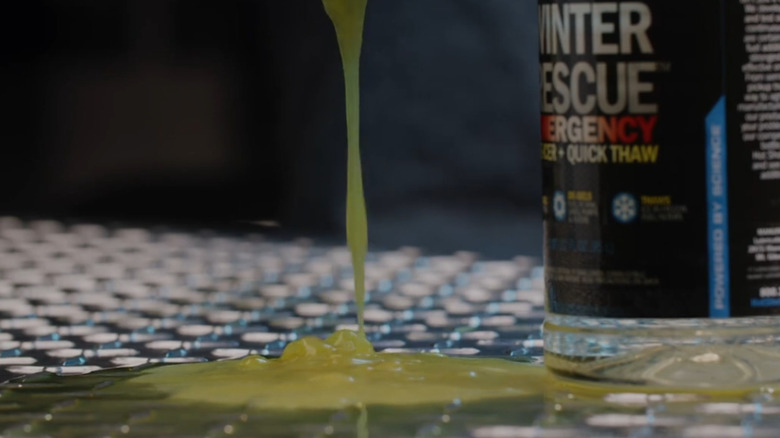
Diesel engines are famous for reliability, longevity, and torque — until winter shows up and reminds them that chemistry still applies. Diesel fuel, which is pricey nowadays, behaves differently in the cold. When temperatures drop far enough, it can turn from a free-flowing liquid into something closer to a milkshake.
The paraffin wax inside diesel fuel is the cause of this change. As temperatures fall, wax crystals begin to form in a process known as clouding. At somewhere between 10 degrees Fahrenheit and 15 degrees Fahrenheit depending on fuel blend, those crystals grow large enough to clog fuel filters and restrict flow. This is what causes diesel to take the form of gel, starving your engine. Fuel injectors can't get a steady supply of diesel, pumps get strained, and combustion becomes inconsistent or stops altogether. That's why symptoms often include hard starting, rough idling, a loss of power, or a complete stall. Gelling can even happen while driving since the fuel tank is a bit far from the engine's heating.
Gasoline doesn't suffer this fate because it doesn't contain paraffin wax. It instead uses lighter hydrocarbons, remaining fluid at much lower temperatures. Although gasoline can freeze under extreme conditions (around -40 degrees Fahrenheit to -200 degrees Fahrenheit), it doesn't crystallize in a way that blocks fuel systems. Diesel fuel is less forgiving when cold weather shows up uninvited, and using it could lead to one of the worst winter driving experiences of your life.
How to un-gel diesel fuel and prevent it next time
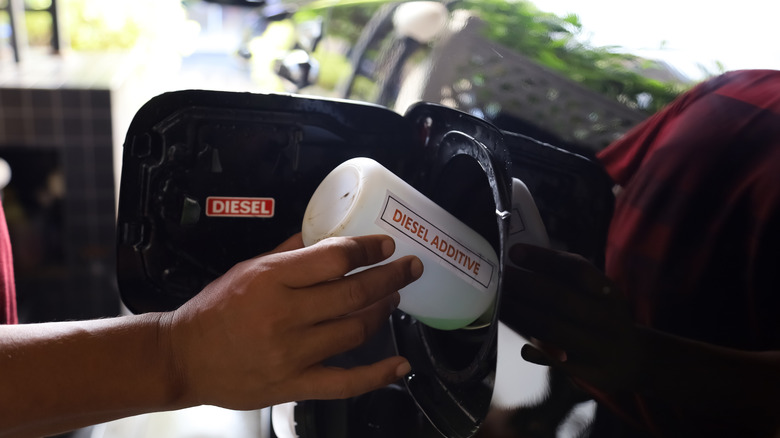
If your diesel has already gelled, the fix is straightforward — but not instant. Check the fuel tank and fuel filter to confirm presence of cloudy oil. If that's what you see, there's a big chance the filter could be clogged. The fuel system needs warmth, so it's wise to move the vehicle into a heated space like your garage. You could also apply external heat from something like an engine block heater to warm the engine and fuel system. Once temperatures rise, the wax crystals should dissolve back into liquid fuel. Depending on how cold it got and how gelled the system is, this process could take a few hours. You want the help a de-gel treatment designed to re-liquefy wax and clear filters. Also watch out for diesel fuel icing, which mimics gelling symptoms and creates its own cold-weather problems.
Regardless, it's better to avoid gelled fuel outright. Use winter-blend diesel — preferably a 70/30 blend (70% diesel #2 and 30% diesel #1) – when temperatures drop. Add anti-gel additives like cold flow improver, as they will help fuel flow smoothly through the filter even when it's cold enough to gel. And keep your tank relatively full to reduce condensation. You could also use kerosene for diluting the diesel engine and the wax.
Diesel doesn't "fail" in winter. It just has some problematic behavior in the cold. Plan ahead, or those low temperatures will ruin your diesel engine.