

Why The B-52 Bomber Uses Eight Engines Instead Of Four
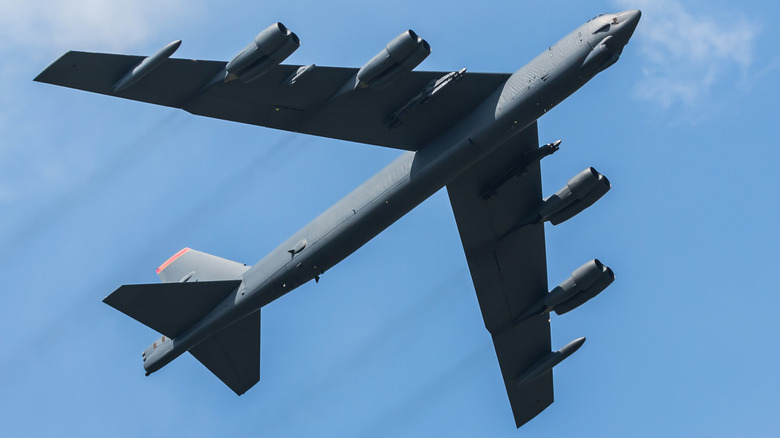
The B-52 Stratofortress carries eight engines for one simple reason: the technology of the 1940s, when it was designed, wasn't capable of powering it with anything less. Engineers didn't have much choice but to group eight of these early Pratt & Whitney J57s together in the plane's signature twin-pod configuration to achieve the massive thrust necessary to hoist a fully loaded bomber up to the high altitudes needed.
With modern technology, if the same plane were designed from scratch, it would require no more than four engines, much like what we see in the C-17 Globemaster or the B-1 Lancer or even the twin-engine design of America's next stealth bomber, the B-21. However, the B-52 is a relic of an earlier technological era.
This defining silhouette was not part of some sort of long-term master plan, but rather the result of a frantic weekend redesign spurred by a crisis in a Dayton, Ohio hotel room. Boeing's first conceptions, the Models 462 and 464, used huge Wright XT-35 turboprops rather than pure jets. The gas turbines were highly complex, though, and engineers were convinced that their propellers would lose efficiency at high speeds. Things came to a head in October, 1948 when Col. Henry "Pete" Warden of the Air Materiel Command urged Boeing engineers to once and for all drop the failing turboprop configuration. The team reworked the airframe over that single weekend, returning with Model 464-49, which finally paired the swept-wing design with the eight-engine turbojet layout we see today.
The engineering challenges of reducing the engine count
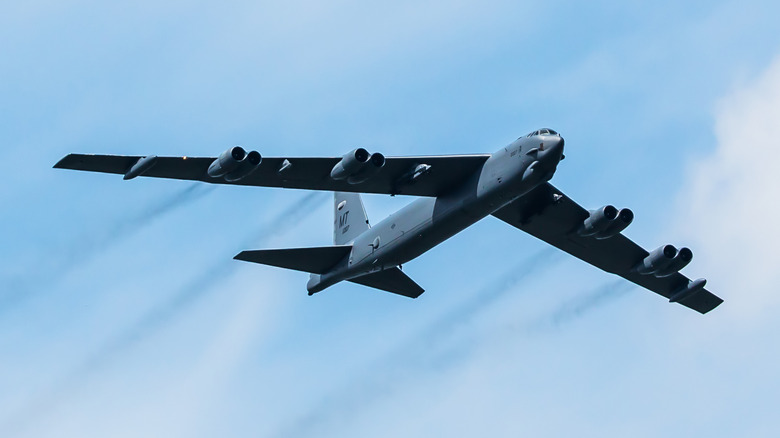
The Air Force has tried several times over the years to re-engine the B-52 with four high-bypass turbofans, similar to what one would find on commercial airliners. Proposals in 1969, 1980, and even a joint Boeing and Rolls-Royce pitch in 1996 aimed at the modernization of the bomber with drastically fewer engines. These proposals were continuously turned down because the switch would drive a snowball of engineering problems that outweigh any potential benefits.
There's the B-52's existing airframe, specifically the shorter tail fins and rudders on today's G and H models, which just can't handle the physics of a four-engine setup. The four-engine arrangement could create dangerous asymmetric thrust if one of four large engines were to flame out — the resultant yaw or twist could violently pull the nose toward the dead engine and make it impossible for a pilot to control the plane. The pilot would have to stomp on the rudder to keep the plane flying straight, but the current rudder doesn't have the surface area to fight that kind of drag.
So the plane would have to have major redesigns in the wings, cockpit, and engine struts, owing to different weight distribution and drag profiles. It would open a Pandora's box of structural risks and delays that the Air Force just isn't willing to touch.
Why eight engines still make sense today
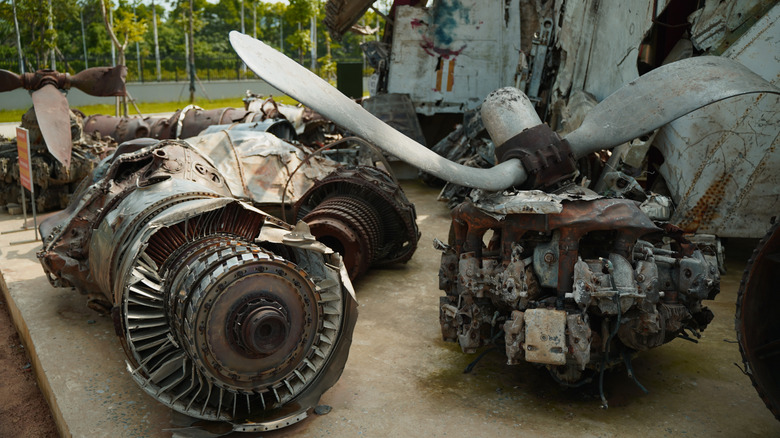
This commitment to the legacy eight-engine configuration birthed the massive Commercial Engine Replacement Program, which will keep the B-52 flying alongside the next-generation B-21 Raider into the 2050s. In 2021, Rolls-Royce secured a $2.6-billion contract to replace the aged-out Pratt & Whitney TF33 engines with 650 F130 engines, a militarized BR725, on a one-for-one basis, preserving the eight-engine layout.
That replacement is not to boost the airplane's speed but to provide 30% better fuel efficiency and considerably cut maintenance needs. And the engineers aren't just guessing whether all of it will fit in. Boeing and Rolls-Royce are using "digital twins" — exact 3D models of the aircraft — to identify problems such as mismatched hydraulic lines or electrical disconnects before they ever touch a real plane.
The Boeing B-52 still retains its eight engines because replacing them would amount to breaking the very advantages that have kept it flying. By upgrading the propulsion system without changing its basic airframe architecture, the Air Force has made a wise decision that will help in keeping its oldest jet in the skies until it's 100 years old.