

Why This Vintage Fix For Sun Glare Still Divides Classic Car Fans
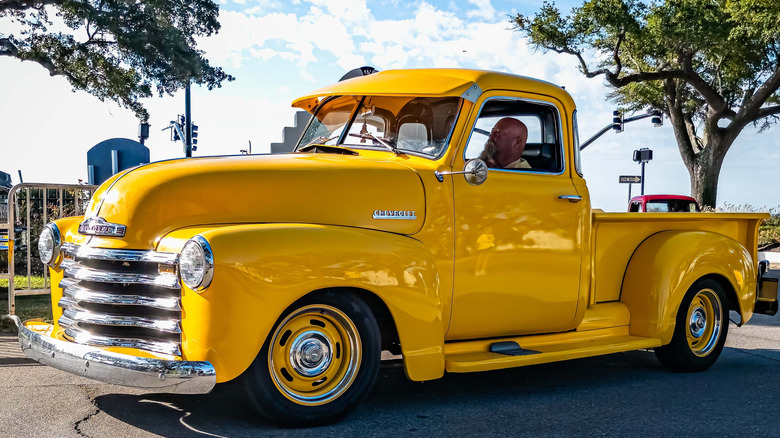
Vintage and classic cars aren't the most practical of choices in the modern world. They don't pack clever safety systems, nor do they sport the same kinds of creature comforts and technical advancements that many of us now consider must-haves. But for all of their weaknesses, they sure do look cool. Classic cars somehow managed to make art out of anything, be it an Art Deco door handle, a flowing chrome grille, or an external metal sun visor. The latter is our focus here, and while once popular, it's a classic car accessory that's now been largely forgotten.
Modern cars obviously still have sun visors, little flip-down fabric covered ones that fit into the headlining just above and in front of us, but wind back the years, and sun visors were very different indeed. The sun visor originated over 100 years ago, when the Ford Model T was still selling in showrooms. It was during these early days of mass car production that automakers and consumers alike began thinking not only about how cars work and how to produce them efficiently, but also how they could also be made more practical.
Sun visors seemed like a logical addition to the car recipe. However, rather than being mounted as they are in modern times, the original sun visor was a windscreen-wide piece that sat on the outside of the car. As the decades progressed, so did the visor, with some models then adorning huge metal external visors. Here's the thing: these old-school visors now divide the opinions of enthusiasts. Some love them and will pay handsomely to equip one to their classic, whereas others believe they are one of the dumbest automotive accessories out there and serve only to detract from the car's overall appearance.
Not all sun visors are dividing opinions

Classic car fans don't have an issue with the concept of sun visors per se; it's surely a universally good thing to be able to shield our eyes when driving. But it's those add-on external visors — which really boomed in popularity during the 1940s and 1950s – that are splitting classic enthusiasts down the middle.
The earlier designs, such as those you might see on the Ford Model T, were factory fitted. Typically, they would be situated just above the windscreen, providing not only a shield from the sun's glare but also protection from the rain. Windshield wipers were a little lackluster back then, so having a fold-out visor like that was of some benefit in a downpour, keeping at least some water from pouring over the screen.
However, by the time the 1950s rolled around, passenger cars and trucks already had drop-down sun visors — the type we use today. So why use the external add-on types? They are unnecessary, and in the view of some enthusiasts, they simply don't make sense. These folks aren't alone, as external sun visors fell out of fashion fairly quickly — you certainly don't see them affixed to many '60s and '70s cars, for example — suggesting they have been a controversial addition for some time.
External sun visors and why they're controversial

Part of the problem is that some enthusiasts just don't like the way these visors look, which is fair enough. Style has always been a subjective thing, and many classic car owners simply want their car or truck to look as the designers originally intended and not be adorned with huge external visors that might ruin the original lines of the vehicle.
Another reason why they might not be all that popular has to do with their efficiency at speed. While there's little in the way of wind tunnel evidence, these additions may disrupt a car's aerodynamics, creating a large area in which air can get trapped when driving. This extra drag is fine for standard cars and trucks, but if you think your car deserves a cool restomod or want to swap in an LS engine, then maybe reconsider adding a visor altogether, as the forces will only increase with speed.
You could also make a simple modification, like one classic Chevy truck owner on Facebook who wanted the sun visor look, but didn't want to risk causing damage when driving at higher speeds. So his answer was simply to louver the visor, allowing for air to escape when under pressure. This way, not only are the pressures reduced, but the visor still fulfils its intended purpose of keeping the bright sun at bay.
Finally, visors not only block the sun, but they also block part of your vision up-high. This could obstruct your view of traffic lights, but there is a solution for this as well: traffic light finders use a prism which reflects the traffic light signals as they change, clearly showing the lights to drivers when visors obstruct the view.
External sun visors in the classic car community today
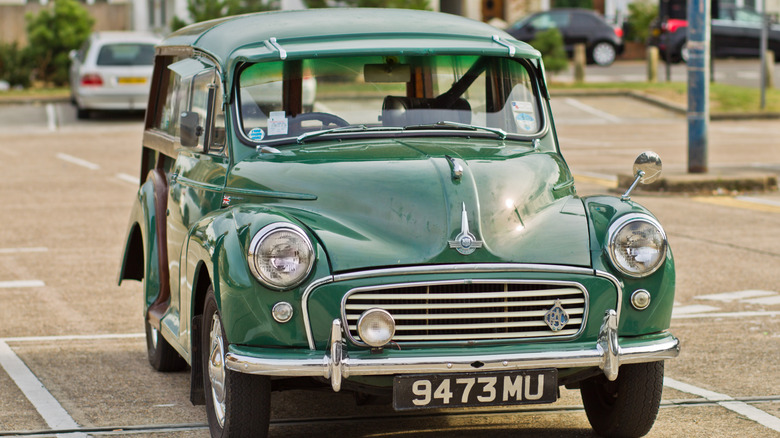
Not everyone likes their classic cars the same way. Many enthusiasts want everything to be as it was when it left the factory; others prefer creating a restomod or rat-rod, while some just want to create something that simply transports them back to that era. The latter are the ones most likely to use period add-ons like an external sun visor, although smaller groups in the classic car community — such as lowrider owners – love them too.
It's worth noting that not all external sun visors are created the same. Popular choices include the Fulton three-piece sun visor, which is relatively easy to install and has the benefit of being adjustable. However, some external sun visors may take a lot of fiddling to fit right, as you might expect of any generic-fit or custom-made aftermarket accessory.
If adding one to your ride sounds interesting, then the good news is that they aren't terribly expensive. Reproduction items can be found fairly easily for around $500. Just remember that you will also need to factor it painting and fitment too, if you don't fancy tackling it yourself. Plus, there is no need to be craning your neck at the lights, as those traffic light finders are still available.
External sun visors might not be to everyone's taste, and you might find particularly grumbly classic car enthusiasts questioning your choice at shows. However, when it comes to achieving that perfect '40s and '50s look, the external sun visor is pretty much a must-have — unlike some old school car accessories.