

Why GM Stopped Making Brand-Specific V8 Engines
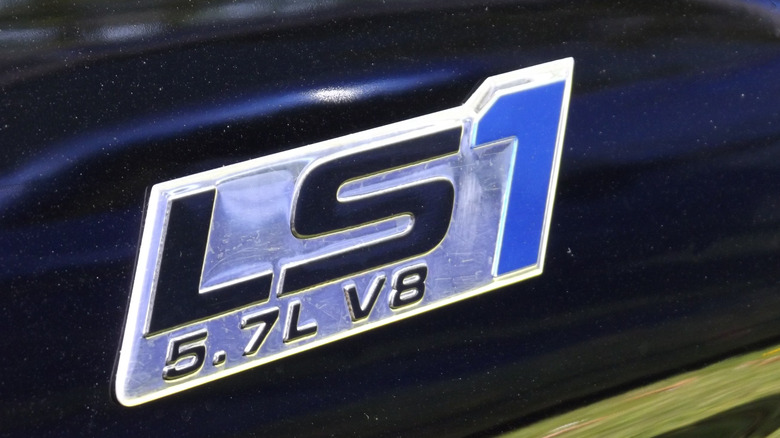
You probably suspect the disappearance of division-exclusive V8s has something to do with General Motor's diminishing market share over the decades, and yes, that is a factor. In 1963, GM had over 50% of the American car market locked in while Ford and Chrysler duked it out in the corner for second place, according to the American Enterprise Institute. Checker and Amphicar sat nearby enjoying the show. American Motors Corporation (AMC) and Studebaker were passed out on the floor.
Then, in 1970, GM's market share dropped to 40%, fluctuating throughout the '70s, but never hit 50% again. In 1986, it fell below 40%, then below 30% in 1998, and finally below 20% in 2010. Now, Carvana's value is higher than GM's. But boiling it down to "GM didn't have as much money to develop engines as it used to" ignores other factors. The starting point may have been 1970, when emissions regulations and insurance costs started to strangle high-po V8s. The exotic V8s that divisions were prototyping went "poof," including Pontiac's overhead-cam V8s and Oldsmobile's 32-valve pushrod W-43 455.
Power and compression dropped in the big V8s and smaller engines started to take over. By the time GM reined in all the division-specific V8s in the late 1970s, there were literally a dozen engines in varying configurations being produced. Developing and producing these engines cost plenty of money, as the vibrating Chevrolet 2300 leak factory and mediocre yet unkillable Pontiac Iron Duke didn't pop into existence out of thin air. On top of that, GM vehicles were selling like gangbusters, with market share back up to 46% in 1976. Wait, that last item sounds like good news, right? Well, keeping up with demand put a strain on engine production, resulting in a class-action lawsuit (more on that shortly).
The GM V8 golden years become the rusted sheet metal years
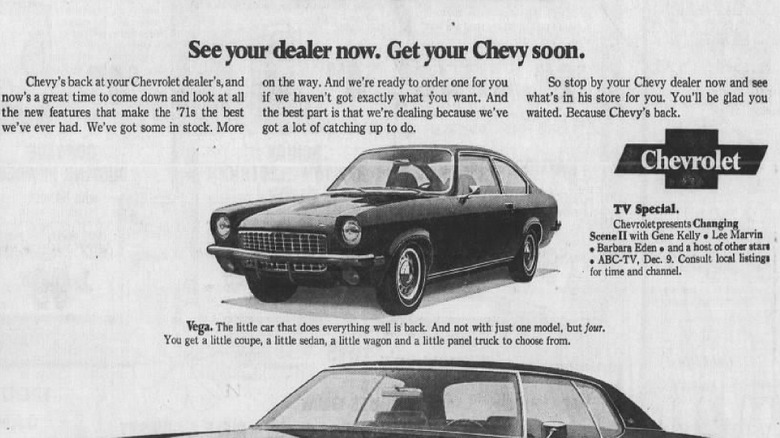
Economies of scale were in GM's favor in the late '50s and early '60s when the number of engines was small, helping spread out those development dollars. In 1959, Chevrolet made three engines: the inline-six, the small-block V8, and the W-series big-block V8, and these were disseminated among 1.4 million cars. In 1976, Chevy sold 2.1 million cars, but was also making nine different engines. That's too many engines using up development and manufacturing resources. GM took a long, hard look at all the V8s its divisions were producing, and began to sober up to the reality that there was a lot of overlap.
So, in the late '70s, the Pontiac/Buick/Oldsmobile 455 V8 engines got axed, the Cadillac 500 went to the dumpster, Pontiac's 400 rode off into the sunset, and the Chevy 400 small block was dropped off at a farm where it was very happy. These engines were getting harder to certify for ever-tightening emissions regulations, too. Slowly but surely, the unique division V8s were quietly snuffed until all that was left in the '90s were Chevy small blocks in a few select displacements, Chevy big blocks mostly in 454-form, and whatever V8s Cadillac felt like making in the moment, including the meh-inducing HT 4.9 and frustratingly un-durable Northstar V8s.
Another touchstone moment that led to widespread brand blandening was the Oldsmobile/Chevy 350 debacle. In March 1977, Chicagoan Joseph Siwek took his recently-purchased Oldsmobile Delta 88 in for service, only to have his mechanic tell him that the car's engine was a Chevy 350, not a 350 Oldsmobile Rocket V8. Marketing materials advertised that the car was available with a 350 V8, but conveniently didn't say which one.
From V8 hierarchy to V8 conformity
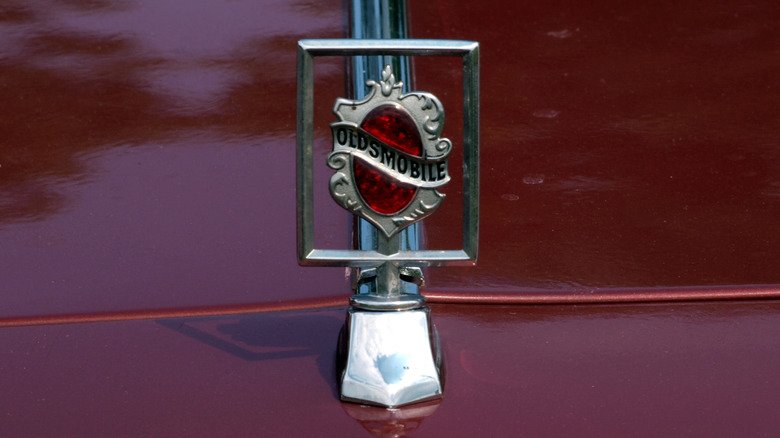
Let's unpack this comedy of errors. Oldsmobiles sales exceeded a million in 1977, and the Lansing engine plant couldn't keep up with demand. So, Oldsmobile V8s were set aside for California cars where they were certified for that state's emissions (they also went into cars sold in high-altitude states), and 49-state-approved Chevy 350s could slot in everywhere else. Yes, Chevy 350s and Oldsmobile 350s are that different, but not different enough that GM couldn't paint all its V8s blue in 1977 so it wouldn't be visually obvious.
Unless you happened to notice the L34 Olds V8 or the LM1 Chevy V8 were on your order sheet, you'd be none the wiser. Well, at least until your mechanic noticed that your new Olds fan belt and oil filter didn't fit your Chevrolet engine. A class action lawsuit followed. GM fessed up and changed its advertising to reflect the source of each engine, then paid back $550 to Oldsmobile owners who bought a car with a Chevy 350 before the advertisement update.
Once the cat was out of the bag that brand-specific powertrains were gone, why continue making bespoke V8s, especially V8s like Cadillac's 500 and Pontiac's 400 that had difficulty meeting emissions regulations and made little power? So, GM became like a kindergarten class; everyone had to play nice and start sharing.
But GM got itself into this situation. By promoting brand hierarchy, the expectation from buyers was that each division was mostly unique. Pontiac emphasized excitement, Cadillac represented luxury, Chevrolet was the volume brand, etc. As market share dwindled with increased competition, emissions regulations forced more compliance, and new engines of varying layouts required development dollars, allowing each division to pour money into unique V8s had to stop.