

Every Brand Inside The Renault–Nissan–Mitsubishi Alliance
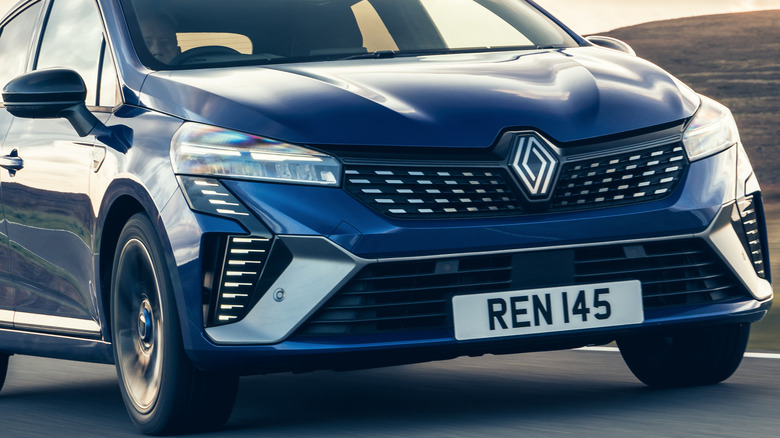
The brain child of auto exec Carlos Ghosn — possibly better remembered for his guitar-case escape from Japan — the Renault-Nissan-Mitsubishi Alliance began its life in 1999 when French automaker Renault, under Ghosn's leadership, helped bail out the Japanese company Nissan. Of course, automotive mergers weren't all that rare in the 1990s. Ford was buying up brands like Jaguar and Volvo, Volkswagen snapped up Rolls-Royce and Bentley, and Daimler and Chrysler had their infamous merger of equals during this decade, for example.
But what made the Alliance different was that it was an alliance, not a merger or acquisition — Renault and Nissan continued to operate as separate companies, with each having ownership shares in the other. This was slightly complicated by the fact that France, in turn, had — and continues to have — a significant ownership stake in Renault. Also, a "joint management structure" for the Alliance was put in place in 2021.
Anyways, Nissan would go on to purchase a controlling interest in Mitsubishi Motors in 2016, which also allowed the latter company to join the Alliance, and the result was one of the world's top-selling automotive groups of that year, backed by some 10 million deliveries. Through September 2025, the Alliance remained in fourth place globally for sales, trailing only the Toyota Group, the Volkswagen Group, and Hyundai-Kia, per data compiled by Focus2Move. Helping matters are the combined sales of eight brands: the Renault Group's Renault, Dacia, Alpine, and Mobilize; Nissan and its lux division, Infiniti; and Mitsubishi.
Mitsubishi
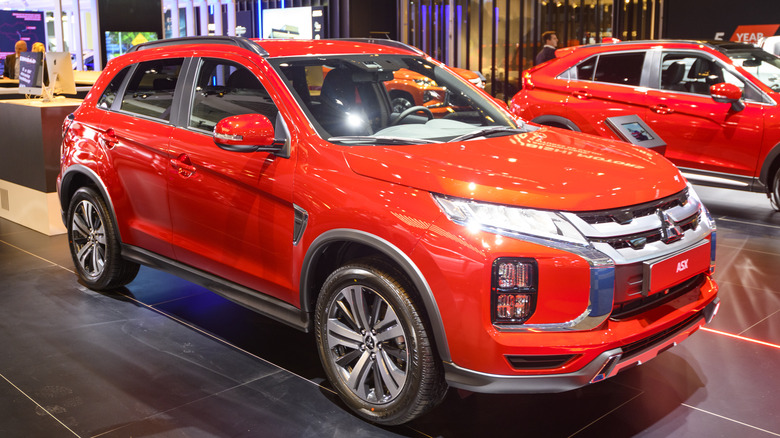
Mitsubishi was founded in 1870 as a shipping company, taking its name from the Japanese words behind its three-diamond emblem; "mitsu" is Japanese for three, and "bishi" here refers to water chestnuts — which reflected a sort of Japanese nickname for the diamond shape. The mark itself was derived from the family crests of the company founder — Yataro Iwasaki — and his first employer.
As an automaker, Mitsubishi was responsible for key Japanese firsts, including by some accounts, the country's first mass-produced car: the 1917 Model A, with a 22-car production run. The first Mitsubishi sold in America was the rebadged 1971 Dodge Colt, while the brand name launched in 1982 with the Mitsubishi Cordia, Starion, and Tredia. It's also worth noting that the Mitsubishi Galant GS and 3000GT VR-4 were named Motor Trend's Import Cars of the Year for 1989 and 1991, respectively.
More recently — and perhaps building off of past success with the rally-inspired Lancer Evolution and the world's first modern mass-production EV, the MiEV — Mitsubishi has carved out a nice niche with the Outlander PHEV, an affordable plug-in hybrid that shared the Green Car Journal's 2026 Family Green Car of the Year Award with the regular Outlander. The Outlander PHEV is also helping out another Alliance member through an old-school rebadge for the 2026 Nissan Rogue.
Nissan
With all apologies to the previously mentioned Mitsubishi Model A, many other experts point to the 1937 Datsun Type 15 as Japan's first mass-produced automobile — since thousands were built on a modern-style assembly line while the 22 1917 Mitsubishis were built by hand. Now, to get to Nissan, we actually have to go back and forth a bit in time from the late 1930s. The automaker currently known as Nissan has roots in the Kwaishinsha Motor Car Works, which was founded in Japan in 1911. The company's first car was the DAT Model 41, and after a variety of ownership and name changes, Nissan — shortened from the Nihon Sangyo Co., which had ended up the sole investor in the company at the time — first appeared in 1934.
That said, many readers may recall that Nissan relied on the Datsun brand for its U.S. products right up until the 1980s, turning out the occasional icon like the 240Z sportscar. Nissan additionally revived Datsun as a low-cost global brand that sold cars from 2014 to 2022.
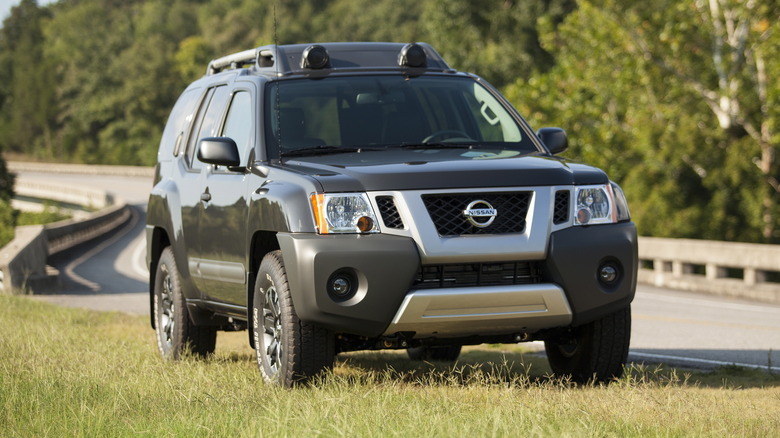
Nor have the years after that been kind to Nissan. The automaker has gone from battling Toyota for the title of best-selling car in the country — and, some months, winning — to fully acknowledging that Carlos Ghosn's legacy is dead as it sells off its Japanese headquarters. But hey, the Nissan Xterra is finally coming back, so a Nissan comeback wouldn't be out of the question.
Infiniti
To be clear, the "bubble" in Japan's Bubble Era of the late 1980s was of the financial variety, and it burst with a bang that led to years of economic difficulties. But for a while there, it inspired an impressive expansion of the Japanese auto industry that saw all of the country's Big Three launch their own dedicated luxury divisions. Honda debuted Acura in 1986, Toyota followed with Lexus in 1989, and Nissan introduced Infiniti in 1989 with the Q45 sedan and M30 sport coupe.
During its early years, Infiniti developed a modest reputation as a credible alternative to some premium German brands, thanks to the likes of the G35 — Motor Trend's Car of the Year in 2003 — and the contemporary FX that we said was the perfect performance SUV. Infiniti's fortunes followed those of Nissan's in many ways, however, and that's meant Nissan's current financial woes have left Infiniti a shell of its former self.
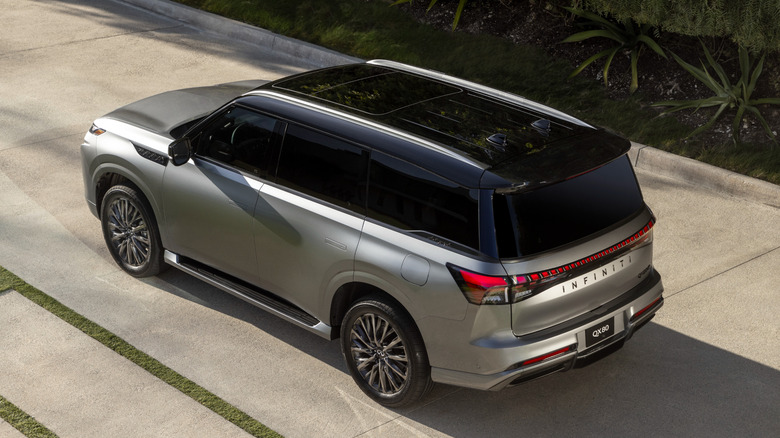
Take a peek at the retail website today, and you'll see the 2024 Q5, the QX50 and QX55 that are ending production after 2025 — although they're selling so slowly dealers may not notice — and a pair of 2026 models, the QX60 and QX80. The good news? The latter body-on-frame SUV gets a twin-turbo V6 and a big tech boost for 2025.
Renault
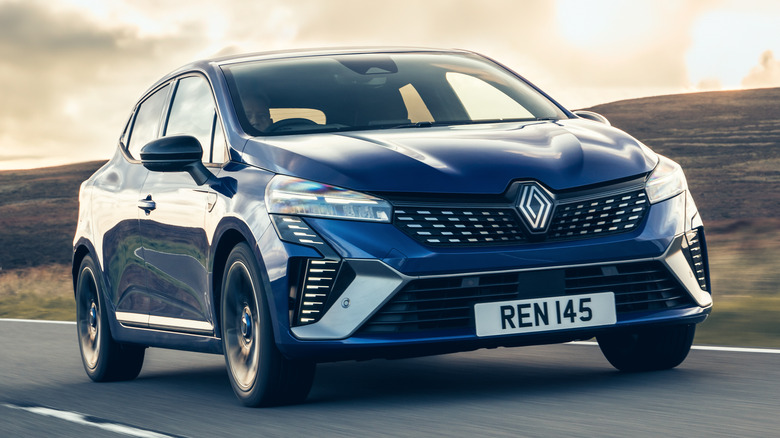
The mainstay of the Alliance, Renault, has sold cars — and Le Cars — in the U.S. in the past, and it had an ownership stake in AMC from 1979 to 1987. That means Renault is on our list of every company that's owned Jeep, too. But even now, when it's partnering with a Chinese automaker to build cars in Brazil, Renault remains close to its European roots.
Louis Renault built and took orders for his first car in 1898, and with his brothers Marcel and Fernand, he founded the Renault company in Paris in 1899. It originally catered to upper-class performance enthusiasts, but began garnering a wider audience when the Renault AG1 became a common choice for Paris taxi drivers beginning in 1905. Many were then pressed into military service in World War I to help transport soldiers to the Battle of the Marne and beat back the Nazis.
Turning to the 21st century, Renault was the fifth-best-selling brand in Europe last year, and it remains in the same spot through October of this year. The Renault Clio provided much of that momentum, as it was No. 2 on the European sales leaderboard for 2024; Renault is now launching the sixth-generation model and hoping for the Clio's third title as European Car of the Year — having won previously in 1991 and 2006.
The rest of the Renault Group
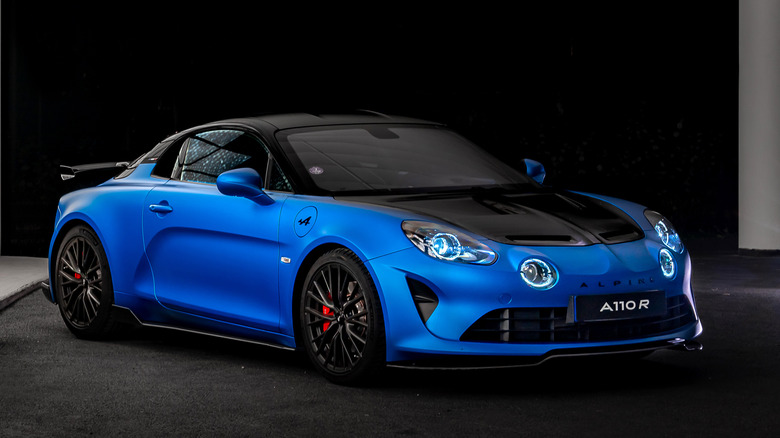
Beyond its namesake brand, the Renault Group owns three other companies that have made even less of an impact on U.S. shores — but not always for lack of trying. The Group's Alpine sports car brand, founded as an independent automaker by friend-of-Renault Jean Rédélé in 1955, then purchased by Renault in 1973, had been planning on bringing its now all-electric lineup to America by 2027. Sadly, Trump's tariffs have made a mess of those plans, likely locking us out from getting the A290 hot hatch anytime soon.
The Group's low-cost brand, Dacia, was the idea of Nicolae Ceausescu, the longtime dictator of Romania, who, before being overthrown and executed in 1989, had decided that Romanians needed their own car brand to provide cheap, cheerful transport for regular people — even if it started by producing rebadged Renaults. Affordability became a tradition for Dacia that continued even after Renault took a controlling stake in the company in 1999. Today, its low-cost Sandero has led Europe's monthly sales charts five times so far this year, meaning it's right on pace for its second straight year as the best-selling vehicle in all of Europe.
Lastly, the Renault Group has a brand that — while it may sell vehicles — was actually founded to reduce personal vehicle ownership. That brand is called Mobilize and will, in theory, create a full ecosystem of products and services aimed at getting people to give up their own cars in favor of on-demand transportation from shared vehicles — like the city-sized Mobilize Duo EV. You can expect Mobilize in the U.S. right around the time, as the French would say, "quand les poules auront des dents" — when chickens have teeth.