

How To Store Tires Long Term Without Ruining Them

We may receive a commission on purchases made from links.
Whether you're storing your car's all-season tires after upgrading to the best winter rubber, or have a set of grippier performance tires for the next track day in the spring, the best way to store tires long-term without ruining them boils down to two factors: where you store them and the method you use.
Regardless of the season, it's best not to store tires outdoors. You shouldn't store them in places that get excessively hot or are exposed to direct sunlight, either. That means you also need to avoid locations with heat sources like generators, water heaters, furnaces, battery chargers, or welding equipment.
Ideally, tires should be cleaned, individually wrapped, and stored in a cool, dry area with low humidity or precipitation, to avoid degrading the rubber. In addition, tires shouldn't be placed on heat-absorbent and reflective surfaces like black asphalt, bare concrete, sand, or even snow. As to how to store tires, it all depends on whether the tires are mounted on the wheels or unmounted.
How to store tires mounted tires
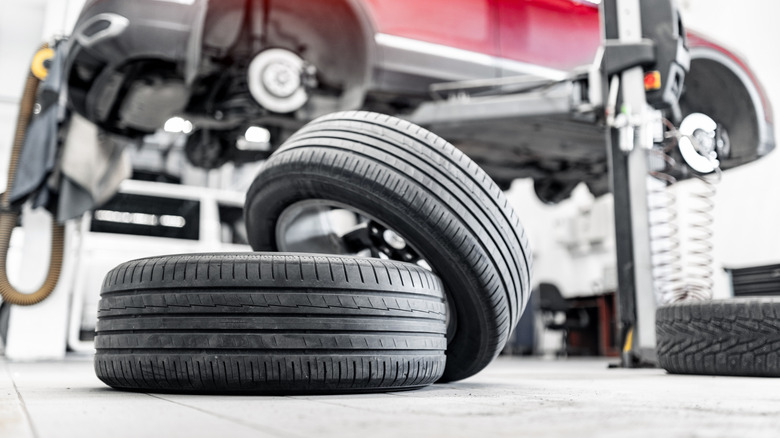
Okay, let's say you have a separate wheel-and-tire combo for summer or winter driving. After removing the tires from the vehicle, clean them with mild soapy water using a sponge or a wheel brush. If you're up for it, grab a bottle of wheel cleaner or asphalt remover like the Stoner Car Care Tarminator to rid the wheels and tires of harmful tar, tree sap, asphalt, and other stubborn stains.
Rinse thoroughly with clean water and wipe dry with a microfiber cloth afterward. As to whether you should add tire dressing or tire black on the sidewalls before storing them, we prefer not to. Tires already have anti-ozonants in the rubber compound to combat ozone exposure and cracking. The funny thing is, those same anti-ozonants that protect the rubber can also cause the sidewalls to turn brown — something referred to as tire blooming.
The next step is to fill each tire with air, ideally to the recommended tire pressure, before wrapping them in airtight plastic bags. Use tape to seal the bag shut. You can skip this step if you don't have large leaf bags or yard bags, but bagging them helps keep dust, dirt, and other contaminants off the wheels during long-term storage.
Finally, we get to the point of whether to hang, stand, or stack the tires. If the tires are mounted on wheels, the best method is to hang them on hooks or racks. The alternative is to stack them, but avoid stacking too high, and pay attention if the tires have white lettering on the sidewalls. If they do, stack with white facing white, or bag each tire before stacking to prevent the lettering from staining.
How to store unmounted tires
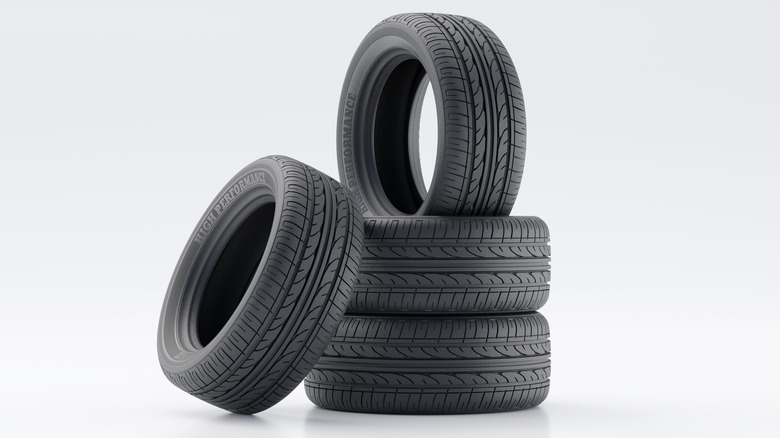
The first step is to clean each tire with mild soapy water and a sponge to remove dirt. Rinse well with clean water and dry with a microfiber cloth. The preferred method is to bag each tire before storage and to stand it upright, but you can do so without wrapping them in plastic. Another option is to stack them on top of each other, but remember to only stack in pairs to prevent the stack from tipping over and potentially damaging them.
If you're going to stack them, avoid placing them on loose ground or bare concrete floors to protect against moisture. Whatever you do, do not hang unmounted tires on hooks, as this can distort and damage the rubber. You can also place tires on racks, but it all depends on your budget or garage space.
When it comes to storing tires, timing is also important. When temperatures fall below 44°F, it's time to remove your summer tires and switch to winter rubber. Conversely, if the mercury rises above 44°F, it's time to take off your snow tires and put your summer tires back on. If you plan on storing your car for a month or longer and you intend to leave the wheels and tires on the vehicle, raise the vehicle on jack stands to prevent the tires from developing flat spots.