

The Pros And Cons Of Power Running Boards For Trucks
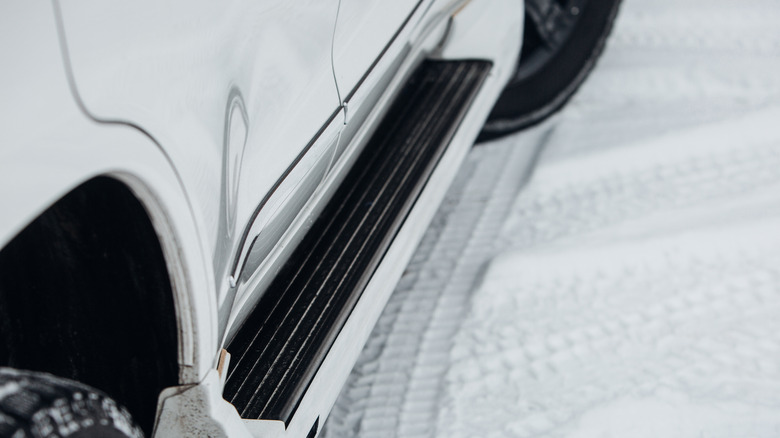
Running boards offer many benefits for stock or lifted pickup trucks, rugged crossovers, and even the best large SUVs. Besides enhancing your rig's outdoorsy, rugged style, running boards make ingress and egress a more dignified two-step affair, whereas you'll reach, pull, and strain without them.
However, their most significant advantage is the added protection they bring. Not only will running boards protect the rocker panels from scrapes and other objects when off-roading, but they can also shield doors and fenders from dents and dings from erring motorists in parking lots.
Running boards come in fixed and power-folding variants. The former are flat platforms made of steel, aluminum, or hard plastic that attach to the frame, particularly under the doors. Most running boards can support 300 to 500 pounds, but heavy-duty variants can support upward of 600 pounds.
In most applications, running boards make your truck better-looking and more practical for everyday use, but there are downsides. Steel or heavy-duty running boards add weight to your rig, while they tend to collect mud, dirt, snow, and other debris. They also reduce your ride's ground clearance, so keep this in mind if you like off-roading or overlanding over harsh, desolate terrain.
Power running boards do solve two of the problems of fixed side steps, but nothing is perfect. Despite the novelty of having folding steps that extend when you need them and fold away when you don't, power running boards have their own issues, too.
Pros of power running boards
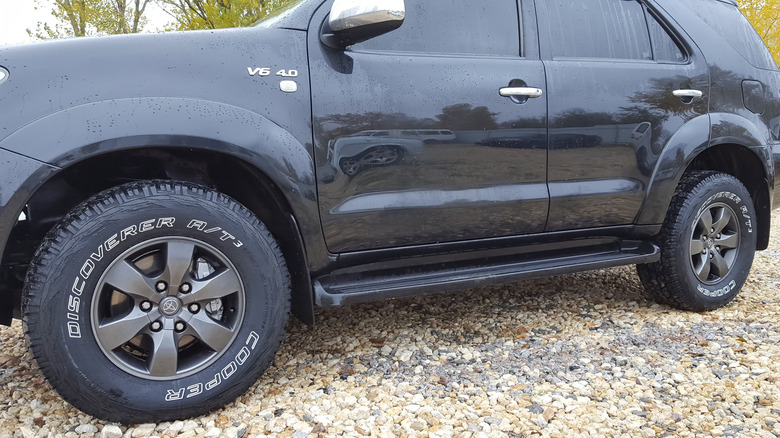
Some advantages of power-operated or automatic-folding running boards are unsurprisingly similar to those of fixed side steps. But besides making it easier to get in and out of your vehicle, they also add a high-tech look with their ability to extend and fold away as needed, and they tend to extend the steps much lower than the fixed variety, which is good for larger SUVs and lifted pickups (which have their own pros and cons).
Moreover, they retain your ride's sleek look, since they're only there upon opening the doors. Unlike fixed nerf bars or side steps, power running boards, in most cases, retain your rig's ground clearance when folded, which is worth considering if your typical weekend involves trail-seeking, camping, and getting drunk under the moonlight.
More importantly, power running boards won't collect dirt, mud, or other debris, since they only extend when needed. Not only will they keep your truck looking neat, but they're easier to clean. Furthermore, power running boards come in many shapes, sizes, and varieties, with some that are custom-made for any make and model of pickup truck or SUV.
The downsides of power running boards

Perhaps the most significant con of power running boards is their price. Fixed side steps are more affordable and cost from $200 to $450 per set (labor and installation are optional). Power running boards cost three to four times as much, with some running into the thousands. It's a costly investment, and the cons don't stop there.
Since power side steps consist of a maze of electronic parts, they can be a handful to install if you don't have the right tools or skill set. Installing them also involves connecting wires and, in some cases, drilling holes into the pinch welds to wire LED lights or other accessories. They also have motors, actuators, and extension arms that, although durable and designed to handle some abuse, tend to wear out and fail, especially during the winter when snow and ice do their thing.
Moreover, power running boards add weight, significantly moreso than fixed side steps, what with all the motors, brackets, and electronics. And while some power running boards have emergency features that deploy the steps in the event of a malfunction, it's still a buzzkill when they fail.
Running boards versus nerf bars: Is there a difference?
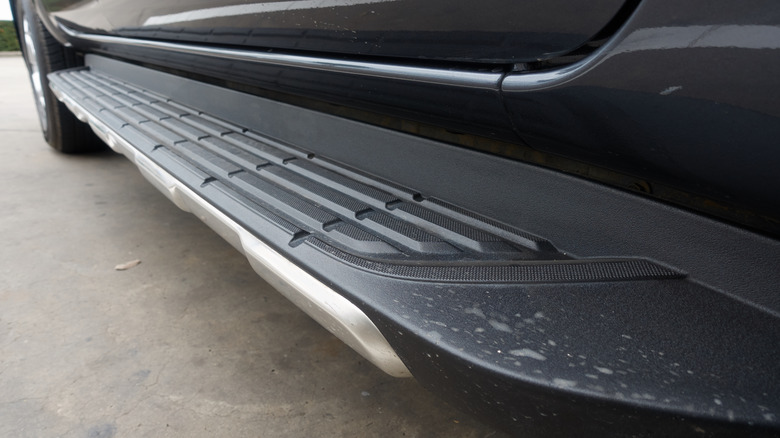
Yes, there are differences between nerf bars and running boards. Nerf bars are typically oval tubes that attach below the doors like running boards, and they have sleeker profiles than running boards, with cutouts for the steps. All in all, nerf bars imbue a truck with rugged styling, and their design guards against scrapes and impacts.
However, nerf bars are not as ergonomic or as safe to step in as running boards, and this is particularly true if you have kids or people with disabilities in the household. The sleek and narrow tubular design could also get slippery in rainy or icy weather, making it potentially dangerous when entering or stepping down the truck.
Then again, nerf bars are great if you want side steps that are more affordable and won't eat into your ride's ground clearance. Running boards cost more and probably weigh more, too, but the wider steps are safer and more comfortable to use. Choosing between nerf bars or running boards will boil down to your budget, preferences, and lifestyle. Also, we haven't heard of power-folding nerf bars yet, so consider this if you prefer fixed side steps and want nothing to do with those finicky power running boards.
Are power running boards worth it?

You don't need to have mobility issues, injuries, or joint pains to enjoy the benefits of power running boards. If you like them and can live with the price and potential hassles come winter, they're worth every penny. They're a bit more complicated to install, and the moving parts require periodic maintenance to ensure everything works regardless of weather, but the sheer variety means there's an applicable running board for every pickup truck.
However, fixed running boards, side steps, or nerf bars have a charm of their own. You don't have to worry about motors and moving arms that might freeze or get damaged in the winter, and their fixed nature means they're always there to protect the truck and make it look effortlessly cool.
Aluminum running boards are the most expensive, more so if you choose the power-folding kind. On the other hand, nerf bars and side steps are mostly made of steel. You can save a bit of cash on the power-folding kind by choosing ABS plastic or polymer instead of lightweight aluminum, though they're not as strong and don't last as long.