

Can Windshield Tint Mess With Your Car's Head-Up Display?
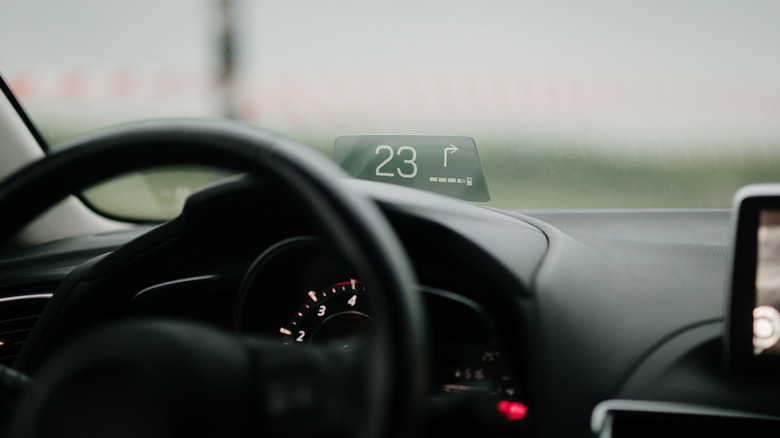
These days, there are dozens of car models offered with a standard or available head-up display (HUD) from the factory. A factory HUD is an image projected onto the vehicle's windshield or a small screen right in front of it that is generally aligned with the driver's eye level and contains important information such as current speed limit and navigation instructions.
As of this writing, more than 30 different brands offer a standard or optional HUD on several models. While usually available at a premium — as in, only included on more expensive trim levels – HUDs are an incredibly useful safety feature for modern driving conditions. That said, if you take to internet car forums in recent years, many car owners with a factory HUD are asking an important question: can windshield tint mess with a car's HUD?
Thankfully, the general consensus seems to be no. When done the right way, tinting your windshield will not mess with your car's ability to correctly display its HUD. In some cases, tinting your windshield can even improve the visibility of the HUD by reducing glare from incoming sunlight — which is the whole purpose of window tint, after all.
It's all in the quality of the window tint
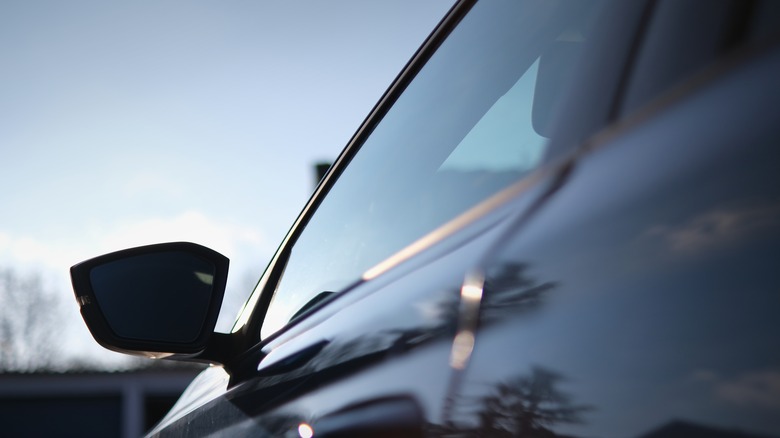
Like many things in life, you get what you pay for, and good automotive window tint is no exception to that rule. Automotive window tint has certainly come a long way since the days of the early 2000s, where seemingly every other fifth-generation Honda Civic had some degree of tint bubbling creeping into the rear window.
Nowadays, what matters most about your selected automotive window tint is whether or not it has features like UV protection or glare- and heat-reduction properties.. Those characteristics play a major role in helping your car's HUD display properly while incorporating the benefits of windshield tint. Ultimately, using a high-quality light windshield tint is truly the key to retaining your car's HUD visibility.
Incorporating the right windshield tint can also aid in keeping electronics nice and cool by helping to absorb solar heat, ensuring the electronics that are responsible for displaying your car's HUD function properly.
The most popular window tint choices for HUD users
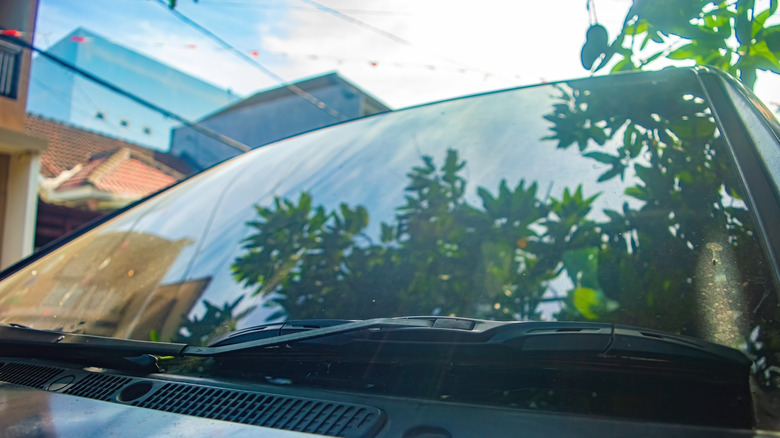
Two of the most popular window tint options are ceramic and carbon. While both options are more than efficient for the end result, there are some key differences to go over. For example, carbon window tint is favored for its non-reflective finish and its ability to block infrared light. This is because carbon window tint features carbon particles mixed directly into the film, blocking incoming light. Carbon window tint, however, isn't as effective at blocking harmful UV rays as ceramic.
Ceramic, on the other hand, is the go-to automotive window tint solution by tint experts. Based on a non-metallic construction, ceramic tint can block up to 99% of UV rays from the sun. Moreover, ceramic window tint is praised for its ability to reduce glare. Lastly, it has a reputation for no signal interference, which makes it perfect for the tech heavy cars that typically feature a HUD.
Keep in mind, though, that while it's nice to have tinted windows, you should always research your specific state's window tint laws in order to avoid paying a hefty fine if you're ever ticketed.