

If You're Not Cleaning Your Car's Gross Air Vents Like This, We'd Rather Walk
We may receive a commission on purchases made from links.
Regularly removing dirt from your car's air vents may seem excessive, but it has more to do with health concerns than anything else. It's rather gross if the vents are lined with thick, clingy dirt, but even mild dust can accumulate thicker layers of bacteria, mold, and pollen if left unattended. Couple that with a disgusting and neglected cabin filter, and it's no wonder that your car's AC is blowing foul-smelling air that reeks of stale vinegar.
Furthermore, emissions from other vehicles and microplastic pollution from your car's cabin components, as well as bacteria, viruses, and fungi from improperly maintained AC systems, can either trigger or worsen cardiovascular and respiratory diseases, increase your blood pressure, and affect your concentration while driving. In short, dirty air vents can be a health hazard and make you a bad driver. So, it's critical to keep them clean to prevent the build up of pathogens that could potentially make you or other occupants sick.
Moreover, excess dust and dirt on the air vents can scatter and blow away with the AC, making the cabin and dashboard look dirtier than they already are. Luckily, it's relatively easy to clean a grimy dashboard and prevent dust from clinging to surfaces, but the air vents are a different matter.
When to clean the air vents in your car
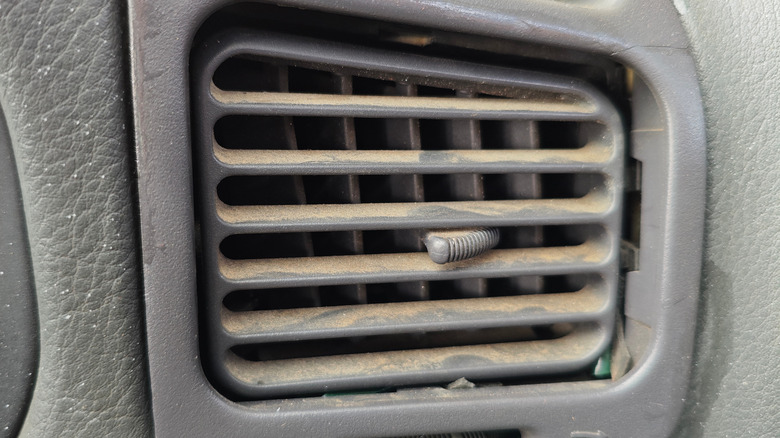
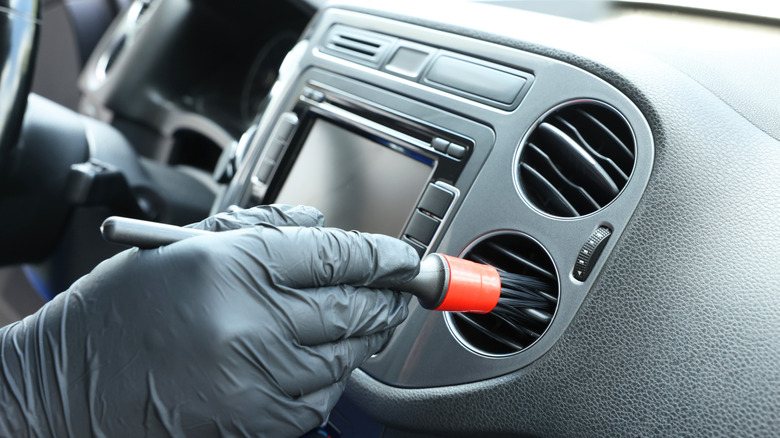
We recommend cleaning the air vents at least once a year, and we're talking about surface cleaning with basic tools like a soft interior brush (or an old toothbrush), a small microfiber towel, and some cleaning wipes. In some cases, a small vacuum cleaner may be necessary, but the gist is to wipe all the louvers with a brush or the ends of a towel and use cleaning wipes to remove thicker slabs of dirt and gunk.
Not only will the vents look fantastic afterward, but the air will flow much better, too. You may need to clean the vents more frequently if you live in a dusty area or regularly drive with open windows. You can also use all-purpose cleaner to clean the air vents and wipe off the excess disinfectant with a cloth. If you want to dive deeper and clean further down the vents and louvers, you can do so using a few tools and specialized cleaners.
How to clean inside the air vents
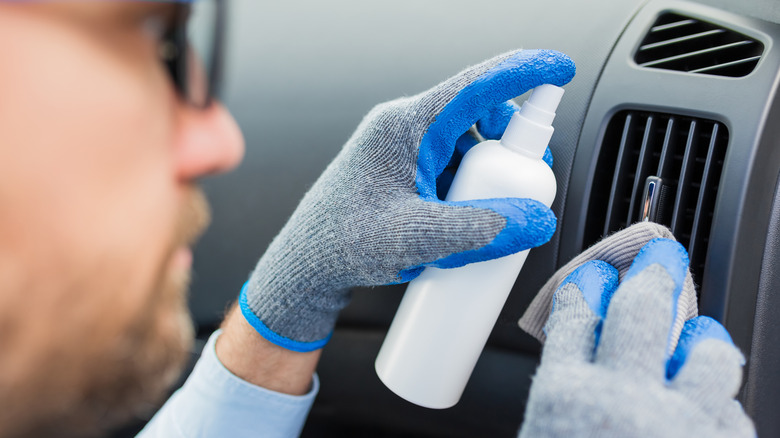
For this procedure, you can remove the air vents from the dash by popping them out or using a screwdriver. Removing the air vents will give you unobstructed access to every nook and cranny to thoroughly remove dirt, and you can do so using the techniques mentioned above. You can wash them under the faucet if you like, but it's generally better and more convenient to just spray all-purpose cleaner and wipe the surfaces clean with a microfiber towel.
After making sure the vents are perfectly clean, you can treat the ducts with an HVAC system cleaner. This is an optional step, but consider doing so if your air conditioning is blowing musty air. You'll need a specialized cleaning and deodorizing product like the AC Pro Vent and Duct Cleaner or Duct Aid HVAC Air Duct System Deodorizer to neutralize odors and rid the system of fungal growth, mold, mildew, pet odors, smoke smells, and stale air.
The best part? You don't have to be a hardcore AC technician to use them. For the most part, you simply spray the product directly into the air vents and the air intake, run the HVAC system for 5 to 15 minutes, and you're done. You don't even need to remove the air vents to make this work! If you're particular about spraying chemicals, the Duct Aid product contains plant-based ingredients like thyme oil extract and natural vanilla to attack odors without further health risks.
HVAC maintenance is necessary
Clean air vents start with a generally clean and well-maintained AC system. For the most part, your car's AC and heater require cleaning and servicing at least once a year, including checking and recharging the refrigerant, inspecting for leaks, and replacing hoses with cracks or noticeable wear. When in doubt, consult the owner's manual.
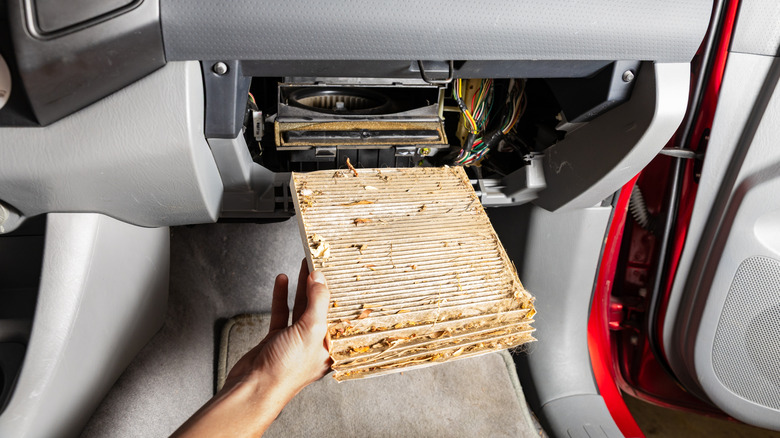
Another way to keep your air vents clean is to replace the cabin air filter at the prescribed intervals, which is once a year or every 15,000 to 30,000 miles. You'll know it's time to change the cabin air filter if the AC smells funny, if the air flow feels weak, or if there are unusual whistling or rattling noises under or behind the dashboard.
You can reuse the cabin filter by blowing it clean with compressed air, but it's better to replace it if the filter is an ugly, grimy, slimy, or smelly mess. Consider replacing the cabin filter more frequently if you like to go off-roading or constantly drive in dusty, polluted areas.