

Single Vs. Tandem Axle Semi-Trucks: The Differences Explained

Have you ever wondered why some semi trucks have one set of wheels and others have two sets crammed together? That's because some semis use a single axle while others have tandem axles, but why is it important? Well, choosing an axle setup is actually one of the most critical decisions a commercial vehicle fleet owner can make. The axle setup affects everything from the business's bottom line to truck traction on a muddy job site. And it's not just a vehicle choice — operators may be considering one of the latest offerings from the many semi truck brands that Daimler owns, but there are also legal, economic, and practical factors to consider.
An axle on a semi‑truck is the shaft that connects the left-side and right-side wheels and allows them to spin. It also provides support for the brakes, wheels, and suspension. The number of axles impacts the semi's weight distribution and overall road behavior. There are different types of axles, too, and we'll focus specifically on the rear, non-steering axles. These can be drive axles, which transfer the engine power to the wheels and connect to the transmission via differentials, or tag and pusher axles, which are load bearing but not connected to engine power.
Then there's the number of axles that a truck uses. A single‑axle semi truck uses one drive axle in the rear, while a tandem-axle setup uses two powered axles placed close together. Using two axles helps with weight distribution and increases load carrying capacity. But let's get to the point of why and when they're used.
The single axle — why less is more for local hauls
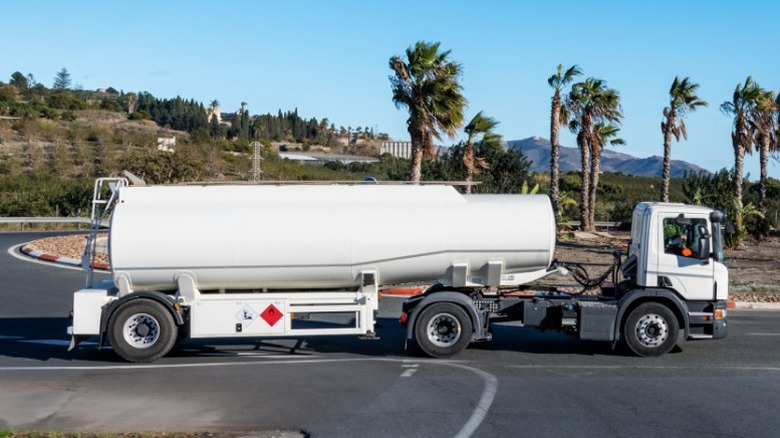
By eliminating an entire second drive axle, a semi truck can shed a significant amount of weight. This is obviously beneficial when it comes to fuel expenses. Fuel is not just a vital requirement for a commercial fleet, but it also accounts for a large chunk of operating expenses. The weight reduction translates directly into lower fuel consumption. Furthermore, fewer tires touching the ground means less drag, so the truck accelerates easier and, in the process, burns less fuel.
A single axle also means there are fewer tires to buy and fewer brake and suspension system components to service, which translates to lower maintenance costs and less time in the workshop. Then there's maneuverability. Single‑axle semis are shorter in length and have a tighter turning radius, typically around 35 to 45 feet, which is invaluable in cities when navigating tight spaces, like alleys, docks, warehouse yards, and older urban districts. Size is also a key factor contributing to the biggest differences between American and European semi trucks, as EU laws limit overall vehicle length.
Single-axle semis may also be the more efficient option for short-distance transportation. Studies suggest that semi trucks with single axles can deliver up to 30% more in the same timeframe compared to larger tandem-axle trucks when driving in the city. Lastly, there are monetary benefits of a single-axle semi. Better fuel efficiency and lower maintenance costs aside, the initial cost of a single-axle semi is often lower than a tandem-axle semi.
The tandem advantage — for compliance and payload capacity
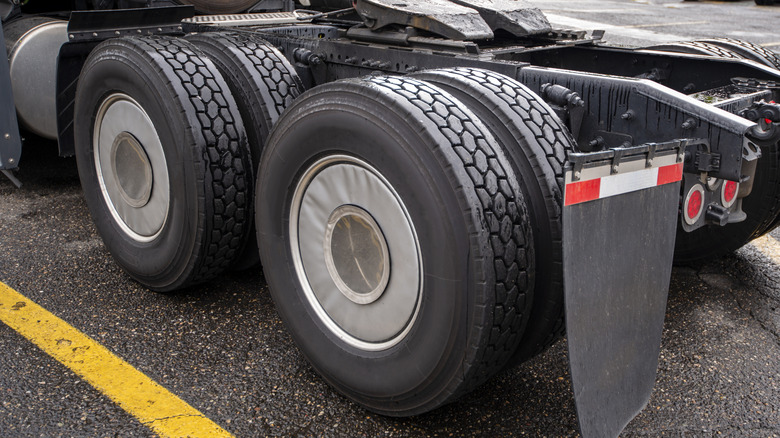
The value of a tandem setup lies in weight distribution. Weight on a single axle puts the suspension and tires through more work. Spreading the load across two drive axles reduces stress on individual parts and protects the truck's frame from concentrated stress. They are, of course, heavier than single-axle semis, so fuel consumption is higher. However, these trucks also experience fewer mechanical breakdowns, which helps save on maintenance in the long term.
Where tandems become essential is in staying legal. Federal law caps most Interstate travel at an 80,000-pound GVWR, but a truck can violate regulations long before reaching that figure if too much weight sits on a single axle or axle group. Most states limit a single drive axle to roughly 20,000 pounds. Load a heavy trailer behind a single-axle tractor and that limit is easy to exceed even if the overall truck weight is far below 80,000 pounds. A tandem axle, rated for 34,000 pounds, spreads that load correctly and keeps the truck compliant.
Some states allow higher GVWRs on their own roads or through permits, which makes proper axle distribution even more important for carriers running multi-state routes. This is why tandems dominate long-haul freight, as they can legally and structurally handle the weights needed to move equipment, containers, and bulk cargo.
Tandems also deliver better stability. A single-axle tractor can hop and bounce over rough pavement, shaking delicate freight. A tandem's extra wheels smoothen out the ride and reduce vibration. The additional axle also boosts traction on dirt roads, inclines, and winter surfaces. With twice the contact patches transmitting power to the ground, tandems slip less and are far less likely to get stuck.
The legal hammer — understanding the Bridge Formula

While making an axle‑related decision in trucking, the long-nosed American semi-trucks are an easy aesthetic choice, but there are legal complications and the Federal Bridge Formula Weights to deal with first. Simply put, the formula determines the maximum allowable weight of a truck based on the number of axles and the distance between them.
The Bridge Formula exists to protect highways by regulating how weight is distributed across axles. Concentrated loads may accelerate structural fatigue for a bridge on the highway, and no one wants that. So, if two trucks weigh the same, the longer one spreads that load over a greater area, placing less stress on bridges. A shorter wheelbase concentrates the weight and increases structural strain. That's why spacing matter, and why the formula assigns different legal weight limits depending on how far apart the axles are. When axles sit too close together, the standard single- or tandem-axle limits apply — spread them farther apart and the truck can legally carry more weight. It's this interplay between axle spacing, group limits, and state-level rules that makes choosing the right axle configuration so important.
But why is this important in choosing the right number of axles for a semi? Failure to comply isn't just a slap on the wrist. Even a mere 5% over a state's axle weight limit can lead to fines that top $10,000.
The modern middle ground — using lift axles and steering axles
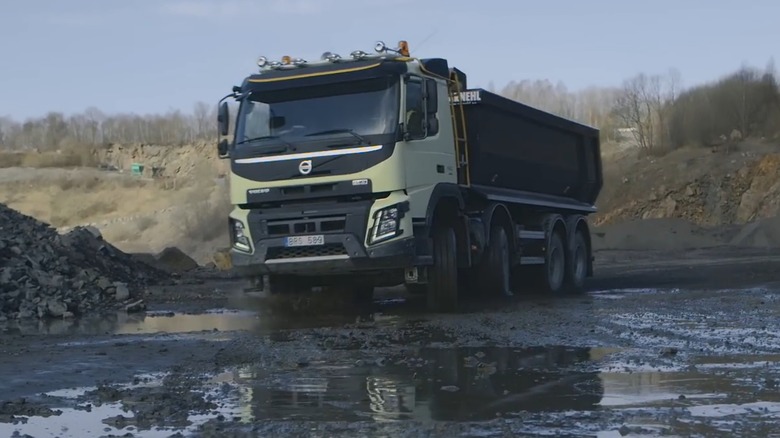
We've progressed far enough in the trucking world to now have electric big rigs, even though Tesla's Semi falls short and is on shaky grounds. The evolution of trucks now goes far beyond the old single-vs-tandem debate. Many modern tractors now rely on lift axles. These are additional axles that can be hydraulically raised or lowered depending on load requirements. When running light, the driver lifts the axle to reduce rolling resistance, cut tire wear, and save fuel. When hauling heavy loads, the axle is dropped and helps distribute weight so the truck stays compliant with axle-group limits. It's a simple solution that gives operators the flexibility of a tandem without dragging unnecessary hardware when it's not needed.
Some heavy trucks now use dual-steer front axle systems, which give big rigs far tighter low-speed maneuverability than a traditional single-steer setup. On three-axle semis, the additional non-driven front axle can be designed to steer, lift, or even actively steer depending on load and application. A steerable axle already sharpens the turning radius, but an actively steered one goes a step further by using electronic controls and hydraulic actuators to angle the wheels precisely to match speed and steering input.
Volvo's modern dynamic steering for dual front axles is a good example. At low speeds, the second steering axle turns slightly in coordination with the main front axle, reducing the turning circle dramatically. In tight yards, construction sites, or waste-collection routes, that extra articulation can mean the difference between making a clean turn or performing a frustrating multi-point maneuver. At higher speeds, the system re-centers and stabilizes, improving tracking and reducing driver fatigue.