

When (And Why) Did Cars Switch From Leaded To Unleaded Fuel?
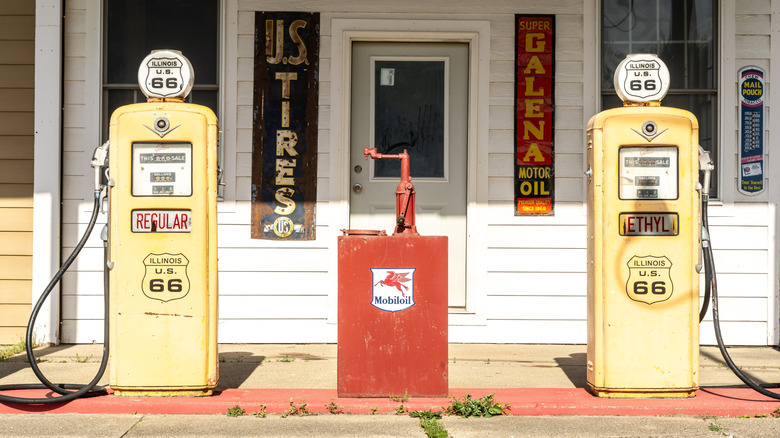
The automobile itself traces its roots back to the late 19th century. Gas stations came about later, though, and people had to work a little harder to get gas up until that point.
The first drive-in gas station opened up in 1913, in Pittsburgh, Pennsylvania. Ten years later, at a filling station in Dayton, Ohio, the very first gallon of a new type of fuel — leaded gasoline — was sold. Lead was added to gas as a way of increasing the performance of the engines it powered, and it sure worked well. But as we now know, lead exposure has some particularly nasty consequences.
As it happens, there were warnings about such side effects early on, but leaded gas continued to power our cars for years. On January 1, 1996, leaded gas was officially eliminated altogether. In its place sat unleaded gas, which had hit the scene roughly 20 years prior to leaded gas' disappearance. So what happened in the 73 years between the introduction and formal removal of leaded gas, why did it take the industry so long to move on, and what are the consequences for cars designed to run on the older fuel in today's unleaded world?
Health concerns

We'll start by stating the obvious for those who have been living under a rock: lead is bad for your health. Like, really bad. Leaded gasoline has been blamed for dropping the IQ of millions of Americans, and that's just the start of it. That first sale of leaded gas in 1923 is connected to a man named Thomas Midgley Jr. Midgley Jr. worked for General Motors, and it was there that he discovered the octane boosting benefits of lead, or more specifically, tetraethyl lead (TEL).
The performance benefits were clear, and so this was undoubtedly a huge discovery for Midgley Jr. He was there to witness it being sold to consumers for the first time in Ohio, right? Not quite, for he was busy suffering from the side effects of lead poisoning. See, the health effects of TEL were known to some even back then. TEL could cause damage to your nervous, cardiovascular, and immune systems, plus it stunted the development of young children. Midgley Jr. ended up taking months off work due to the poisoning, but by all accounts he got off lightly, as numerous General Motors employees ended up dying due to TEL exposure.
However, it also boosted the performance of cars by working as an anti-knock agent; cars were big business, so leaded gas was rolled out for the masses to "enjoy," in spite of the known and well-documented side effects.
Research in the 1960s and '70s forced the industry's hand

Despite the rather morbid health concerns linked to TEL, leaded gas continued to be sold, and not just as some strange alternative fuel either — it was powering the world's automobiles. However, the health side of things could only be ignored for so long, and damaging reports cast a dark shadow on the industry's wonder-fuel, which ultimately ensured the beginning of its demise.
Clair Patterson, a geochemist who fought hard to demonstrate the seriousness of lead poisoning, had a paper published in 1965 that highlighted the dangerous levels of lead that could be found within the average U.S. resident's body. His research concluded that it had very little to do with natural causes, as was previously thought by many.
Couple this with Herbert Needleman's research, which taught the world about the dangerous effects even low-level lead poisoning can have on the development of young children, and the government really had no choice but to respond appropriately. The Clean Air Act of 1970 was passed, the Environmental Protection Agency (EPA) was formed as a result, and in '73, a gradual reduction in the amount of lead found in fuels was mandated. One year later, the EPA demanded that at least one grade of unleaded fuel be made available at all filling stations.
Performance took a hit from using the new fuel, but the health effects of lead were widely known by this point, and so it didn't take long for unleaded gas to take over in terms of overall sales; the late '70s saw it become the most popular choice in America. It wasn't just the health concerns that made lead look unfavorable, as the EPA had another trick up its sleeve to condemn the deadly fuel too — catalytic converters.
The war on tailpipe emissions

The Clean Air Act of 1970 wasn't just about getting rid of lead in fuels. It had a larger goal, and it's in the title — it looked to clean up America's air. Part of limiting the amount of air pollutants included tackling what came out of the end of each tailpipe, and so modifications were necessary in order to combat these emissions.
The EPA's answer was to mandate the installation of catalytic converters in all cars sold from the 1975 model year onward. You'd need to go on a bit of a deep dive to understand everything about catalytic converters, but the general gist of them is easy to explain — they use various metals to convert harmful gases into somewhat less harmful gases, before emitting them out the back end of your tailpipe. The pollutants that a catalytic converter focuses on are carbon monoxide, hydrocarbons, and nitrogen oxides. You don't need to know the ins and outs of them, or why they're harmful, just know you don't want them on your breakfast — it's nasty stuff.
We can all agree that this sounds great. There was one problem, though — lead damages catalytic converters. It's not really a problem at all, but if you're in the business of selling and using leaded gas, then it is. Hence why the EPA mandated the availability of unleaded gas, with all new vehicles from '75 onward being fitted with the new emissions device.
The days of leaded gas were numbered
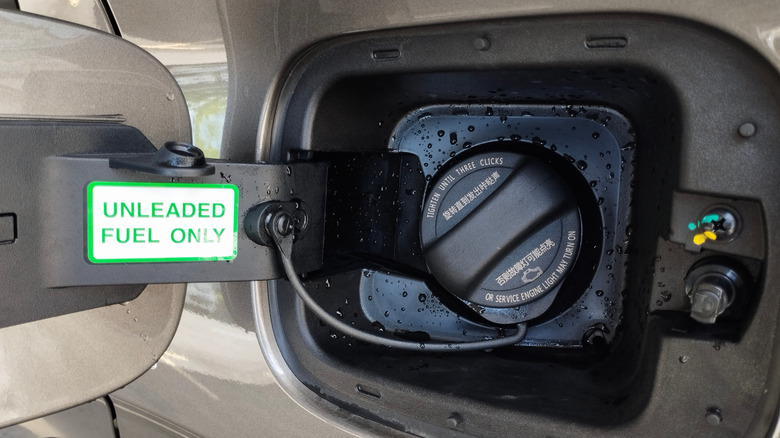
So with the all-new EPA changes underway, the number of cars that had to run on unleaded gas thanks to their new-fangled catalytic converters was only going up and up. Equally, the number of cars that ran on the older leaded stuff would be going down, as older cars met their natural demise and became junkyard cars.
It was only a matter of time before those that were designed for leaded gas were a small minority, and two decades after the EPA mandated catalytic converters, specifically in 1996, the decision was made to cut leaded gas from filling stations entirely. By this point, just a tiny percentage — 0.6% — of all vehicles on the road were running on leaded gas, so there would have been little grumbling about its removal. After all, lead has been linked to everything from autism and ADHD through to the more obvious health concerns covered above, so removing it from public filling stations could only be a universal win for all concerned.
However, 0.6% of all cars on American roads is still a significant number, so something had to be done for those who still enjoyed driving their classic cars. Thankfully, solutions were available.
Here's how classic cars get past the unavailability of leaded gas

The answer might seem obvious to some, why not just use unleaded gas in these older cars — gas is gas, right? Kind of, yes — unleaded gas will still work in classic cars, but it can lead to problems over time. Most prominently, it might cause something called valve seat recession, which is when the valve seat itself erodes, causing the valve to sit deeper into it. This can lead to a loss of compression, and therefore a lack of performance. Older cars were also designed to run on fuels with a lower octane rating, and modern fuels with a higher rating could cause carbon buildup, which isn't horrendous, but it is still best avoided if possible.
However, valve seat recession is the main issue to avoid. One solution, and it's a permanent one, is to have your engine head modified to run on modern unleaded fuels. This involves stripping it down and having hardened valve seats fitted, which can be costly. Luckily, there is a cheaper solution. It's not as foolproof, but drivers can simply add a lead additive each time they top up the tank. These fuel additives can help improve your vehicle's lifespan, and ultimately, they enable classic car owners to still use leaded fuel, even though it's no longer available at gas stations directly.