

Yes, Fake Spark Plugs Are A Thing: Here's How To Avoid Getting Scammed
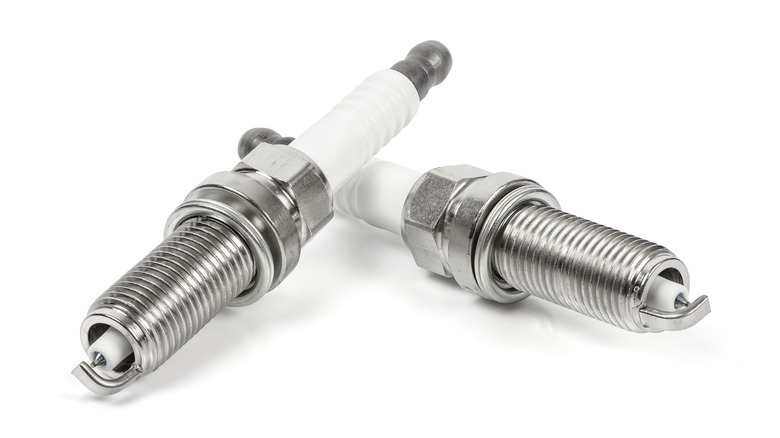
A lot of us here do our own tune-ups, just like a lot of you do. It's a great way to save a few bucks, and frankly, we think something like changing spark plugs is one of those car maintenance skills everyone should know. Unfortunately, there are plenty of scammers out there who like to take advantage of folks who are hoping to "save a few bucks," and the automotive world is no exception. There happens to be a large influx of counterfeit parts into the market, and a lot of these parts are spark plugs offered at prices that seem like a great bargain. That can be pretty tempting, considering some genuine spark plugs cost around $13 apiece. That amounts to over $100 just for spark plugs on a V8.
Most of these counterfeit spark plugs are being sold online. Back in 2019, Australia's Federal Chamber of Automotive Industries found that 60% of spark plugs sold on online marketplaces were counterfeit. This is still a problem in 2025. One easy way to avoid this scam, then, would be to get your spark plugs from a dealer or a trusted auto parts franchise. If you do buy online, consider the source you're buying from. Are you buying directly from the manufacturer or a trusted auto parts store, or is the product being sold by some third-party seller on Amazon that you've never heard of? Is the price too good to be true? That would be another indication that the spark plugs are fake.
Considering the damage a defective spark plug can do to an engine, this is not a threat to take lightly. If you have bought plugs from a possibly sketchy online seller but haven't installed them yet, inspect them carefully. If you detect any irregularities, don't install them.
How to tell if spark plugs are fake
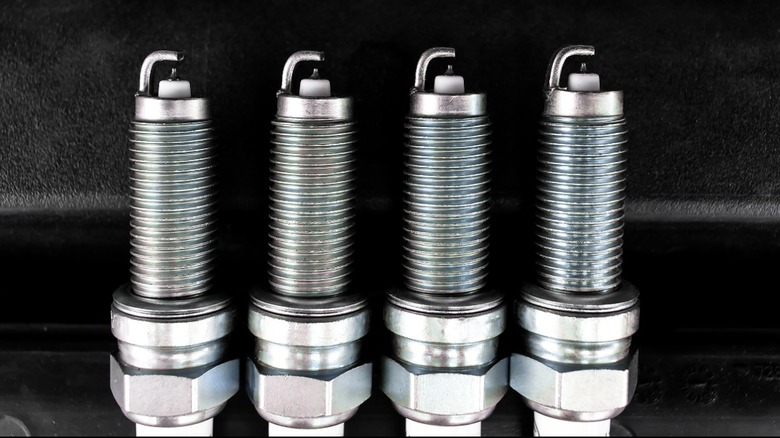
So, how can you tell if a spark plug is fake? First off, if it's a name-brand spark plug offered at a price much lower than you see at legitimate retailers, then it's likely a counterfeit. And the best way to avoid getting scammed is to buy from a dealer or another legitimate source. By "source", we're not referring to Amazon or eBay. Those websites are not sources, but are facilitators for third-party sellers – there's a reason why automakers like Porsche have their own counterfeit busters. So, if you're buying on Amazon, check the name of the seller. If you haven't heard of them, move along.
There are other ways to tell once you have the spark plug in hand. But you have to look closely, because even experienced mechanics can be fooled by some of the counterfeits that are out there. Is there a lot number? Research the brand to see where they put their lot numbers on their plugs (usually on the insulator). If the plug you bought has no lot number, it is likely counterfeit.
You'll also want to check the threads. If they aren't a consistent shape and size, they are likely counterfeit. Another thing to do is to scratch the metal part to see if it's really metal or just painted. Check for machine marks on the metal and bubbles or imperfections in the porcelain insulator. These parts of the plug are uniform on genuine products. Is there a gap between the gasket and spark plug body? Can the washer be screwed off of the plug easily? Does the ground electrode bend at an odd angle, instead of close to 90 degrees? All of these are signs that the spark plug is fake.
What fake spark plugs can do to an engine
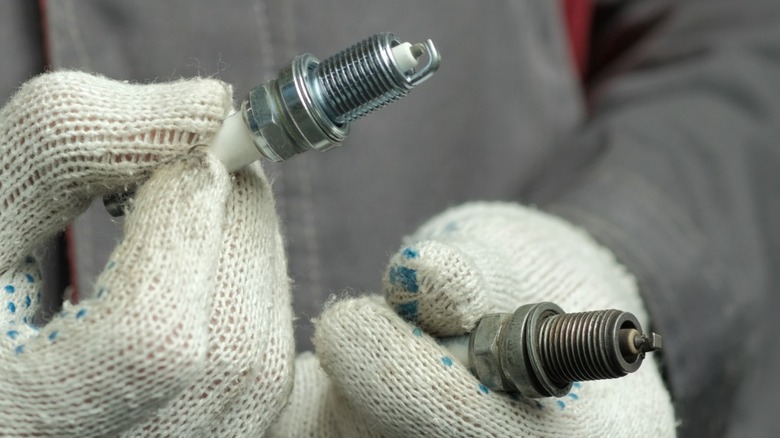
Putting fake spark plugs in your car is a lot more serious than wearing counterfeit Air Jordans or buying your spouse a fake Gucci bag by mistake. Some of these fake plugs can melt completely once installed, and a defective plug can do a lot of damage to an engine. Most commonly, it will cause a misfire, since the spark plug is not igniting the air-fuel mixture. That, in turn, can cause unburned fuel to flow through your exhaust, eventually ruining your catalytic converter. Even worse than that, a continuing misfire can lead to serious engine damage, and bits of a broken spark plug can fall into the cylinder.
Then there's the safety issue caused when a misfire prevents your car from accelerating when you need it to. Imagine trying to cross a busy intersection or merging onto a freeway when your car suddenly starts to stall. A malformed electrode or cracked insulator can be a big deal. By the way, if you do buy one of these plugs but find out they're fake after you install them, you might want to check out our guide on how to remove a broken spark plug.
Another thing to consider is your car's warranty. Typically, auto manufacturers will not cover damage caused by counterfeit parts. That applies whether or not you knew the part was fake when you installed it. You could end up with a mechanically totaled car, which means you're on the hook for the entire cost of replacing it. So, be careful out there when you're buying car parts, especially spark plugs. Buy from trusted sources and check your plugs when you get them. A bargain isn't always what it seems to be.