

This Is What Happens If You Drive With The Parking Brake On
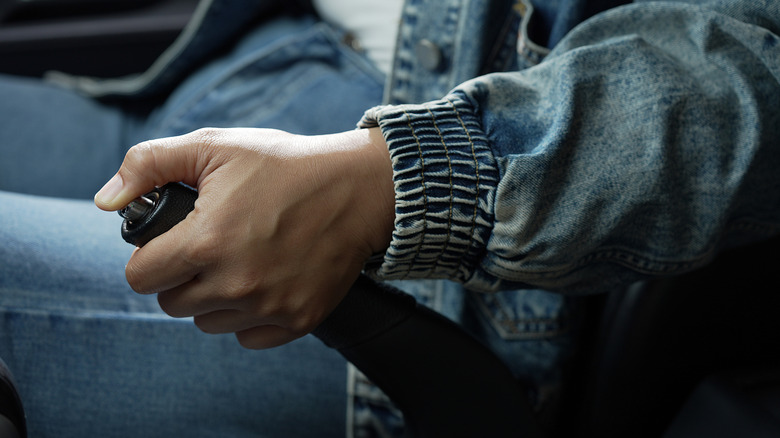
The name is somewhat self-explanatory, but the parking brake keeps your vehicle from moving while it's parked. There are two main kinds of parking brakes: lever-operated and electronic. Both are connected to the rear wheels of your vehicle. If you're the curious kind who wants to know what happens if you use the parking brake when the car is in motion, it's generally not going to be good for your car, unless you're trying to master your Scandi flick.
In most modern vehicles with an electronic parking brake (EPB), the brakes automatically disengage once the vehicle starts moving, provided the door is closed and the seatbelt is fastened. If one or both of these conditions are not met, a warning may appear on the dashboard indicating that the EPB is still engaged. If you apply the EPB while driving, the car may come to a halt, triggering warning sounds and alerts.
In cars that have lever-operated parking brakes, there is a greater risk of damaging your car's components than with EPBs. Unlike EPBs, manual parking brakes are not automatically released when the car starts moving. If the parking brake is engaged, your vehicle's performance will be sluggish, ultimately demanding more of the engine and stressing it out, while wearing out your brakes. With the parking brake engaged, the brake force continues to act on the rear brakes, and driving with the parking brake applied for an extended period can cause them to overheat due to friction. Continuous use may wear down braking components and could eventually lead to brake failure, while also experiencing juddering and loud screeching sounds as the brakes wear.
How exactly does a parking brake work?
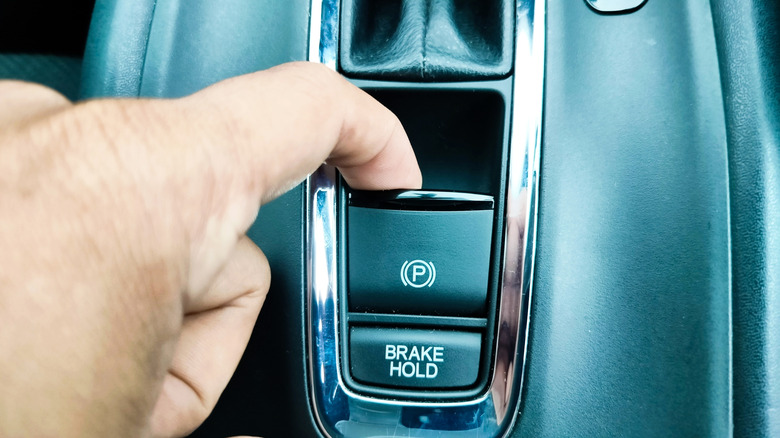
The parking brake, also known as the emergency brake or hand brake, is a separate system from the foot-operated brake. It's used to prevent your vehicle from rolling away from a stop and, in situations where the pedal-operated brakes aren't working, bring it to a stop. Parking brakes operated with a hand lever are typically connected to the rear wheels via a cable that runs under your car, independent from foot-operated brakes, which engages the brake pads or shoes. On the other hand, an EPB engages the brakes electronically through an electric motor attached to the caliper, which in turn presses the brake pads to stop the car when activated.
EPBs are more common in modern cars, with the switch from mechanical parking brakes taking place over the last two decades. Car manufacturers have transitioned to EPBs because they are less prone to failures and malfunctions than mechanical systems, whose cables can snap or fray and are also vulnerable to rust. The parking brake, aside from its primary role of keeping the vehicle stationary, can also be used in emergency situations if your main brakes fail.