

Can You Use Windex On Car Windows?

We may receive a commission on purchases made from links.
Your car's windows and windshield are among its hardest parts to clean. Auto glass is clear, for starters, and using the wrong cleaning products could introduce streaking and affect driving visibility. The original Windex glass cleaner seems fine for cleaning exterior glass because it contains ammonia, a potent solvent that evaporates quickly, making it unlikely to leave streaks on the windows and windshield.
However, the fumes and strong odor could irritate the skin, eyes, throat, and respiratory system of vulnerable users. And since ammonia is a solvent, it can prematurely degrade window tints, causing them to fade, crack, or discolor with repeated exposure, making it unsuitable for cleaning interior auto glass. Moreover, glass cleaners with ammonia could be harmful and toxic when mixed with bleach. Doing so produces chloramine vapors, which can cause pulmonary edema, or fluid in the lungs, with prolonged exposure.
Windex is great for cleaning windows and other hard surfaces around the home, but we prefer ammonia-free glass cleaners when cleaning car windows and windshields. Windex's ammonia-free glass cleaner is more suitable for use in cars, and the mild formula can clean tinted windows without damaging them, though Windex recommends you "test in an inconspicuous spot first, since there are different qualities of tint." What's more, ammonia-free glass cleaners have no strong odors or fumes that could pose health risks or cause foggy windows. Windex also has a vinegar-based glass cleaner that makes do without ammonia, so it's another safer alternative to original Windex.
Tips and tricks for streak-free auto glass
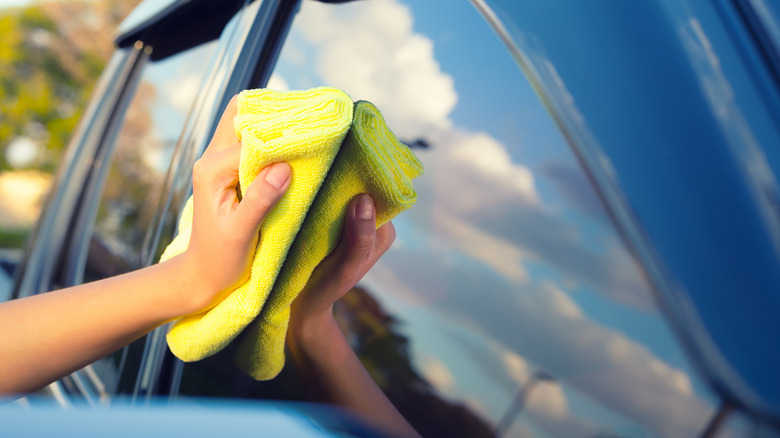
Your car's windows and windshield are tricky to keep clean because you need to treat both the inside and outside. Exterior glass surfaces are consistently exposed to the elements and can accumulate dirt, fingerprints, streaks, and water spots. Interior glass, meanwhile, is prone to fogging and haze from air fresheners, smoking, or vaping. In short, you can't achieve clarity without cleaning both sides.
It's best to treat the windows with glass cleaner after washing the entire vehicle with soap and water to remove excess dirt and grime. Avoid using glass cleaners under direct sunlight or if the surface is hot to the touch, and this applies when cleaning both the outside and inside glass. Cleaning them when they're too warm might cause the cleaner to evaporate quickly and cause streaking.
Only pair glass cleaner with a clean, dedicated microfiber towel. Avoid using towels you use for wiping the car's body or interior on auto glass, since contaminants from the paint or dashboard will inevitably streak the windows and windshield. Furthermore, do not use sponges or harsh cloths that can scratch the glass and window tint. Mixing distilled water with a teaspoon or two of white vinegar in a spray bottle is an excellent alternative to Windex. It's potent enough to rid the inside windows of haze, mild enough for tinted windows, and is highly effective in keeping auto glass fog-free in hot or cold weather.