

Here's Why Semi Trucks Still Use Drum Brakes
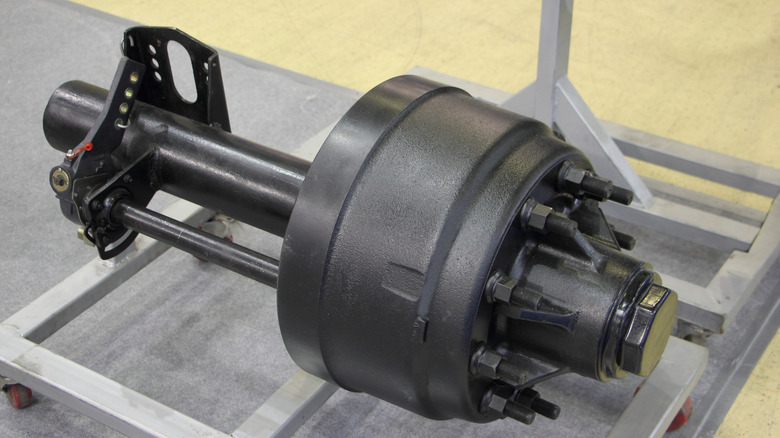
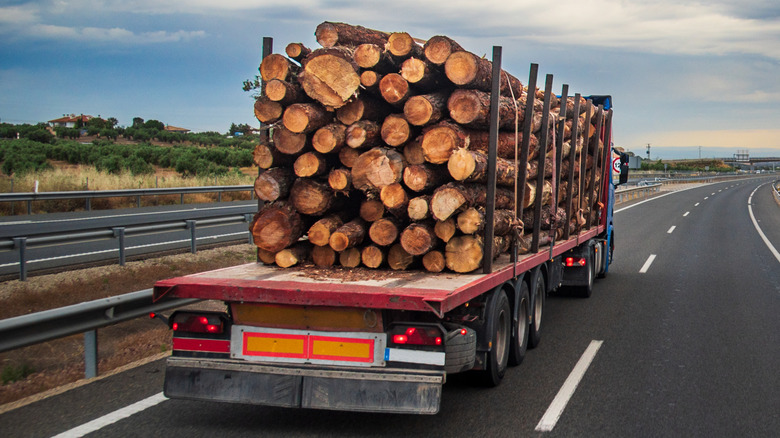
Most modern cars stopped using drum brakes years ago, adopting disc brakes for their improved performance and heat resistance. Those sound like pretty good reasons, so you'd think they'd be just as important for semi drivers. You'd think wrong, though. Many big rigs still rely on drum brakes, and it mostly has to do with budgeting. Drum brakes are generally less expensive and less difficult to maintain and repair, which is vital for an industry as price-sensitive as trucking.
It's especially important now that the industry is grappling with a combination of high tariffs, low rates, and a declining workforce. This year's layoffs at Mack Trucks were blamed on tariffs, for example. These factors, among others, have also drastically lowered profit margins and increased operating costs (excluding fuel) to a historic high point, according to a recent study from the American Transport Research Institute.
The fact of the matter is that, in the real world, the weights of disc and drum brakes are now approaching parity for big-rig fleets, while costs are dropping in many cases. Remember, too, that the higher initial cost for discs tends to be set off by their lower overall cost of ownership. Yet beyond money and momentum — as in fleets that simply prefer doing things the way they always have — there are still some cases where drum brakes make sense.
How do drum brakes work, and where do they work best?
Coincidentally, disc brakes and drum brakes were invented the same year — 1902 — with English engineer Frederic Wilhelm Lanchester devising the former, and Louis Renault securing the first patent for drum-style stoppers. To understand how they work, imagine a small actual drum tilted on its side. Now, the top of the drum becomes the attachment point for the wheel, and inside the drum is an arrangement of pistons, brake shoes, and pads. Pressing the brake pedal activates the pistons, which push the shoes, which in turn press the pads against the rotating inner surface of the drum.
Keeping the brakes in the drum was a good idea at the time because the roads were so bad. In fact, as late as 1960, there were some 2.31 million miles of unpaved roads in the United States — compared to 1.23 million paved miles. Drum brakes protected the actual braking mechanism from debris and corrosive road salt, but with a penalty: The drums not only kept gravel out of the brakes, they also kept heat locked into the drum. Under high enough temperatures, the drum itself will expand, moving further away from the shoes/pads, and requiring progressively more effort to produce the same stopping power — until they stop working entirely.
As a result, trucks today can still benefit from using drum brakes in situations where they're operating in dirty, dusty areas and/or on streets where salt and chemicals are used. And yes, that includes areas where they try pickle brine instead of rock salt.
How do disc brakes work, and where do they work best?
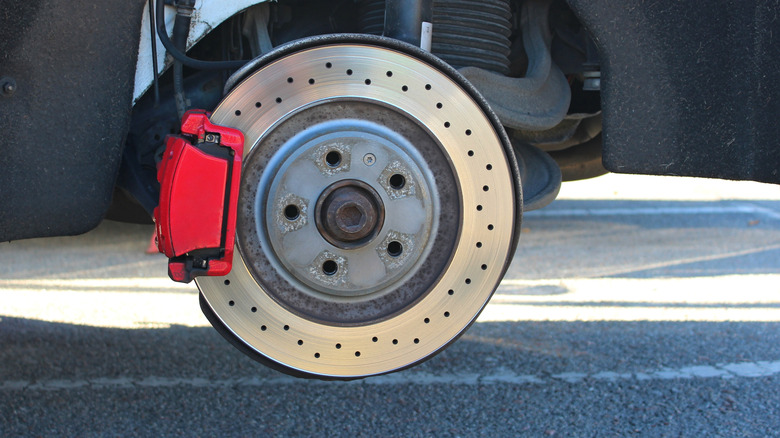
Disc brakes are sort of like bicycle brakes — where squeezing the lever causes the calipers to squeeze the bike wheel in order to slow it down. On semi trucks, each wheel attaches to a piece of hardware that looks like a wide-brimmed hat turned on its side. The crown of the hat is the wheel hub, and the brim is called the rotor. Stopping with this setup relies on a pair of calipers — wearing the brake pads — closing in on the rotor.
The key advantage is that disc brakes are all right there in the open air, and not enclosed in a metal drum. It makes a huge difference in their performance under hard use. The physics of it is that brakes work by turning the energy from the movement of the wheels into heat. But if things get too hot, components won't be able to get rid of enough heat for the process to work — it's even possible to boil off the brake fluid. Having discs in semi trucks also makes it easier for inspectors and drivers alike to check the brakes for signs of wear or damage.
At this stage, even semis with drum brakes usually only have them on their rear axles. The majority of new big rigs now have discs up front since it's the front brakes that do most of the work.