

Seven Cylinder Engines Exist, Just Not In Cars

In a world of four-, six-, and eight-cylinder engines, the number seven sticks out like an awkward middle child. It may be a lucky number in Vegas, but it's practically taboo in engine bays. Not because of superstition, but due to physics being its usual killjoy self.
Car engines thrive on symmetry. Inline-fours are tidy, inline-sixes offer incredible balance, and V8 engines roar with grace. A seven-cylinder setup? That's where everything starts to wobble. Firing orders become uneven, vibrations creep in, and crankshafts twist or even break.
Over the decades, automakers have toyed with weird configurations. Audi, for example, found success with five-cylinder engines in models like the RS Q3 and RS3. But the seven-cylinder offers no tangible advantage over what we already have. Why make an engine that costs more, vibrates more, and produces no extra power?
The physics that make an inline-six so smooth are the same ones that make an inline-seven shake like a washing machine on spin cycle. Seven's fine on a slot machine, but under your hood, it's just chaos.
Where seven works: ships, tractors, and old airplanes
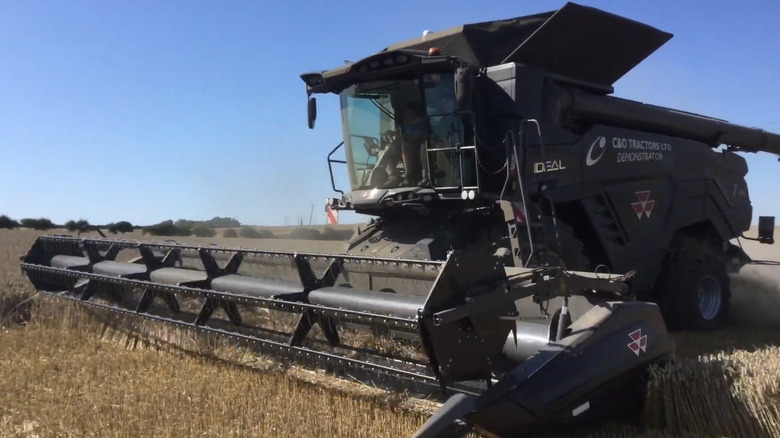
Here's where things get weird -– seven-cylinder engines do exist, just not on the freeway. You won't find one under a car hood, but out at sea, on a farm, or in a museum full of prop planes? Absolutely.
Seven-cylinder engines are often found in marine diesels. Massive low-RPM beasts from builders like Wärtsilä and MAN Diesel use inline-seven configurations because, well, they can. They are perfect for cargo ships and oil tankers that run at steady speeds, where vibration isn't a deal-breaker because your engine is the size of a small apartment. The layout is modular, and smoothness is managed by sheer mass.
For agriculture, AGCO Power (formerly Sisu) developed a 9.8-liter inline-seven diesel for Fendt tractors and Massey Ferguson combines – this is where torque matters more than refinement. And of course, old airplanes rocked sevens long before turbojets stole the spotlight. Radial designs like the Jacobs R-755 and Wright Whirlwind R-760 (J-6) used seven-cylinders arranged in a circle.
As long as you kept the propeller spinning and the air cool, seven-cylinder engines ran smooth. Turns out, they just needed a little help from gravity and airflow to make sense.
Why seven stays off the road
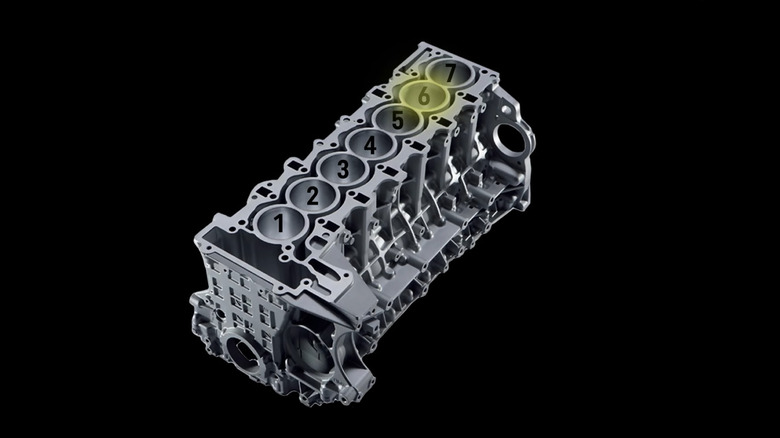
So if ships, tractors, and old planes can pull it off, why not cars? The simple answer: cars hate imbalance.
An inline-seven engine in a car would have uneven firing intervals (1-3-5-7-2-4-6), which means the crankshaft receives pulses at irregular intervals. That translates into vibration and noise – stuff engineers spent decades trying to eliminate. Unlike a straight-six, which cancels its own vibrations, a straight-seven fights itself every step of the way. Engineers could counter this with weighted crankshafts, but that adds weight, complexity, and cost. And for what? A little extra torque that a turbocharged four could already provide?
It's not that nobody could build an inline-seven; it's that nobody should — except maybe for car YouTubers like ChargerMiles007, who built and tested one in his backyard. The gains simply aren't worth the pain. Besides, having a seven-cylinder engine would take up more space. You don't want a protruding engine blocking your view, right?
Then there's the cost. A tailor-made seven-cylinder would require new tooling, custom parts, and new calibration for emissions and NVH — again, for what? Slightly more displacement? In the age of hybrid fours and smooth sixes, that's a hard sell. The truth is, the seven-cylinder engine has been beaten by math and balance.