

Is Driving With A Broken Windshield Illegal?
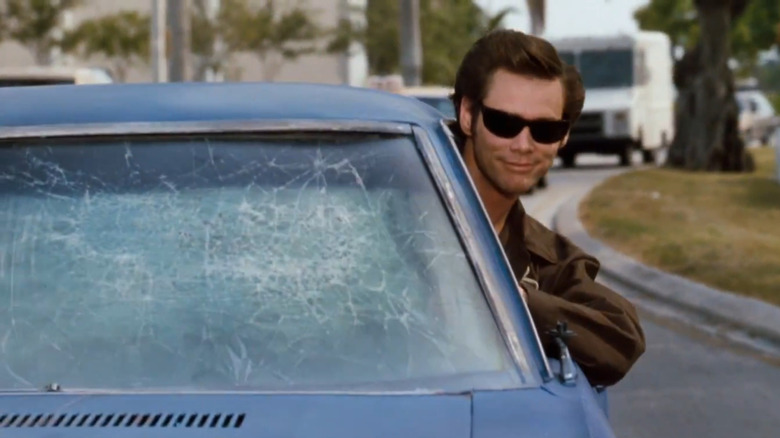
If you're dressing up as Ace Ventura for Halloween, be careful with how accurate you plan on being. The sunglasses, Hawaiian shirt, striped pants, and grating mannerisms are all fine, but skip the broken windshield. There are actually Department of Transportation regulations governing the number and size of cracks your windshield can have before you'll get a ticket: No cracks larger than three-quarters of an inch in diameter, no cracks blocking the driver's view straight ahead, no two cracks closer than three inches apart, and no cracks that intersect. Consider these regulations the bare minimum, because some states get way more strict.
And it is indeed up to each state, or even individual counties, to issue broken-windshield tickets, which can get quite pricey. In Alabama, driving with a cracked windshield through Covington County could cost you $181. Head over to Pike County and suddenly that's a $249 fine. But if you insist on driving around with a cracked windshield and have a smaller ticket budget, California's fines start at just $25. Sure, the Golden State can slap you with a penalty as high as $197, but there's no reason to be a pessimist.
Now, don't start hyperventilating, those of you without commas in your bank statements. The officer who pulls you over might hand you a "fix-it-ticket," which basically tells you, "Go get your windshield fixed, pronto, your countdown has started." If you miss the deadline, you could face further fees, but if you get your windshield repaired in time, you might not have to pay a fine at all. Or you could get a reduced fee, as if you getting a new windshield is a coupon for this particular nonmoving violation. Whatever the case, once you've got a windshield chip or crack, just fix it ASAP.
Replacing your windshield can cost between free and internal organ
You may have laughed at a "Florida man" in the past, but here in the Sunshine State, our comprehensive insurance comes with zero deductibles on windshield repair claims, so who's laughing now? Everyone, since Florida man stories are always hilarious, even in Florida. South Carolina and Kentucky residents also stand on equal, deductible-less footing, and drivers in Arizona, Connecticut, Massachusetts, Minnesota, and New York can pay extra for no-deductible glass coverage as an insurance add-on. If you don't live in any of these states, you'll probably have to pay some manner of deductible, or you could foot the bill for the repair/replacement yourself, which won't be cheap.
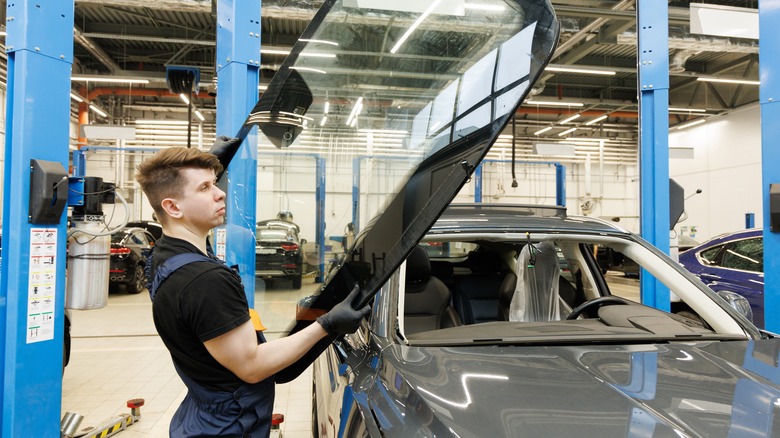
Since every last blasted thing in our cars has to have some sort of computer or sensor these days, getting a new windshield is fist-clenchingly, brow-furrowingly exorbitant. While your older, less electronic-nanny laden cars might only require around $300 to get a fresh windshield, newer cars with Advanced Driver Assistance System sensors and cameras that require precise calibration can suck $1,000 or more from your bank account should you need a windshield replacement. If you want to live in the future, it will cost you.
By the way, if your car is under warranty, you'll probably have to get a repair done at a specific shop (or dealer) with original factory parts. If you get the work done by "a guy who probably knows what he's doing," or if you have a poorly done aftermarket tint or modifications that compromise the windshield's structural integrity, don't expect your car's manufacturer to shrug its shoulders and approve further repairs. Just grit your teeth, get an authorized replacement, and keep your warranty intact.
State of denial
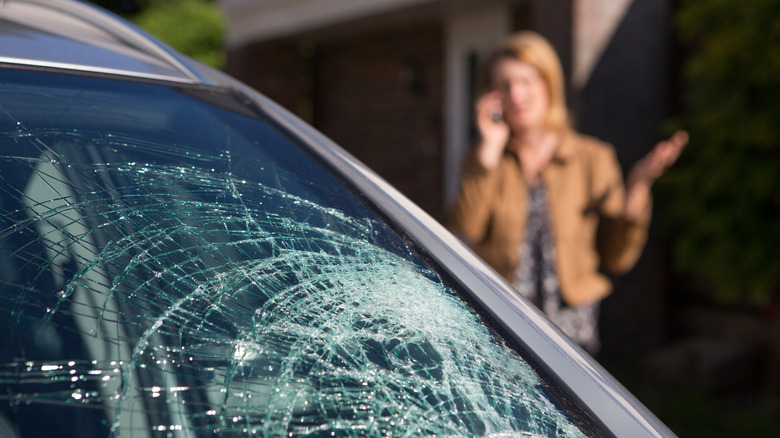
Not every state settles for the federal cracked-windshield regulations. Some go further. Many states are fairly objective, such as Georgia, which requires starbust or spider web cracks to be less than 3 by 3 inches. Other states get super-specific, such as Louisiana, which limits windshields to two chips, nicks, half-moons, or stars less than a half-inch in size. Missouri and Pennsylvania prohibit sharp, exposed edges, which are hard to cause in safety glass. However, it's probably possible if you, say, walk on your Cybertruck windshield enough times.
Many states restrict wiper-area cracks specifically, such as Massachusetts, Mississippi, Missouri, New York, Oklahoma, Rhode Island, Virginia, and West Virginia, so just make sure to shatter the area outside the wiper's reach. New Hampshire and South Dakota are military-boot-camp strict, as windshields cannot have any cracks, shatters, or damage whatsoever, do I make myself clear? Now drop and give me 20!
Then there's the vagueness of Kansas, where cars can't have a "damaged front windshield or side or rear windows which substantially obstructs the driver's clear view." Ignoring the fact that all windshields are "front" windshields, how does one define "substantially?" Does a half-inch clear-glass peephole count?
Now, there may be a loophole here. Federal regulations say that buses, trucks, and truck-tractors must have windshields, but cars don't. Otherwise, McLaren couldn't sell the windshieldless Elva (not that those cars sold much anyway). Some states will even let you drive your Jeep with the windshield folded down, not that it's recommended. And if your car doesn't have a windshield, would that make your glasses the windshield? If so, is it illegal to drive with a crack in your glasses?