

Refusing A Breathalyzer Test In Florida Could Send You To Jail Under New Law
Americans can't really agree on much these days, but, at least for now, it seems like most of us can generally agree that drunk driving is bad. Heck, even the people who don't think you should be punished for running over an elderly woman crossing the street tend to change their tune if the driver is drunk. So, while you may not expect Florida — a state whose governor says it's okay to use your car as a weapon against protestors you don't like – to come down hard on drunk driving, that's exactly what one new law does.
Known colloquially as Trenton's Law, after Trenton Johnson, an 18-year-old who was killed by a drunk driver with a previous vehicular homicide conviction, HB 687 went into effect on October 1 and specifically targets repeat offenders. Now, instead of 15 years being the maximum sentence for vehicular homicide or DUI manslaughter, anyone on their second offense can now be sentenced to up to 30 years in prison.
And don't think it's any different if you drunkenly kill someone with a boat, either. BUI manslaughter is also eligible for the new 30-year sentence. Additionally, first-time offenders can now be sentenced to up to 30 years if they knew or should have known they hit someone but failed to stop or fled the scene. The new law doesn't just target repeat offenders — it also adds new penalties for refusing a breathalyzer test. Under the new legislation, you could face fines, jail time, and even a license suspension if you refuse a breathalyzer test in Florida. Here's what you need to know.
More than just longer prison sentences

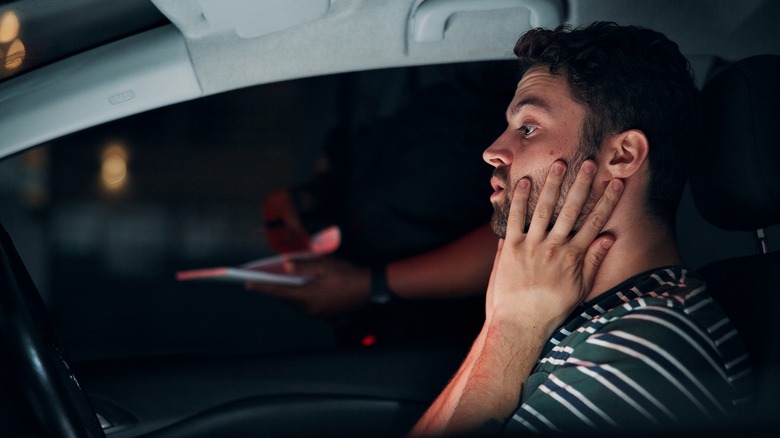
The new law does more than just add harsher punishments for repeat offenders. It also allows authorities to go after people suspected of drunk driving, even if it's their first alleged offense. Before Trenton's Law went into effect, refusing a breathalyzer test was treated as a civil infraction. Now, it's treated as an actual crime that can be charged as a misdemeanor. That said, the cops are at least required to let people know the potential consequences that now come with refusing a breath test.
As a second-degree misdemeanor, refusing a breathalyzer test could result in up to 60 days in jail and a potential $500 fine, consequences that some may still find preferable to a DUI conviction. That said, a refusal also comes with an automatic 12-month license suspension — and good luck getting around in Florida without being able to drive. That 12-month license suspension is also only for your first breath test refusal. Refuse a second test, and it becomes a first-degree misdemeanor punishable by up to a year in jail, a year of probation, and a $1,000 fine. Those who have previously had their licenses suspended for any reason and refuse a breath test may also have their licenses suspended for up to 18 months.
So, while drunk driving (and boating) was already bad, you really don't want to do it in Florida now. Sure, drive your car into as many protesters as you want, but you better be sober while you do it.