

How Does Grille Shape Affect Engine Performance And Why Are They All Different?
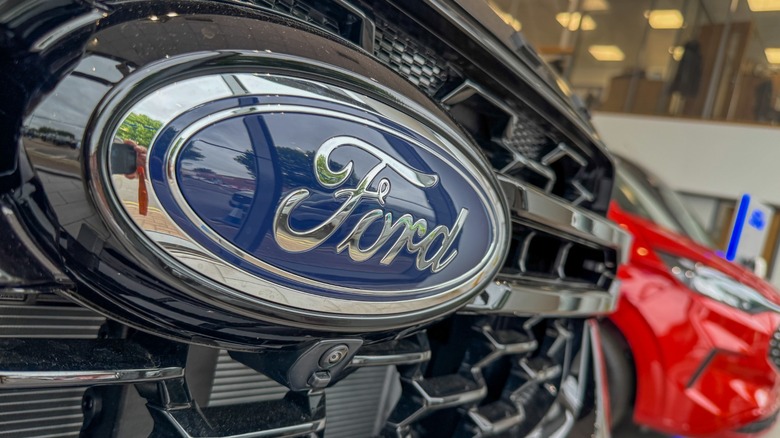
You probably already know that your grille protects your radiator while allowing air to flow on to it, keeping it cool. In fact, the openings, whether they are hexagonal, diamond-like, horizontal, or vertical, are shaped to direct air directly on to the radiator without letting that air leak to the side. This really just applies to cars with internal combustion engines, of course, as most EVs are cooled differently. Instead of a grille, the Tesla Model 3 does have a narrow air vent towards along the front of the car towards the bottom edge. However, some Tesla owners have found it necessary to add an aftermarket grille or mesh to that vent to keep out debris like leaves and dirt.
But your car's grille serves other purposes besides protecting and cooling the radiator. For example, grilles are also shaped to direct airflow around the car to make it aerodynamic. This reduces drag and enables your vehicle to get better gas mileage and to more easily reach its top speed.
Both engine cooling and aerodynamic performance can be achieved by different grille shapes, which is why no one shape dominates grille design. That's a good thing, because grilles are an important part of automotive branding. In this age of look-a-like vehicles, one of the few things that stand out among car brands is the shape of the grille. Of course, in Tesla's case, it stands out by having no grille at all on its later-model vehicles. But that doesn't stop some folks from pimping their Teslas with aftermarket grilles.
It helps keep the engine cool

Have you ever been broken down on the road with steam spewing out of your radiator? An overheated engine is not a good time. Your car's engine generally needs to be between 195 and 220 degrees Fahrenheit. Hotter than that, and you're in trouble. Of course, if your car does overheat, there is usually a problem a grille design can't fix, like a busted radiator or hose. It could also be a sign that your radiator needs to be flushed.
Still, a good grille design is an important part of your car's cooling system. The grille is usually shaped in such a way as to direct air straight to the radiator, helping to keep it cool. That's why your car is more likely to overheat in stop and go traffic, as opposed to when it is moving down the road at a good clip. But the openings in the grille have to be shaped in such a way, so air won't escape to the sides of the radiator, making the best use of airflow.
Does that mean the bigger the openings, the better the grille cools the radiator? Not necessarily. While large openings are better than small ones, very large openings don't increase airflow that much and are not always structurally sound. Another important element is what the grille is made of. Plastic grilles may seem cheaper than the older metallic ones, but they are better for airflow because they weigh less. Their light weight also makes them more aerodynamic.
It's aerodynamic
We don't have to tell you that gas prices have been through the roof for the past few years, staying above the $3 a gallon mark. That has led a lot of us to value good gas mileage and fuel efficiency. But the shape of the grille in your car can help with that.
One of the biggest enemies to fuel efficiency is drag. In fact, studies show that a car going 100 mph uses 50%-70% of its energy fighting drag. The harder your car has to work to push through the air as it goes down the road, the more gas it uses. But a properly shaped grille can redirect airflow around your car, so that it doesn't have to work so hard. This is particularly true of a grille that is closed.
But how can a closed grille help to cool an engine? Some automakers have found a way to balance the need to cool the engine with making the car aerodynamic, by using active grilles. These grilles have flaps that close when the engine doesn't need to be cooled as much, but open up in situations when the engine needs to be cooled. Ford has used active grilles on the Mustang, Focus, and F-150. Chevy has used them on the Cruze Eco and Malibu Eco. Other automakers, like Ram, Dodge, Honda, Mazda, Toyota, and even luxury brands like BMW, Lincoln, Mercedes and Rolls-Royce have used active grilles. Studies have shown that active grille shutters can improve fuel economy from 1.5% to 4%, depending on factors like ambient temperature and driving mode. Any little bit helps, especially since some of us are running out of things to pawn to keep our tanks full.
It looks cool
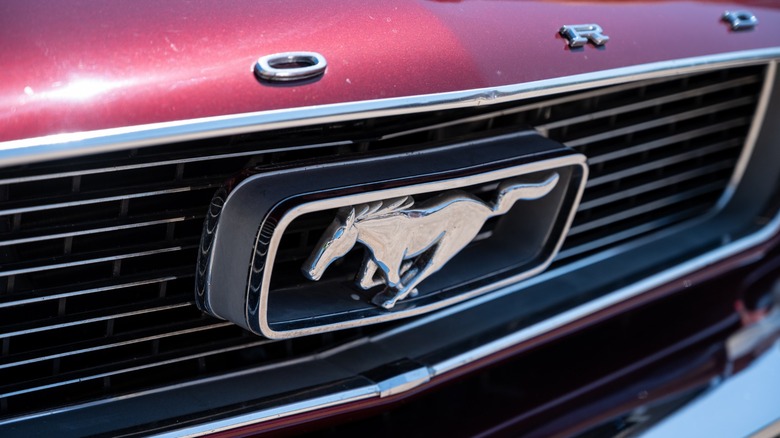
Another advantage of grilles is that some of them just look cool. Think about cars like the classic Ford Mustang. Where would it be without that aggressive grille with the pony in the middle? The same could be said of the Dodge Challenger and Charger. The grille is an important design element on these cars.
Lots of automakers have their own iconically-shaped grilles, which have become an important part of branding. That's significant, since most cars look pretty much the same today, but the grille gives each automaker some leeway to create their own unique style. For example, most enthusiasts know a Ram pickup truck when it comes charging by, thanks to the big boxy grille attached to the hood. The same could be said of the 7-slot grille on the front of Jeeps. Luxury car brands especially feature recognizable, unique grilles. Most of us know the BMW kidney grille, that in-your-face hexagonal grille used by Audi, and the elegantly retro grilles seen on Rolls-Royce vehicles.
How grille shape has changed over time
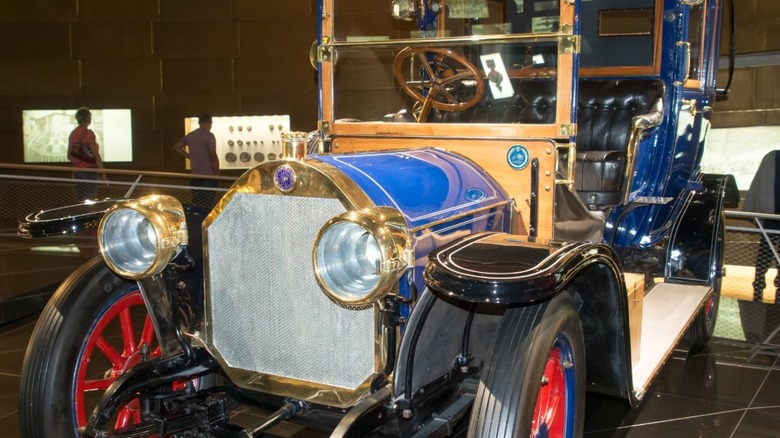
Grille shapes look a lot differently today than they did in the past. You only have to look at the progression of the Mercedes-Benz grilles to see that. That automaker installed its first protective radiator grille in 1931. Before then, radiators had just been mounted to the front of automobiles, exposed to the world. That was the case when Mercedes first fitted Wilhelm Maybach's invention, the honeycomb radiator, to the 35 PS in 1900. But even when grilles started to be used, it was mostly function over form, as they were designed specifically to protect and provide air flow to the radiator. That's why those early grilles were almost the same size and shape as the radiator.
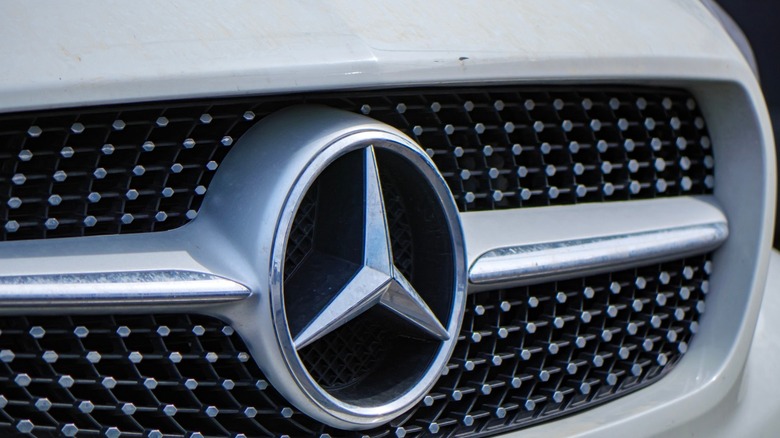
But grille shapes widened over time and took on a unique look for each brand. In Mercedes' case, grilles changed from the mostly square shape to a more rectangular one, to the broad three-bar version on the G-Class, to the wide, aggressive grille with the vertical bars and the large Mercedes badge right in the center. The wider grilles also provided more airflow for cooling and better helped make the cars more aerodynamic. Grilles aren't just about protecting the radiator anymore. Their importance goes beyond the function of making cars more aerodynamic, as they are an essential part of the aesthetic.
Grilles? We don't need no stinkin' grilles
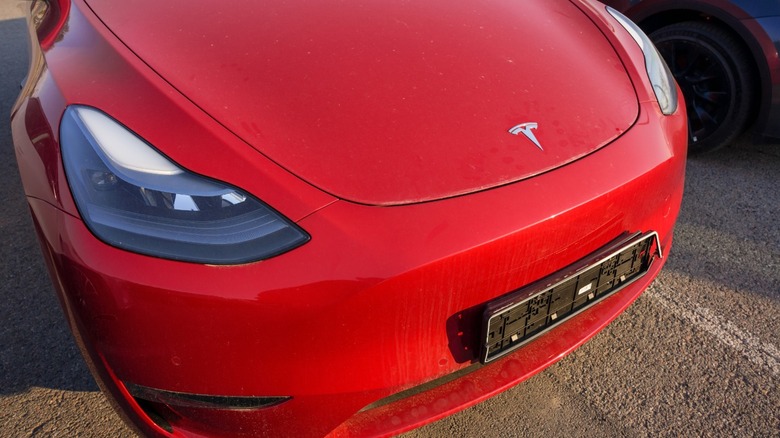
You may have noticed newer Tesla cars don't have grilles, but Tesla vehicles and other EVs do, in fact, have radiators and cooling systems. They just aren't like the ones you'll find in your typical car driven by an internal combustion engine. EVs need cooling systems because they have components like batteries, electronic systems, and electric motors, all of which need to be cooled. But generally, they are liquid cooled, as opposed to air cooled, meaning they don't need a grille, in theory.
So, why do most EVs, like the Ford F150 Lightning and the BMW iX series, have grilles if they don't need them for cooling? Grilles still have benefits for EVs, like making the vehicle more aerodynamic, providing a spot to hide censors and cameras, and looking cool. Of course, Tesla has to do everything differently and doesn't let things like "looking cool" get in the way of that. One look at the Cybertruck will tell you that.
Instead of grilles, Tesla opts for panels that are the same color as the rest of the car body, along with a narrow air vent on the front of the Model 3 and Model Y. Looks are important to some Tesla drivers however, and some of them opt to attach an aftermarket grille right on the front of that body panel. Tesla's obstinance notwithstanding, the humble grille has been an important part of automotive design for almost a century. It helps to cool the engine, makes your car more aerodynamic, and improves your car's looks.