

These Are The Coolest Cars That Came Stock With Wire Wheels
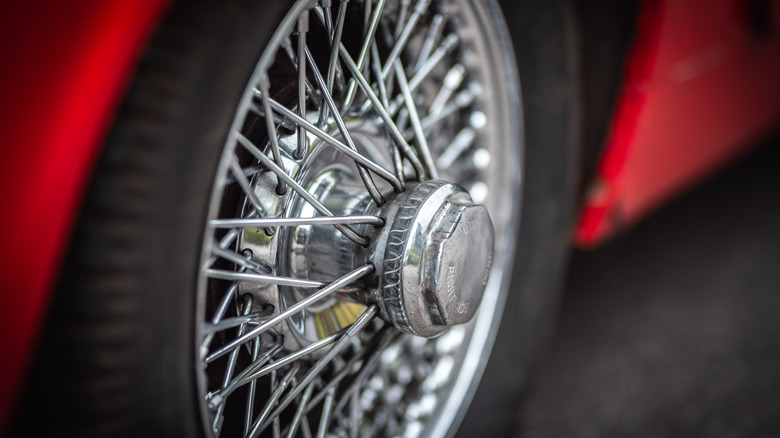
Wire wheels aren't in favor today on new cars – unless lowriders count – but they've been around since the dawn of the automobile, and there are plenty of cars through the years that just wouldn't look right with any other wheel design under their arches. That's certainly the case for some of the open-wheeled pre-war cars we've gathered together in our list of the coolest cars that came stock with wire wheels.
One of the most famous names in wire-wheel manufacturing in the U.S. is Kelsey-Hayes, maker of many a stock wire wheel. Amusingly, it fought with — and eventually bought out — the Wire Wheel Corporation over the rights to make the patented design, but it turned out that the Packard Motor Company owned the patent anyway. Kelsey-Hayes paid it a licensing fee to stay in business. In Europe, Borrani wheels in Italy had — and still has — an incredible reputation for wire wheels that hinges on its association with Ferrari, most notably in motorsport.
This style of wire wheels was so popular that it spawned a whole generation of American cars in the 1960s using wire wheel covers over pressed steel wheels. These were far cheaper to make and not limited by the appearance of actual wire wheels, allowing for sleeker designs. Are they as cool? We're not convinced.
1963 Aston Martin DB5
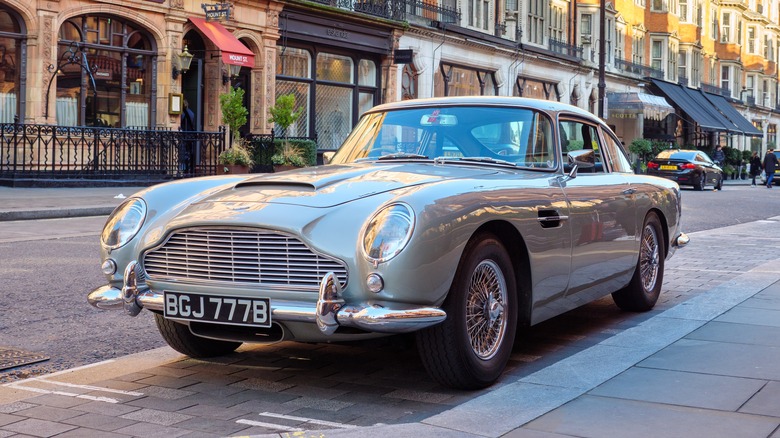
The first car on our list needs little introduction, as the Aston Martin DB5 has been made famous by the James Bond film franchise. The DB5 first appeared on the big screen in 1964's "Goldfinger" and has been synonymous with the British secret agent ever since. Indeed, in that outing, the stock wire wheels came into sharp focus in one scene when 007 deployed the DB5's built-in tire slashers to shake off one of the various baddies giving chase.
Despite its fame, the DB5 was only made in small numbers – just over 1,000 units in three years — which probably explains why they're so sought after, and why values are so high today. The DB5 Convertible is even more rare, with just 123 examples made, but we're suckers for the classical hardtop shape. The DB5 was actually designed in Italy, as was its Superleggera (Italian for super light) construction, by Carrozzeria Touring Superleggera of Milan — consisting of hand-rolled aluminum body panels over a steel chassis.
Under the bonnet was a powerful 4.0-liter inline-6, putting about 280 horsepower to the back wheels via a stick shift. Later Vantage cars topped 320 hp and they were certainly quick in their day, even if the DB5 really was more of a GT than an out-and-out sports car. No matter what the Bond car-chase sequences might suggest.
1963 Ford Thunderbird Sports Roadster
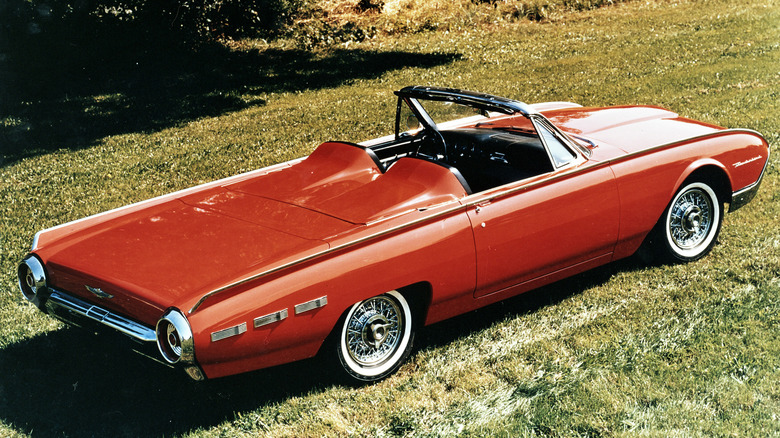
Ford introduced the 1963 Thunderbird in four different styles. Alongside the Landau and Hardtop was the expected Convertible, and that sired another model, called the Sports Roadster. This was the least popular of the lot, probably because of its pricing relative to the not-very-different Convertible. The USP of the Sports Roadster was a sculpted fiberglass tonneau cover that sat over the rear seats to make this Thunderbird look like a two-seat roadster. The cover even featured a slope and two headrests in a manner popular with Italian design houses of the day.
However, with their roofs raised, you'd struggle to spot the difference between the Sports Roadster and Convertible. Unless that is you knew that the Sports Roadster came with wire wheels stock from the factory. It was the only model to do so. They're a 14-inch, chrome-plated design with what a Ford brochure called "simulated knock-offs" with three prongs. Sports Roadsters couldn't be fitted with the so-called fender shields found on most 1963 Thunderbirds — covering part of the rear wheels — because those spinners stuck out too much.
That was the least of Ford's problems, though. Not only was the car expensive to produce, making it way more expensive than the Convertible to buy, but the fancy wire wheels weren't strong enough. As was very publicly exposed when one of the wheels on Elvis Presley's car collapsed. This was before his too-many-burgers days, before you say it, and Ford had to recall all examples sold and reengineer the wheels, which just adds to the car's coolness in our eyes.
1961 Jaguar E-type
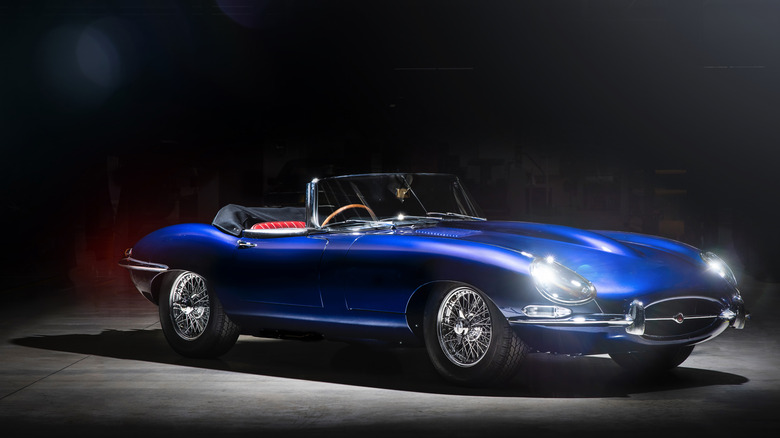
Enzo Ferrari was not known to mince his words, so when he reportedly declared the Jaguar E-Type to be "the most beautiful car ever made" shortly after its 1961 debut, Jaguar most have known it was onto something. In the spirit of this article, we like to think that the wire wheels fitted stock to the E-Type had more than a little to do with its aesthetic appeal. A little digging reveals that the wheels were painted as standard and buyers had to pay more for the chrome finish that has become synonymous with what is undoubtedly a car design icon.
The E-Type not only looked great, as it also delivered performance comparable with the fastest cars. The back story is littered with dozens of cameos and sidebars. You really should watch Norman Dewis, Jaguar's Test and Development Engineer on the E-Type project on the Jaguar Daimler Heritage Trust YouTube channel. He recalls the story of driving an engineering prototype through the night from England to Geneva, then spending the week ferrying passengers up a hill climb to demonstrate the new car. It turned into an impromptu competition between Jaguar, Mercedes, and Ferrari, but the E-Type was quickest.
Given its motorsport roots, that shouldn't be a surprise, and the gorgeous bodywork was actually designed with aerodynamics in mind, so it was famous for its 150-mph capability even before it was offered with an extravagant V12 engine. Either way, wire wheels, stock, cool. No debate.
1962 Ferrari 250 GTO
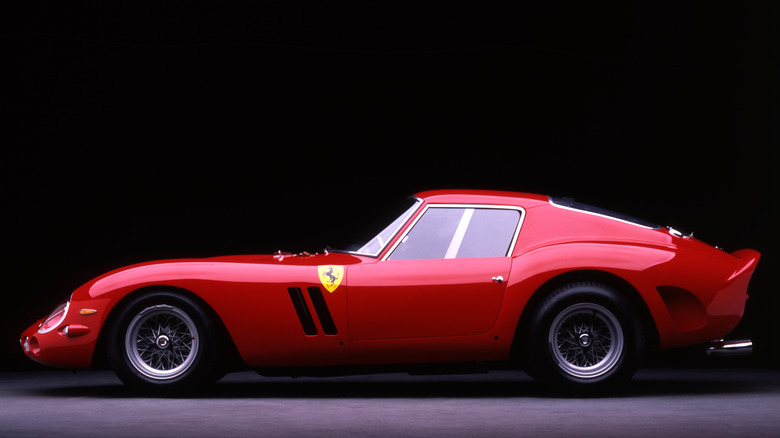
Wire wheels and Ferrari sports cars of the 1960s go hand in hand, specifically the stunning Borrani wheels fitted to many. We've chosen the 1962 Ferrari 250 GTO to represent its maker in this feature, partly because of the insane prices the 250 GTO fetches at auction, but mostly because its achingly beautiful lines were penned not by a famous Italian car designer, but by Giotto Bizzarrini, the lead engineer on the car. Who said engineers couldn't be creative?
The beautiful 250GT SWB prefaced the 250 GTO and was the basis for it, though, as indicated by the O for omologata -– Italian for homologation –- the 250 GTO was developed with the World GT Championship in mind. Unusually for the era, Bizzarrini spent some time in a university's wind tunnel to help shape the 250 GTO's body for high speeds in a bid to reduce its predecessor's tendency to lift. An impossibly low bonnet was made possible by use of use of dry-sump lubrication for Ferrari's sublime 3.0-liter Colombo V12, which produced 300 horsepower, while an integrated rear spoiler would come to define the look of the car.
Only 39 were made –- three of those with a 4.0-liter engine -– but it became an immediate success on the track by winning the newly named World GT Championship in 1962, 1963, and 1964, and reaching the podium two years running at Le Mans. Today, Ferrari openly admits that the GTO "was not simply a great tourer, but a real racing car with a number plate."
1953 Buick Roadmaster Skylark
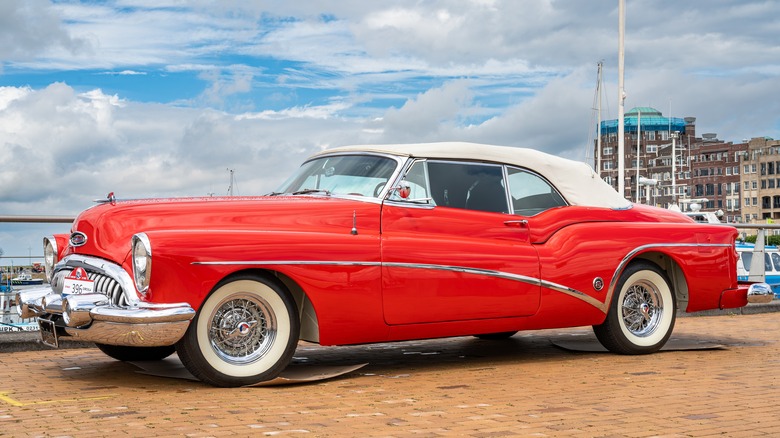
The first Buick to wear the Skylark name was based on the big Roadmaster convertible and without a bit of context it's not an easy car to understand -– it could be mistaken for just another Buick of the day. The burgeoning custom car scene in California began to influence mainstream car design by the beginning of the 1950s and General Motors took a tentative step in that direction by announcing the introduction of three limited-edition, custom-bodied convertibles. These were the Cadillac Eldorado, Oldsmobile Fiesta, and the Buick Roadmaster Skylark.
The Skylark's windscreen was dramatically chopped, as were the doors, giving the car a unique look even before the fenders were reprofiled by hand. More obviously, the fairing covering the rear wheels in the normal Roadmaster was cut away to show off the Kelsey-Hayes wire wheels, and the side spear of chrome was completely redesigned, curving down in front of the rear wheel before sharply following the open wheel well and then flattening out behind it. Out back, the shiny wire spare wheel could optionally be proudly displayed, mounted to the rear of the trunk.
This Skylark wasn't a massive sales success in Buick's 50th anniversary year, with just 1,640 sold, probably because it was eye-wateringly expensive at about 50 per cent more than the Roadmaster convertible. However, it did debut Buick's advanced new Nailhead V8, which was significant, and anyway, rarity is partly what makes it all the more sought after today as a classic.3
1930 Alfa Romeo 6C 1750 Gran Sport
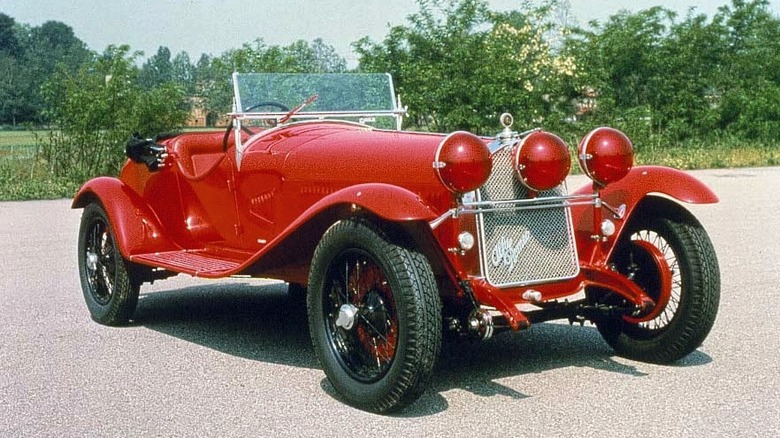
Alfa Romeo was utterly dominant in the late 1920s and into the '30s when it came to racing in Europe. The Mille Miglia –- a name that literally translates to 1,000 miles –- race was its bread and butter. Save for the victory by Rudolf Caracciola in a Mercedes-Benz SSKL in 1931, Alfa Romeos won the Brescia-to-Rome-and-back epic every year from 1928 to 1938. In the early years, the 6C -– meaning six-cylinder -– cars were the fastest and while all featured wire wheels, and from them we've chosen the stunning, Zagato-designed 1930 Alfa Romeo 6C 1750 Gran Sport to lather with our adoration, specifically the Testa Fissa version.
That's Italian for fixed head and it refers to the single casting for the cylinder head and crankcase, eliminating a potential weak point. The 1,752cc –- hence the name -– inline-6 was the brainchild of Vittorio Jano, a renowned Italian engineer, as was the car itself. In replacing the Alfa 6C 1500, Jano was tasked with creating "an economic, lightweight car with brilliant performance," per Fandazione Pirelli, and the 1750 exceeded expectations.
The Testa Fissa version made about 100 horsepower thanks to supercharging but only weighed 1,850 lb, and it was reliable, too, with 25 out of 26 examples finishing the arduous race in 1929. The next year the 6C 1750 Gran Sport took the top four spots after a titanic battle for first place in which Tazio Nuvolari is credited with switching off the distinctive three headlights in the dark so he could surprise the leading Achille Varzi and take first place.
1953 Austin Healey
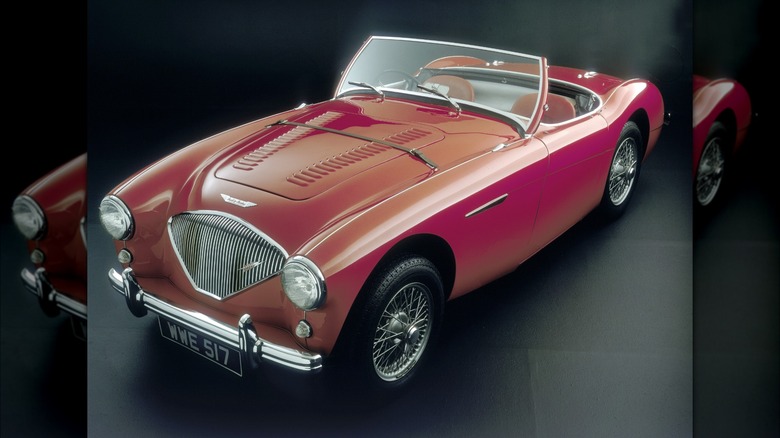
Donald Healey was a busy man. The first car with his name on it was introduced in 1946 as the 2.4-liter Healey Elliot saloon, with the second half of the name coming from the company that produced its closed body. It was the fastest production closed four-seater car in the world for a while, although the Healey Silverstone that came after arguably had a bigger impact on the company's fortunes as it paved the way for an agreement with Nash Motors in the U.S. This resulted in the successful Nash-Healey range of sports cars. Healey himself even drove one at Le Mans.
But arguably his coolest creation is the Austin-Healey, previewed in 1952 as a prototype that caught the eye of British Motor Corporation's boss as a way to compete with other affordable sports cars using its Austin nameplate. Production of the Austin-Healey 100 began in 1953, initially on a hand-built basis before Austin could ramp up manufacturing. That first model was a two-seat roadster with four-cylinder Austin power. And the name? It referred to its 100-mph top speed, of course.
As you've already gathered, it also had wire wheels from the get-go. While the more powerful 100-6 was later offered with steel disc wheels, the wire originals –- made by Dunlop and Dayton –- are as much part of the car's distinctive design as its big radiator grille and low-slung rear bodywork. The Austin-Healey 3000 of 1964 was faster again, but there's nothing so cool as the original.
1930 Chevrolet Sport Coupe
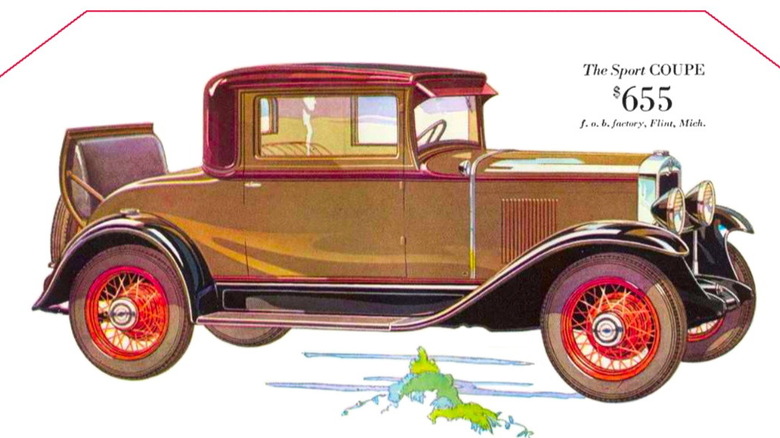
"The Greatest Chevrolet in Chevrolet History" proclaimed the 1930 Chevrolet sales brochure for a range of automobiles using, in the firm's words, "a six in the price range of the four" -– i.e. a six-cylinder engine at a four-cylinder price. The focus on pricing and value was likely due to fallout from Black Thursday in late 1929, partially leading to what has since been called the Great Depression.
Yet, the American auto industry put on a brave face. The 1930 Chevrolet Six wasn't radically different to the 1929 model, but power from the 194-cubic-inch inline-6 was increased to 50 hp. As before, a bewildering array of body styles was offered and, clearly showing that the auto world hadn't yet converged on one wheel construction, there were steel wheels, wood-spoke wheels and wire wheels available.
The coolest model was undoubtedly the Sport Coupe, which came stock with stylish wire wheels that were painted red in the brochure. These were a selling point of the car, as was the dubious advantage of the rumble seat, a pop-out design behind the cabin exposed to the elements that turned this two-seat coupe into a four-seat vehicle. The rear window opened to allow conversation between those in the front and back. It probably wasn't the greatest Chevrolet in history even then, but it sure was a cool way to distract yourself from the financial woes of the world.
1964 Ford GT40
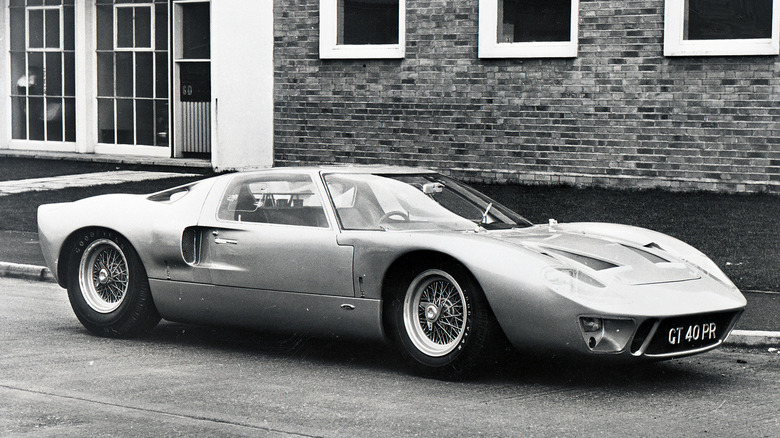
Most pictures of the iconic Ford GT40 show the low coupe sitting on alloy wheels known as Halibrands, but it actually launched with wire wheels and the original batch of Mk 1 road cars sat on wire wheels. The fact they're relatively uncommon makes them all the cooler in our eyes and while Carroll Shelby soon discovered that the wire wheels weren't strong enough to handle the car's torque, new wire wheels did make a return for the short-lived Mk III road car.
It's the history of the GT40 project that makes it so cool. It would probably never have happened if Enzo Ferrari had just sold Ford his company as appeared to be on the cards in 1963. This is wonderfully dramatized in the 2019 "Ford v Ferrari" movie, as is the development challenges of the GT40 itself. The 40 in the name refers to the car's height in inches as you probably know, and its 1966 1-2-3 finish at Le Mans is as legendary as any, although it took a herculean effort from Ford to make that happen.
We're just happy it all meant the creation of such a beautiful, motorsport-inspired coupe powered by a 7.0-liter V8 that could top 200 mph.
1932 Duesenberg SJ
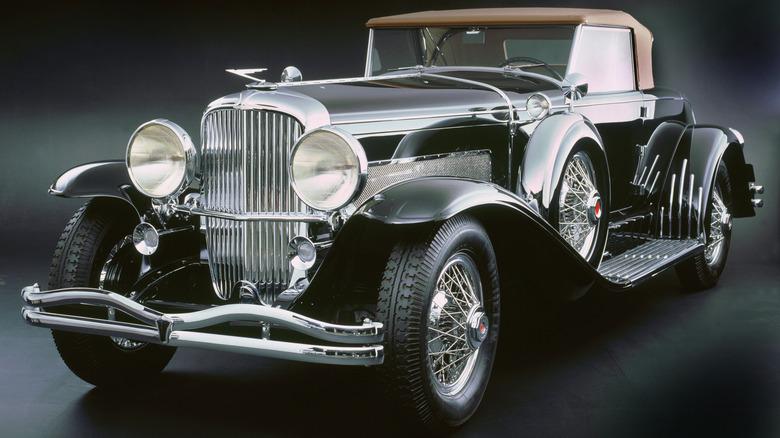
Just a month after Fred Duesenberg unveiled his company's new supercharged Duesenberg SJ in 1932, he tragically died after complications brought on following crash in one of these stunning automobiles. What an incredible legacy, even if Fred -– the brains behind the operation — couldn't make the company work from a financial perspective without outside help.
The first car to bear his –- and his brother August's -– name was the Model A, which featured the straight eight inline-8 engine, the first of its kind in the States. It also was the first automobile to feature hydraulic brakes on all four wheels, revealing the engineering-lead focus of the company. It didn't lead to financial success, however, and Errett Lobban Cord, president of the Auburn Automobile Company, bought the brothers out in 1926 and tasked them with creating something truly exceptional.
In 1929 the Duesenberg J was launched, and its inline-8 was Fred's work, producing 265 horsepower at a time when the next most powerful production car in America put out only 125 hp. But the 1932 SJ was even more special, using a supercharger to produce up to 320 hp, allowing this huge car to hit a scarcely believable 104 mph in second gear and 129 mph flat out. Its extravagant design included chrome-plated exhaust pipes either side of the long bonnet which have come to represent the style of all Duesenbergs, as have the 19-inch wire wheels.
1957 AC Ace
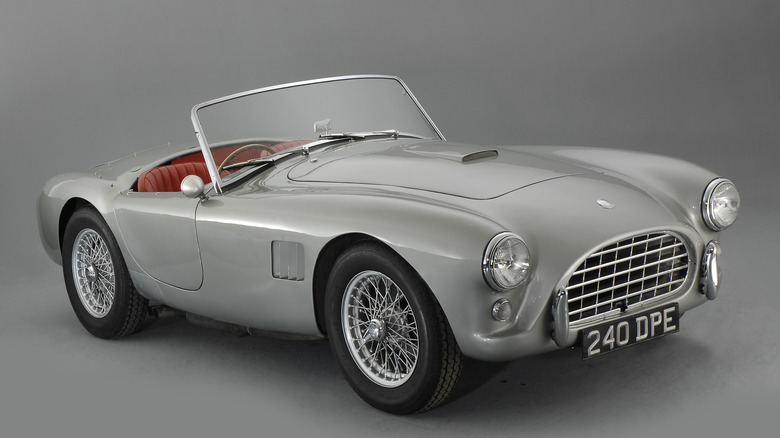
The AC Cobra is one of the most recognizable cars in the world, all muscular fenders and wide tires, no doubt designed to contain the mighty V8 under the bonnet. However, it didn't exactly start out with that shape, nor with an association with Carroll Shelby. In fact, the story starts way back in 1901, even though the AC name wasn't used until 1907 – the same year the iconic AC badge was designed.
Fast forward to 1953 and the introduction of the AC Ace, an open, two-seat sports car using spaceframe construction for low weight. That disguised the lackluster 75-horsepower 2.0-liter engine somewhat, but the car came alive in 1956 when it was upgraded with a Bristol-made engine, a 2.0-liter inline-6 that gave the car way more performance -– up to 125 hp — and actual racing success, too, including class placements at Le Mans. The ace up its sleeve (pun intended) was as much the car's roadholding, aided by the all-independent suspension. From 1957 it got disc brakes up front, which helped its on-track prowess, too.
Given its success, it might be a little surprising that only 463 of these Bristol-engined Aces were made, but the production run was likely cut short by the deal struck with Carroll Shelby to drop Ford's new V8 engine into the car in 1962, creating the AC Cobra we all know and love. Don't ever forget its wire-wheeled AC Ace roots.