

Do You Really Need To Put Premium Gas In A Rental Car?
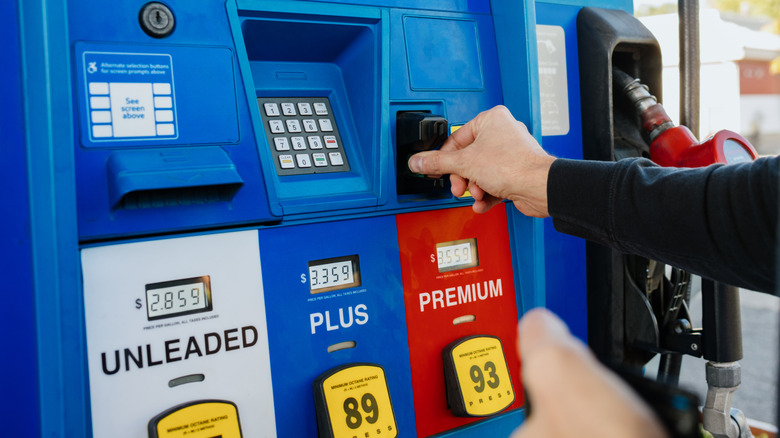
It's common knowledge that buying an ex-rental car can be a path to scoring a great deal on your next vehicle. That said, consider that rental cars frequently have more blemishes than normal, such as extra scratches, dings, and curbed wheels. After all, renters aren't likely to treat their temporary ride as carefully as a personal vehicle. And that's not to mention the, ahem, spirited driving techniques that borrowed cars are sometimes subject to.
We know that Jalopnik readers would never abuse a rental, but what about covering the extra cost if your next rental car calls for premium fuel? On average, premium gasoline costs about $0.80 more per gallon than regular, which can really add up over the course of filling 20 gallons or so. What we can tell you for sure is that not all cars require premium fuel. In fact, the majority are perfectly fine using regular gasoline, which is rated at 87 octane or even 85 octane in some high-elevation areas.
Unless premium fuel is clearly specified with a label or sticker on or near your rental's fuel cap, don't give a second thought to putting in regular gas. That said, even if your rental commands premium fuel in an obvious manner, it still won't harm anything to use regular, though it will hamper performance.
Your hi-po rental will adjust

High-performance engines with high compression ratios or forced induction like a turbocharger frequently call for premium fuel. However, with the advent of computerized engines decades ago, such cars and trucks are able to adapt to lower octane fuels if necessary. If you're renting a Corvette that clearly calls for premium, and you fill it with regular gas, it's not going to hole the pistons from detonation or pre-ignition like the old days. Instead, the ECU utilizes knock sensors and other inputs to, at a minimum, retard the ignition timing. More advanced systems may also adjust valve timing or limit the amount of turboboost to avoid engine damage when running lower octane fuel.
However, such detuning of the engine to adapt for lower octane will obviously hurt performance and possibly fuel economy, too. If you're just puttering around town under normal circumstances, you might not even notice the horsepower handicap of running regular gas when premium is recommended. That said, the performance drop will be noticeable when pushing the limits. For example, Mazda rates its 2022 CX-5 with a turbocharged 2.5-liter engine at 256 horsepower using premium 93 octane gasoline. But running on regular 87 octane gas, that same engine makes just 227 horsepower.
Pay it forward?

If your next rental car is designed for use with premium, and you fill it with regular during your rental period to save some money at the expense of optimum performance, well, that's your prerogative. But at the end of that rental period, you might find yourself topping off the tank at a gas station near the airport to avoid paying a steep fee for returning the vehicle with less than a full tank. That's where the real moral dilemma kicks in.
Do you heed the fuel cap's recommendation for 91 or even 93 octane premium, so the next renter can enjoy the car's full performance capabilities? Or say screw it, I'll save some money on that final fill up, even if it means that the ECU will detune the engine for the next renter? That's between you and your conscience, but do know that you won't actually harm the vehicle or get busted by the rental car police like they're doing with those giant error-prone AI damage scanners.
Finally, it can't be overstated that if your car, rental or otherwise, doesn't specify premium fuel — or even mid-grade, for that matter — just use regular. With a scant few exceptions like Ford's EcoBoost lineup, anything else is probably wasting money.