

When The DPF Light Comes On, What Should You Try First?
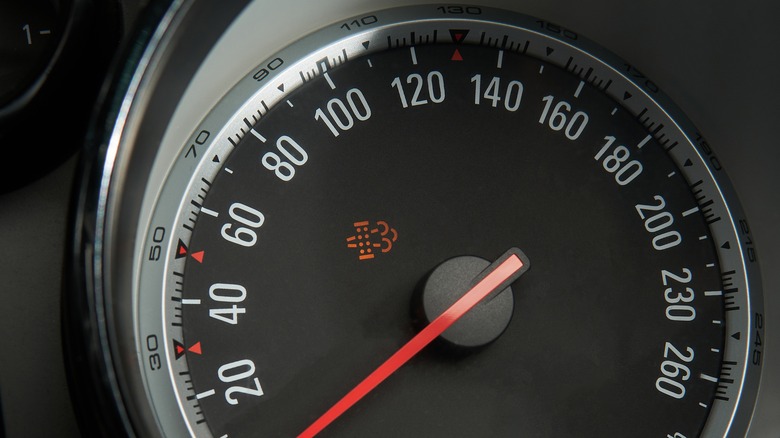
The role of a DPF, or diesel particulate filter, in a modern automobile is an important one. As the name implies, the DPF works to filter out particulate matter in diesel vehicles — more specifically, the DPF helps remove soot particles from the exhaust system. The DPF captures these pollutants instead of releasing them out of the tailpipe and into the atmosphere. The environmental benefits are therefore easily understandable, but DPFs can become clogged over time, and it's at this point that the DPF light will pop up on your dashboard. Blockages can lead to permanent damage further down the line, plus legal and financial headaches if you fail local emissions checks as a result. So, it's best not to continue driving when the light does illuminate.
Instead, when this light pings on, it's best to take immediate action, which can include cleaning, regenerating, or replacing the DPF. It's worth mentioning that when the light first appears, you may be able to continue driving your car as usual, but that's not to say that you don't need to act. As you continue driving, the filter will keep trapping soot and other pollutants, further contributing to the blockage and providing more opportunity for lasting damage to occur.
The first thing you should try to do is regenerate the DPF. This process involves driving steadily at high revs for a prolonged period of time. This increases exhaust temperatures, which can then burn off the excess soot and clear the filter. If this works, the DPF light will go out. However, if the light stays on after attempting a regeneration, it's time to book a trip to the garage.
The processes and costs involved of repairing or replacing a faulty DPF
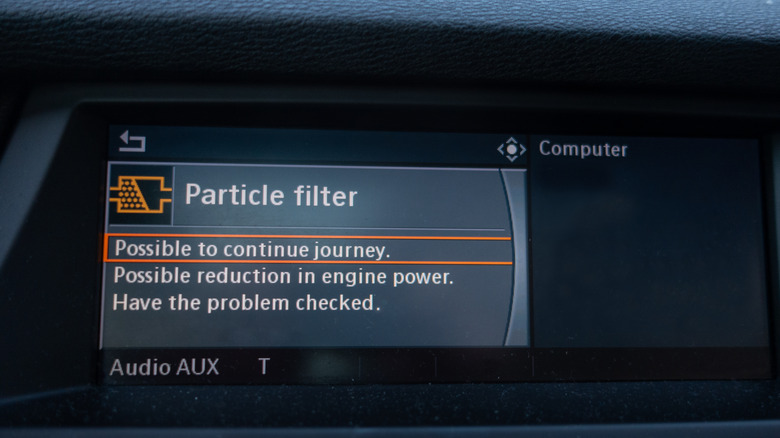
If a regeneration drive fails to clear the DPF light, a mechanic can then try what's known as a forced regeneration. A regeneration drive is free and should be your first move, but it doesn't always work, especially if you're unable to keep the car at a constant speed with higher revs for long enough. A forced regeneration usually costs between $150 and $300, although, if the blockage is severe, professional cleaning may be necessary. Prices vary, depending on the method and model, and it's important to remember that DPF cleaners don't always work. While compressed air cleaning or an additive-based approach may range from $450 to $1,500, an ultrasonic cleaning could cost $500 to $1,600, and thermal or abrasive methods may reach $800 to $1,900.
In severe cases where the filter cannot be cleaned, replacement becomes the only option. This is the most expensive route, and prices can typically range from $1,000 to $3,500. The exact bill will vary, depending on vehicle size and type, and some luxury cars can sometimes see the repair cost exceed $5,000. With potential bills like this, it should be easy to see why tackling the issue early is the best option, rather than allowing it to escalate.
Fortunately, it is possible to prevent DPF clogging problems. Regularly driving at highway speeds allows the system to regenerate naturally. Using the correct engine oil, monitoring those oil levels, and sticking to quality diesel fuel all help to reduce soot build-up. It's also important to avoid switching off the engine during an ECM-triggered regeneration cycle. So, if the process starts, let it finish to ensure that the soot burns off completely. Another key suggestion is to keep up with routine services, as a mechanic could be able to spot early signs of a blockage, and then perhaps perform a simple regeneration before the light even appears.