

4 Useful Ways To Use The AUX Switches On Your Jeep Wrangler
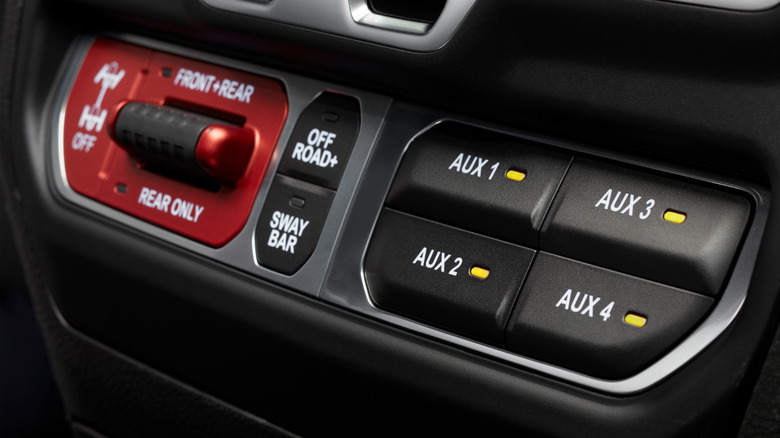
You picked up a Jeep Wrangler to chase the American dream. Now, those AUX switches on the dash are staring back at you, begging to be wired into something fun. They're not there for show, and they're definitely not there to make the cabin look more rugged. The Wrangler auxiliary switches let you run up to four add-on accessories inside or outside your vehicle without hacking up the dash. They integrate directly into the UConnect system, so you can program each switch to behave exactly how you want it to. The switches can provide constant power if you need something running with the ignition off, switched power so that devices turn off with the ignition, momentary power (only on while pressed), or latched power (one-touch on/off).
If your Wrangler didn't come with them pre-installed, the aux switches are also sold as a kit. The Mopar AUX Switch Bank kit ships with its own wiring harness, fuse block, and power distribution center, making integration much cleaner than running standalone toggles. The kit provides max amperage ratings of 15 amps for all four aux buttons, in comparison to the factory-installed version, which provides max ratings of 40 amps for two switches and 15 amps for the other two buttons. If you install the kit as an aftermarket mod, you still need the dealer to run a flash update to make the Jeep's computer to recognize the system.
Whether your Wrangler came from the factory with aux switches or you chose to install them later, you can program these handy buttons to do many things. Here are four of the most practical uses for your Wrangler aux switches.
Lighting things up

Extra lighting is an obvious upgrade because, well, Wranglers and extra lighting go together like peanut butter and jelly. It could be LED light bars across the roof, spotlights on the A-pillars, or rock lights tucked under the fenders — the AUX switches are tailor made for illumination upgrades. Instead of relying on aftermarket wiring kits and random toggle switches zip-tied to your dash, the Jeep system integrates it all cleanly and lets you control multiple lighting zones with factory buttons. Jeep even designed them to handle higher amperage loads, so you don't have to worry about overtaxing the system with a huge light bar.
The pre-wired pigtails for the switches hide near the battery. Jeep has thought things through, as AUX 1 and 2 switches can handle heavy loads (40 amp circuits) with the factory system, and AUX 3 and 4 (15 amp circuits) are better suited for smaller accessories. Then, after connecting one of the pigtails to your light bar's wires, you can jump into the infotainment system to program the button. In short, Jeep did the hard wiring for you — all you need is some heat shrink, a connector, and the confidence to slice into that loom. The end result is a Wrangler that's as visible as you want it to be at night, even if it's painted in Jeep's best color, which is dark and hard to see in low light conditions. When you flip an AUX switch and the desert in front of you lights up like a stadium, you'll understand why Jeep bothered wiring these switches in from the factory.
Powering winches and recovery gear
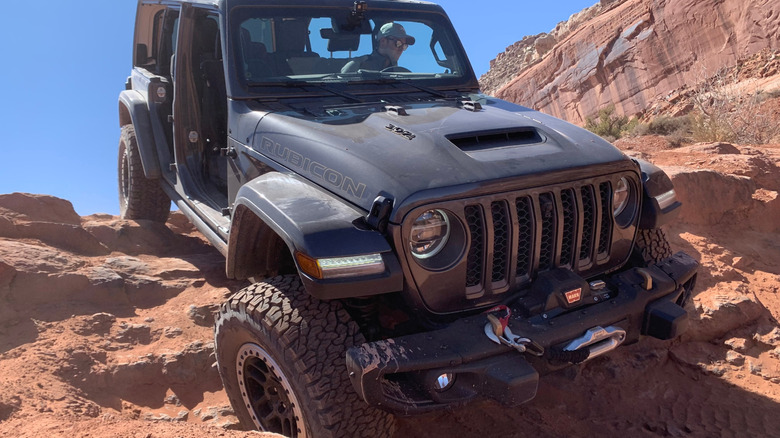
If you find yourself in a tricky off-road situation, a winch could be your last resort, even if you have to winch yourself backwards. Off-roaders know that a winch is less of an accessory and more of a lifeline. You could be yanking yourself out of deep mud or helping a buddy stuck in the sand — having quick and reliable control over your winch can make the difference between driving home and hiking out.
The AUX switches make powering a winch much simpler. Instead of routing everything through a clunky external switch or a dangling remote, you can wire the winch control to the higher amperage AUX 1 and 2 channels for clean integration. It's not just winches, either. Recovery gear, like onboard air compressors used for inflating tires after a trail run, also pair perfectly with AUX switches, as reported by users. Rather than fumbling with connections or opening the hood to start the compressor, you hit a button inside your Jeep, and the compressor fires up. This integration keeps everything neat and helps you avoid extra clutter on your dashboard.
Running fridges, coolers, and inverters
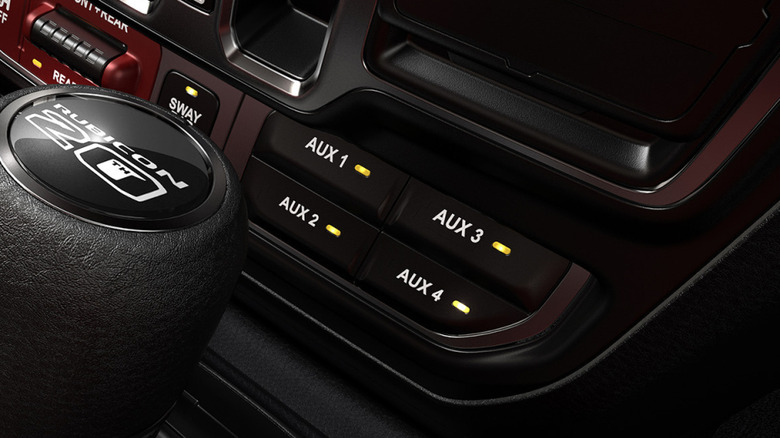
If you're planning a 50,000 mile road trip around the world in your Wrangler, you're going to need some luxuries. Those AUX switches open the door to powering accessories, making life in the wild a lot more comfortable. Owners report installing portable fridges and power coolers using these switches, giving them an easy way to manage power without fumbling with cigarette lighter adapters or aftermarket panels. If you've ever pulled warm beer out of a cooler after a long drive to camp, you already know why wiring in a 12-volt fridge is one of the first upgrades many Jeep overlanders make.
Owners also report that the AUX switches can also be tied into portable power inverters, giving you AC outlets for charging things like laptops, cameras, and other devices. Sure, it's about convenience, but it's also about safety, because running everything through one factory-backed system reduces the risk of overloading circuits or creating fire hazards. When you can roll up, park, and flip a switch to power your little camp setup, your Jeep stops being just a ride to the trailhead and becomes part of the adventure itself.
Managing comms, dash cams and more
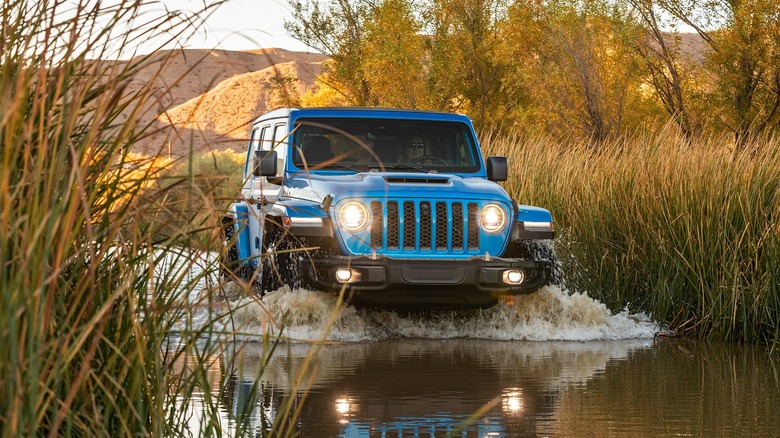
Adventures and overlanding are part of the Jeep experience, and while rooftop tents – like the Go Fast Campers rooftop tent – are convenient and almost essential for multi-day trips, there are many more amenities that are part of the modern overlander experience. Plenty of Jeep Wrangler owners are proving that AUX switches aren't just for lights or winches. Rather, they've become the Swiss Army knife of customizations. Owners have wired their AUX channels to power radios for trail communication, custom 12-volt sockets for accessories like dashcams or GPS units, and even in-cabin fans for hot-weather wheeling.
Jeep built these switches with off-roaders in mind, but owners have turned them into all-purpose power hubs that make Wranglers as capable at camp as they are on the trail. Some even use the switches to power off the engine fan motor for deep water crossings. Other users have used the switches to operate water pumps for a portable shower and USB plugs for the Wrangler's rear end.