

Was Al Capone's Limo Confiscated And Then Used As The First Armored Presidential Limo?
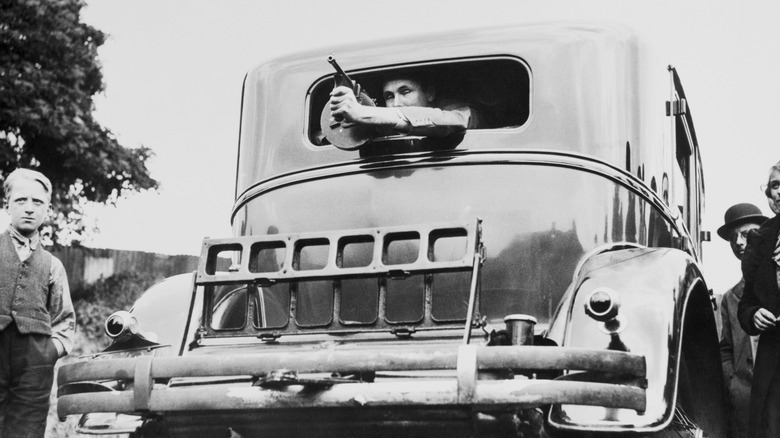
During Franklin D. Roosevelt's 12 years as U.S. president, cars became far more than just transportation at the White House. They served as symbols of visibility, security, and presidential authority. Despite polio leaving Roosevelt with no use of his legs, he was an enthusiastic motorist and refused to move away from the wheel. A number of his personal cars were therefore equipped with custom hand controls, which let him enjoy the freedom of driving.
During FDR's time in the White House, the presidential fleet of cars expanded significantly, which is no great surprise, given the impressive growth of the automotive industry around this time. However, not all were for his personal pleasure. Tensions were heating up on the global stage, so the question of protection while out and about became ever more important.
The importance of armored protection became clear following the December 7, 1941 attack on Pearl Harbor, and here a particularly fascinating chapter of automotive history is recorded — or not. Supposedly, after the attack, Roosevelt was transported in none other than a confiscated limousine once belonging to the infamous gangster Al Capone, seized by the Treasury Department years earlier. While Roosevelt had many of his own cars, Capone's limo was partially armored, and was said to have stepped into service at a moment when Roosevelt's own "Sunshine Special" was being modified with enhanced protection.
Some have cast their doubts over this story, but whether true or not, it still highlights an interesting time in history. And the beginning of armored presidential cars marks the first stepping stone toward cars such as the presidential "Beast" limo produced many years later.
Is there any truth to the Capone connection?
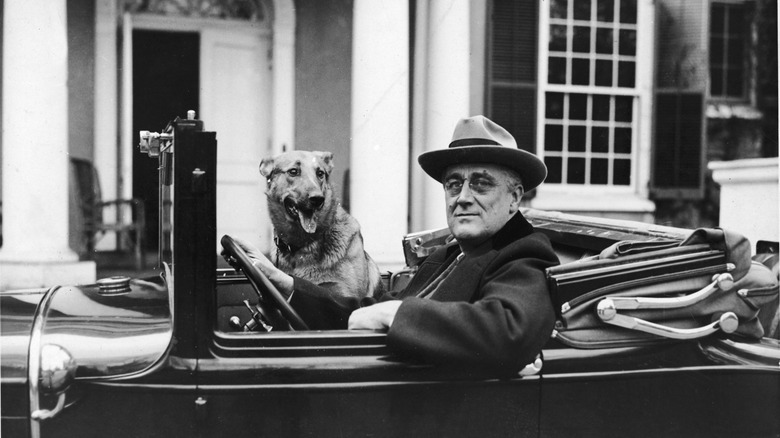
The Capone story connects him with Roosevelt in a bizarre way. The gangster's car of choice was a 1928 Cadillac that housed a 341-cubic-inch V8. According to Secret Service Agent Michael F. Reilly, per the White House Historical Association, Roosevelt relied on a vehicle with a "dubious reputation" for his dramatic trip the day after Pearl Harbor from the White House to the Capitol, where he asked Congress to declare war. Reilly's account is where the rumor first appeared, implying that Roosevelt's car was Capone's '28 Caddy. The vehicle had been held by the Treasury Department after the gangster's 1931 conviction for tax evasion.
It's easy to see why the story gained traction, since Capone's car featured everything Roosevelt required. It was equipped with bulletproof glass, had plenty of space inside, and hey, it was on hand. The story also fits neatly into the urgency of the moment, when the Secret Service suddenly realized Roosevelt needed a higher level of protection when on the road.
However, photographs from December 8, 1941, tell us a different story. These show Roosevelt riding in a semi-armored 1938 Cadillac — a car that had long been in the White House's arsenal. Unlike Capone's Caddy, these beasts were V16-powered, and are one of very few production cars offered with a V16 engine, sitting alongside creations such as the one that will use Bugatti's 21st-century V16. Weighing about 8,000 pounds and equipped with protective glass, Roosevelt had two of the 1938 cars at his disposal, nicknamed "Queen Mary" and "Queen Elizabeth." Whether the president ever used Capone's Cadillac is now unknown, although most agree it's unlikely.