

3 Common Mistakes That Put Kids At Risk In Car Crashes According To IIHS
Despite being a car enthusiast, I've always been morbidly infatuated by vehicle safety and crash testing. Cars are often viewed as four-wheeled manifestations of freedom and excitement, but they're also two-ton blocks of metal and gasoline that flawed humans drive at speeds upward of 70 miles per hour. Millions of car accidents happen each year in the U.S., so it's important for everyone to do what they can to protect themselves in the event of a car crash, but best practices aren't always obvious.
The Insurance Institute for Highway Safety, or IIHS, is spotlighting three common issues that put children at an increased risk of injury in car crashes. (As we approach winter, it's also important to remove your child's puffy winter coat before buckling them up, and if your kids are in their teenage years and you want a safe car for them to drive, IIHS has a list of affordable and safe vehicles for teen drivers.)
Modern cars are designed to protect their occupants from injury in a crash more holistically than ever, but keeping a small child safe requires special consideration by the parents. Cars are designed to keep adult-sized bodies safe in a crash, not the small bodies of babies and young children, but these tips will give your children the best chance at staying safe should an accident occur: always buckle them up, keep them in the proper restraint type for their size, and adequately tighten their restraints.
Simple steps to keep your kids safe
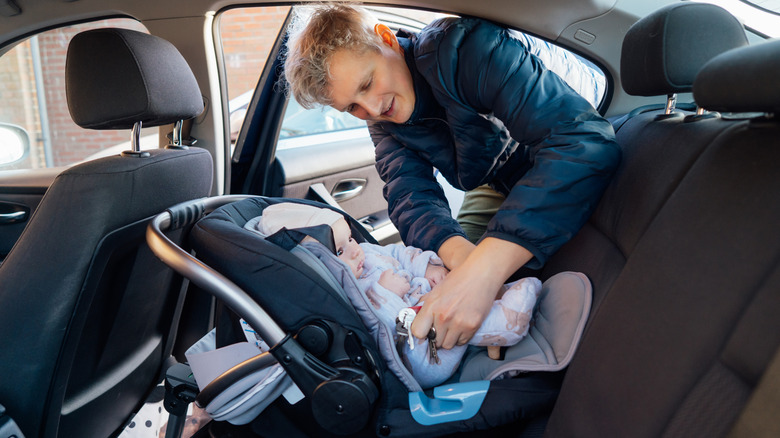
For safety systems to work, they need to be used. Make sure you buckle your child's seat belt for every trip, no matter how short. It can be tempting to say, "We're just driving around the corner, they don't need to buckle up," but doing so puts your child's life at risk. Of course, everyone in a car should wear a seat belt, but it's parents' responsibility to make sure their kids are secured.
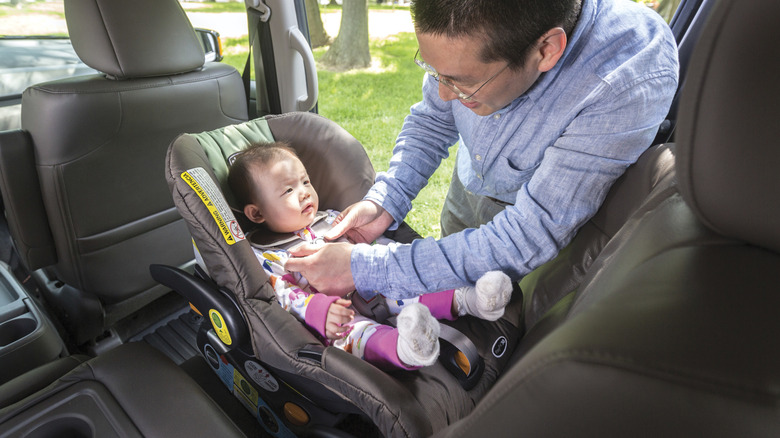
Part of making sure a child is properly secured is making sure they're using the proper restraint. Small children need to be in rear-facing child seats until they grow too big for the seats' height or weight limits. Rear-facing child seats offer great protection because they cradle the child's entire body in a frontal collision. Since babies have disproportionately large, heavy heads, putting a small child in a forward-facing seat puts them at risk for unnecessary strain on their necks and heads in frontal impacts. Older children need booster seats for the seat belt to do its job, generally until they are over 4 foot 9 and weigh over 80 pounds.
And snugly adjust their harness or seat belt, regardless of what type of car seat they're using. In a car seat with its own harness, make sure the harness is tight enough that you can't pinch or grab the belts around their collarbones. If your child is big enough to sit in a booster seat, make sure the seat belt is adjusted to cross their chest and sit close to their neck without contacting it. For more information on best practices to keep your child safe in the car, check out the IIHS child safety research website.