

How Long Do Brake Rotors Usually Last?
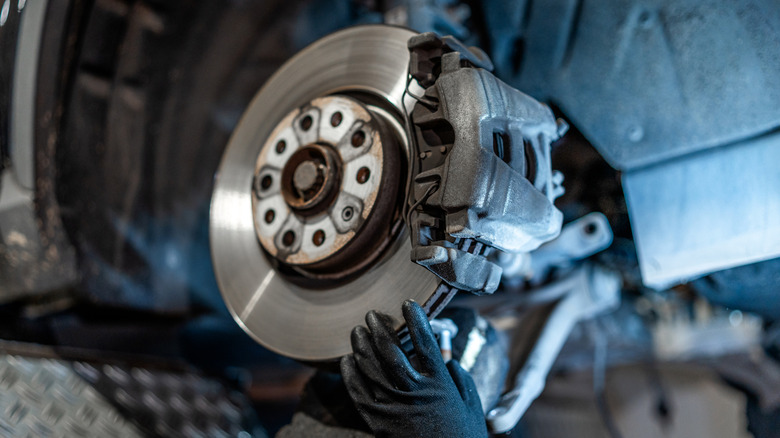
The lifespan of the brake rotors in a daily driven car depends on several factors. Those who drive mainly on the highway can expect the brake rotors to last up to 60,000 miles before they get too thin, too warped, or too damaged with deep grooves, rendering them unfit for service. Meanwhile, lead-footed drivers who live in the fast lane are typically harder on the brakes, which can lead to brake pad glazing and earlier brake rotor replacements every 20,000 miles or so.
Then again, it all depends on your driving habits and the type of vehicle you drive. Most brake rotors are made of steel and are remarkably durable, as well as resistant to warping caused by intense heat and pressure. However, most newer vehicles have brake rotors made of thinner steel to help reduce unsprung weight, but this comes at the expense of durability.
Replacing the brake pads at the prescribed intervals, typically between 35,000 and 80,000 miles, will help extend the serviceable life of the brake rotors. Organic brake pads tend to wear faster than ceramic pads, so your mileage may vary. Neglect and forcibly driving with worn-out brake pads are the primary killers of what could be otherwise good brake rotors.
Do I need to replace the rotors when changing the brake pads?
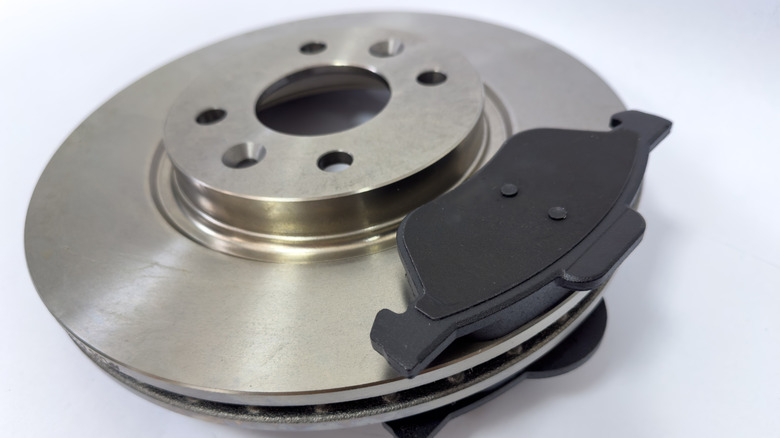
It depends on the vehicle type, as experts recommend installing new rotors when replacing the brake pads to ensure unbridled safety and stopping ability. Read the owner's manual if you have a high-performance exotic sports car, because your baby might need a thorough brake overhaul with every brake pad replacement, which includes a complete rotor swap. But for the average Corolla or CR-V, there's no reason to swap out the old rotors if they're still in relatively good shape.
By that, we mean the rotor surface should be smooth and devoid of noticeable grooves, giving the brake pads a solid and flawless surface to cling to. Moreover, the thickness of the rotor surface (or discard level) should not surpass the minimum number stamped on the hub or rotor assembly. Those numbers will also tell if your old, damaged rotors are good candidates for resurfacing.
Resurfacing is the process of shaving off the damage on the rotors to reveal a smoother surface. It's also cheaper than buying new rotors, but not all rotors are ideal for resurfacing. If the old ones are beyond the minimum discard level, you'll need to foot the bill for new ones. For context, the materials and labor costs of replacing the brake rotors are approximately $250 to $500 for each axle, with rotors costing $40 to $80 each. On the other hand, resurfacing costs half the price of the brake rotor, which is around $15 to $45 per rotor (excluding labor and installation).
The symptoms of bad brake rotors
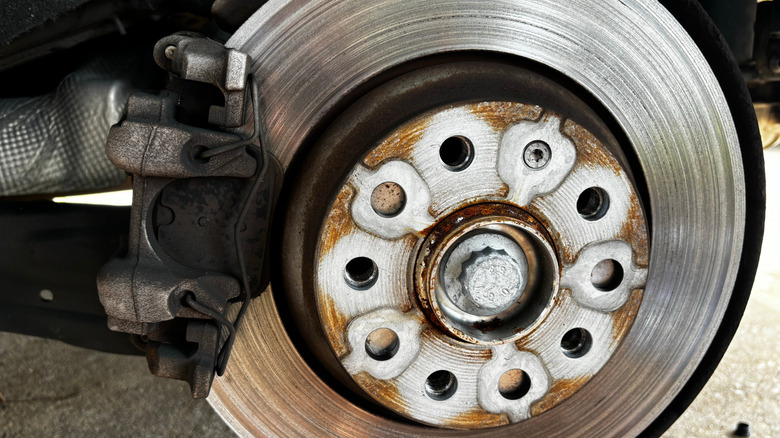
While the brake pads will wear out sooner than the rotors, the latter are not immune to wear. They will ultimately degrade and succumb to the damaging effects of weathering, abuse, and heat, although they do so at a slower rate than the pads, owing to their robust construction. Signs of visible scarring or grooves, excess rust or corrosion on the rotor, bluish heat spots on the rotor surface, or vibrations and pulsing sensations when stepping on the brake pedal mean the rotors have reached the end of their life cycles. Other symptoms include poor braking performance, unpleasant grinding or squeaking noises while driving, and a shaky steering wheel, particularly when stepping on the brakes.
You don't need to have the rotors resurfaced every time you're changing the brake pads. However, replacing them might be a better idea if the rotors are worn, excessively warped, or have enough rust to scare the bejesus out of Rust Valley. With that in mind, have a mechanic check your car's brakes at every oil change, particularly the thickness of the brake pads, to ensure you're not inadvertently damaging the rotors each time you stop.