

Why Your Check Engine Light Might Keep Coming Back After Being Cleared
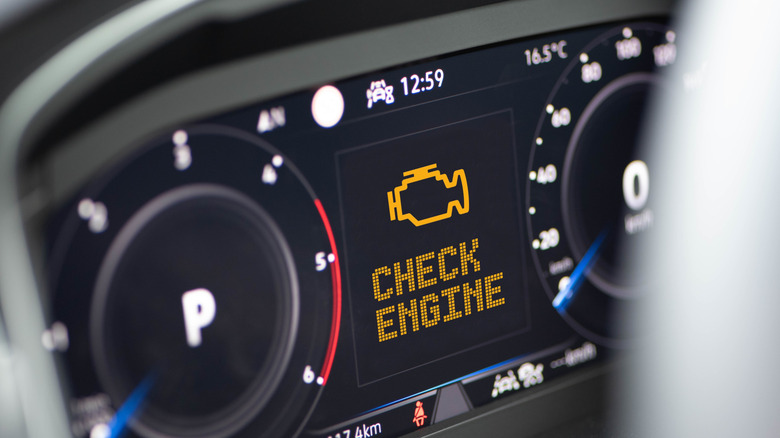
There are few things more distracting when driving than a check engine light, or CEL. The CEL is a vague, catch-all light that indicates there is an error somewhere, be it with emissions, fueling, or something else. While it isn't possible to tell why the CEL is on just by looking at it, there will be a code linked to the CEL, and reading this code is how you tell why, specifically, it's appeared on your dashboard.
While many will go to a mechanic for a full diagnosis, some gearheads and home mechanics prefer to save money by having their car diagnosed at home, and will read the codes on their own. This can be done with an OBD-II code reader. There are countless options available out there, some more reliable and more capable than others, but a cheap one should be suitable if you're just looking to read CEL codes.
Once you've read the code, most code readers will also provide you with the option of clearing the code. This will reset the CEL, leaving you with a problem-free dashboard. For how long, though, is another matter, as the CEL might simply come immediately back on once you restart the car, or it could appear a few miles down the road, or not at all. If you're wondering why it keeps coming on after you've cleared it, it's because you haven't actually fixed the fault — you've just told the car to wipe the code. However, as soon as the car clocks that the issue is still present – ping — the CEL will once again be gracing your dash.
Here's how to actually deal with your check engine light

Instead of clearing the code when you read it, actually pay attention to it. Typically, the code will be five digits long – a common reason for a check engine light to be on is the code P0420 — which is more often brought on due to a failing oxygen sensor. Whatever the code is, take a note of it before clearing (or not clearing) it, so that you can begin your research. After all, you don't want to accidentally destroy your car's engine with a common mistake by not addressing it.
If it's a particularly common issue, then a quick search on the internet will likely bring up a dozen examples of other people with the same car as you in the same boat. Most likely, a solution to your problem will also be posted. Returning to the P0420 example again, the answer might be installing a new oxygen sensor — simple enough. This tackles the problem, rather than just ignoring it. Once that sensor has been replaced, the CEL should reset itself, or you can reset it with the code reader. If the light disappears and doesn't return, you know you've tackled the issue. This is always the preferred way, as, just like with many of life's problems, ignoring a CEL won't magically make the problem go away.