

Do Trickle Chargers Actually Extend A Battery's Life?
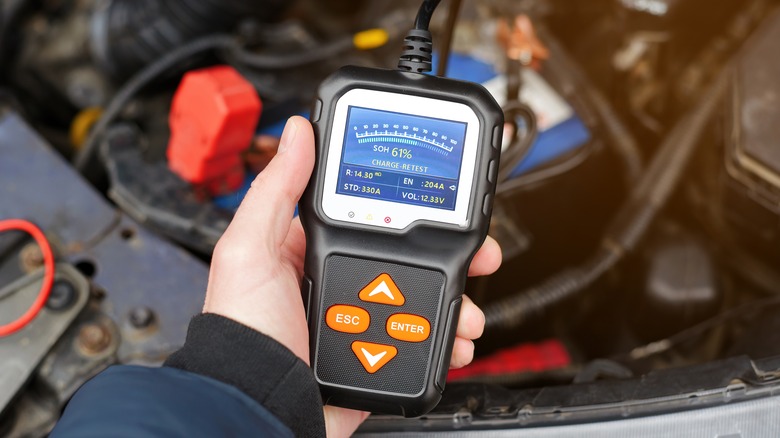
If you've walked into a car dealership in recent years and encountered a puzzling web of cords on the floor, we've got an explanation. Modern cars, even non-EVs, rely heavily on their batteries to perform many operations. Regular charging is important for maximizing EV batteries' lifespans, but maintaining battery power is also important for gasoline-powered cars. When cars (both new and old) sit without being driven, their batteries can drain quickly, depending on the vehicle; some car batteries completely die within two weeks if unused. Trickle chargers, which are those cords you've seen around the showroom, prevent this problem.
Trickle chargers deliver power to car batteries slowly and steadily, limiting the risk of overcharging and battery stress that can occur with traditional or fast-charging methods. Though they take a day or two to provide a full charge, which is less convenient than the four to eight hours a traditional 12-volt charger is likely to take, trickle chargers can actually extend a battery's longevity. They do this by delivering weak but consistent power that keeps a car sufficiently energized even when it goes without being driven.
It's better to avoid the jump-start altogether
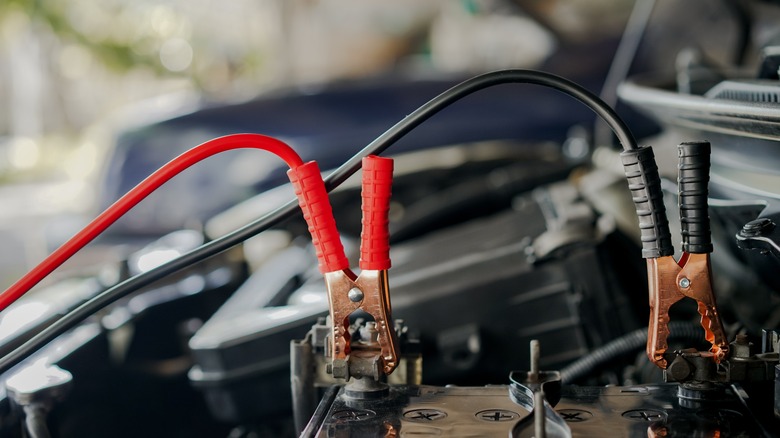
Finding your car battery dead when you try to leave for work on a Monday morning isn't a good surprise, but dead batteries often have consequences that go beyond forcing a late start to the week. When driven regularly, most car batteries last around five years. All car batteries self-discharge — in other words, lose power — when the car isn't running, but the car's alternator charges it right back up when the car is driven on a regular basis. However, cars that sit without being driven (which could be for as little as a week) may experience complete power loss. And a battery's lifespan shortens every time it dies completely.
Jump-starting dead batteries with jumper cables is a quick way to revive your car's battery in a pinch, but it can pose risks to the car's electrical components, especially if done improperly. And in some cases, leting your car's battery drain completely could void its warranty. Clearly, preventing the battery from dying in the first place is the best approach, and driving it regularly is the most straightforward way to do that. For cars that can't be driven regularly, like summer vehicles that stay stored in snowy months, it's wise to find alternative charging methods to preserve your battery's life and prevent drainage.
The trickle charger is preventative care for your battery

For cars that frequently sit without being driven, it's important to maintain power in the battery through other means to ensure the car is ready to drive and the battery doesn't fully drain. A great way to do this is through a trickle charger, which delivers a small electrical charge to the battery at approximately the same rate the battery loses power, helping it maintain a steady state of charge while it sits undriven but preventing it from being flooded.
There are different types of trickle chargers; some automatically stop charging to prevent the car from being overcharged, while others need to be manually unplugged. Knowing the type of trickle charger you have is crucial for monitoring power delivery properly. Trickle chargers don't have to be confined to your home, either; one Jalopnik writer praised solar-powered trickle chargers, which are portable and can be used to maintain power in your car's battery on the go. Adding the trickle charger to your preventative maintenance toolbox can save you money, time, and stress by keeping your battery sufficiently juiced up and running well into the future.