

What Is Heel-Toe Shifting (And Should You Even Bother)?
There are certain things we, as mere car enthusiast mortals, do not deserve and will always make us weak at the knees: the aural pleasure of a BRM 1.5-liter V16 at full tilt, the stunning lines of the 1961-1967 Jaguar E-Type, and the video of racing legend Ayrton Senna heel and toe-ing in a Honda NSX. Honestly, this whole article could just be that video with occasional reverential gasps.
Heel-toe shifting is the best way to achieve smooth downshifts with a manual transmission short of grafting on a third leg. This is because there are occasions, especially when you're going fast around a track, where you'll need to press the clutch, brake, and gas at the same time. Master the heel-toe technique, and you will avoid breaking traction or slowing the car with engine braking.
Let's say you're coming up to a turn and you need to slow down, then shoot out the other end at the highest possible speed in a lower gear. Follow these steps:
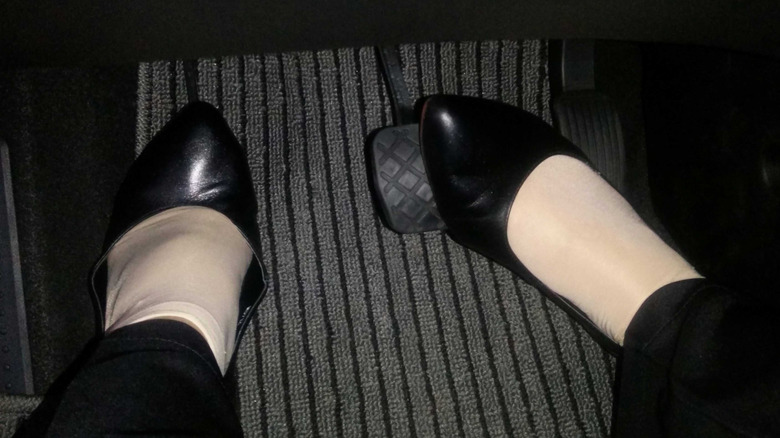
- Press the brake with the toes of your right foot. Your hands should still both be on the wheel.
- Angle your right foot so your heel presses the accelerator while your toes are still on the brake.
- Press the clutch with your left foot. Your hand can grab the shift lever now in preparation for the shift.
- While still applying the brake, start "blipping the throttle", which means revving the engine to sync engine speeds and transmission shaft speeds.
- Shift to the lower gear you want. Ideally, the revs will have matched the shaft speeds, and you won't be putting too much stress on the synchronizers.
- Release the clutch pedal and the brake, while keeping the revs you need with the throttle.
Wait, isn't this just double-clutching?
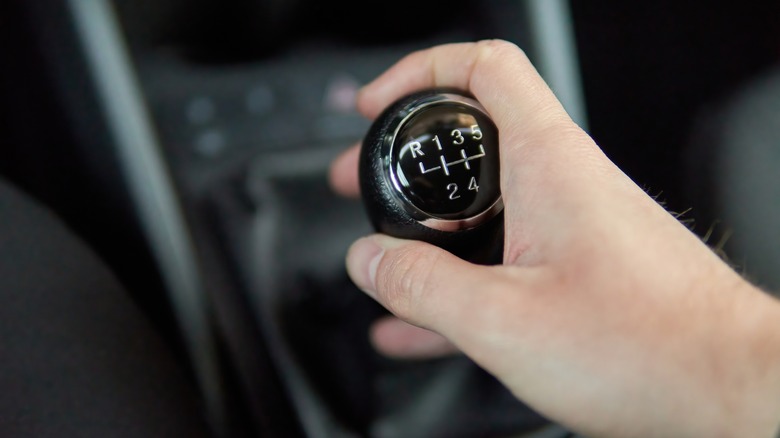
Heel-toe shifting is a lot like double-clutching, but minus some steps. Adding in a double-clutch move comes between the third and fourth steps of the heel-toe process, so let's see what it looks like with double-clutching steps added in. After pressing the clutch in preparation for your shift, put the shift lever in neutral, then release the clutch pedal. Next, press the clutch in again and blip the throttle in preparation for your shift. Get it right, and the shift will be like butter as you match shaft speeds to avoid gear grinding or synchro abuse.
The reason heel-toe shifting has largely taken the place of double-clutching is that synchronizers are magic. They rely on friction to engage, so they can be forgiving of mismatched shaft speeds. You don't have to be so delicate with the clutch pedal, taking your time to perfectly Tetris your way to a lower gear. The synchros say, "Fine, just get close enough, we'll make it all work." Non-synchro transmissions rely on the driver's ability to mesh the gears, lest they be ground into shavings.
Why heel-toe shifting is so important
Manual transmission enjoyers sure do love all those comments from people with dual-clutch automatics who brag about smooth, seamless, fast shifts. Yeah, your paddle-operated transmission can hit the next gear in 100 microseconds, super cool. You can also just skip driving a car entirely and launch yourself from a trebuchet if speed is your only goal.
Learning to heel-toe is not just about driving around a track incrementally faster, though the technique will accomplish that, too; heel-toe shifting lets drivers master a mechanical process that helps them become more connected with their vehicles, which is one of the main reasons why even though manual transmissions may be close to death, enthusiasts refuse to let them die.
If you want more concrete reasons to heel-toe than just "it feels awesome to get right," here you go. Heel-toe shifting will reduce wear on your transmission's synchronizers and maintain traction by avoiding a massive mismatch between engine speed and wheel speed. Plus, you'll be more like Ayrton Senna, and that's objectively a good thing.