

Mini Truck Vs. Side-By-Side: What Are The Practical Differences?
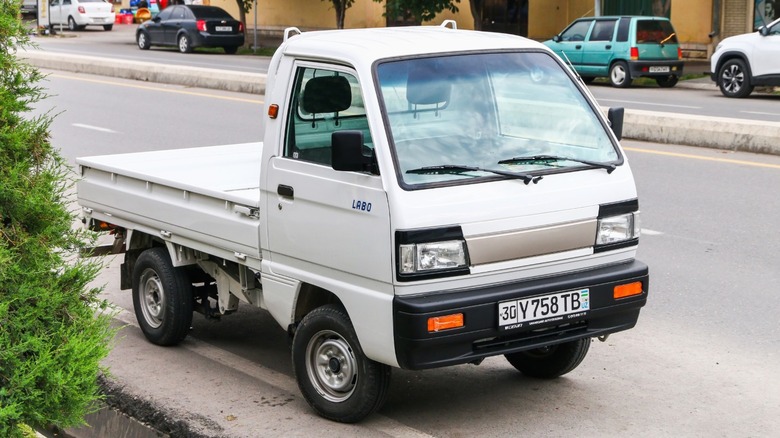
You've likely seen those neat little mini trucks from Japan. They're the size of a compact vehicle, but have a bed as long as some full-size pickups. These Kei trucks, as they are called, look like they would be pretty practical for a number of uses.
President Trump was quite smitten with Kei trucks when he saw them in Japan, apparently for the first time, later calling them "really cute." And in a December 2025 Truth Social post, he said that he had "approved" the manufacture of these "tiny" vehicles here. But, as is the case with many of the president's statements, no one is quite sure what that means. Unfortunately, you can't buy a new one for road use in the U.S., but older ones are available thanks to an exception in import laws.
Maybe you're thinking about snagging one of these trucks for your farm, ranch, or construction site and wondering how they compare to those side-by-sides that are made for work. These utility task vehicles (UTVs) also have a bed on the back and are often used to haul small loads around on a worksite. There are several differences. For one thing, you can easily find new UTVs for sale. Their payload and towing capacities are often higher than those of most Kei trucks. They are built more for off-roading, while Kei trucks are built for the street. It really comes down to what your needs are, though.
Availability
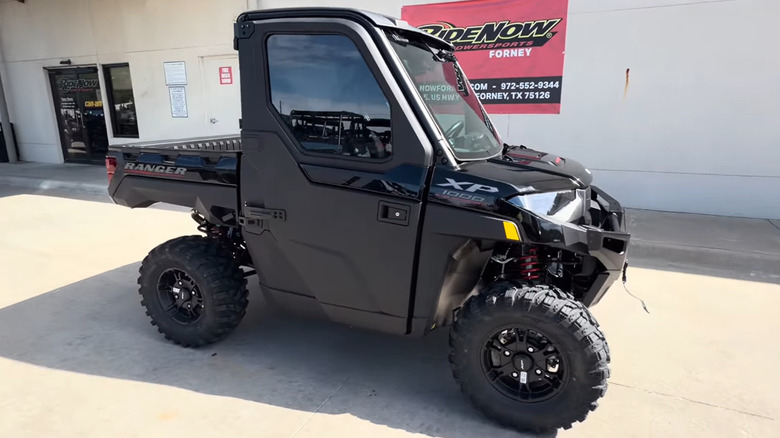
Kei trucks were not made to meet U.S. safety and environmental standards. The Clean Air Act prohibits importing a vehicle that doesn't meet federal emissions standards unless it's at least 21 years old. Federal law also bans foreign vehicles less than 25 years old that don't meet safety standards.
Newer Kei trucks can be imported only as off-road vehicles, permanently limited to 25 mph. That means if you want one for the road, you're stuck shopping for used Kei trucks that are at least 25 years old. That's not to say they're hard to find. Type "used Kei truck for sale" into Google and you'll see several listings for Kei trucks, as well as businesses that sell them. And the ones we've seen look to be in better shape than the typical 25- or 30-year-old vehicle, on the outside at least.
It's a bit more straightforward with UTVs, or side-by-sides. They are off-road vehicles, so they are perfectly legal to sell brand-new in the U.S. We found 25 Polaris dealerships and at least 30 Honda Powersports dealerships in the state of Florida alone. Of course, there are plenty of used side-by-sides all over the place, as well. Sites like ATV Trader, ATVHunt, and Autotrader all contain several listings.
Payload capacity and bed size
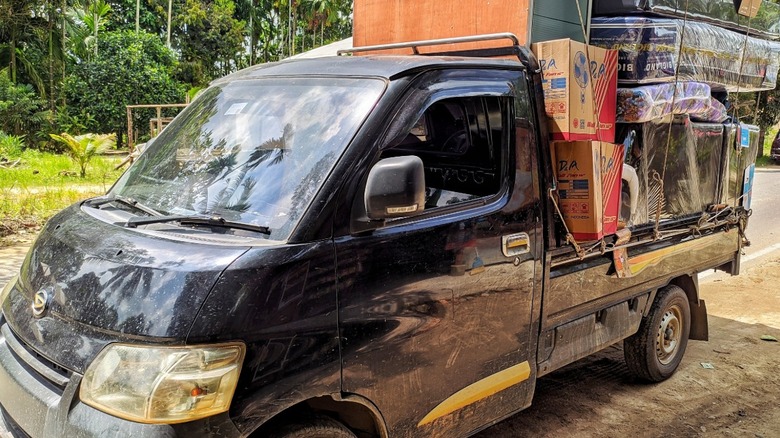
You're going to get a longer, more versatile bed with a mini truck than you will with a UTV. Anyone can see that just by looking at the two vehicles. Kei truck beds are often over 6 feet long and over 4 feet wide. With the tailgate down, that's big enough to haul a piece of plywood or drywall, with just a little bit hanging over the edge.
The sides of a Kei truck's bed often fold down, allowing for easy loading of a packed pallet by a forklift. The walls are not very high, which makes it easier to load and offload the bed, as well. Beds on UTVs are often much smaller, with the boxes on some models being around 3.5 feet in length and a little over 4 feet in width.
Don't confuse bed size with payload capacity, however. Kei trucks, as regulated by the Japanese government, can carry no more than 771 pounds of cargo. On the other hand, the Polaris Ranger XD 1500 has a box capacity of 1,500 pounds, which is on the high end for UTVs. We should point out, though, that payload capacity is the final word on how much you can load into your vehicle. The total weight of passengers in the cab and cargo in the box should not exceed payload capacity, regardless of box capacity.
Towing capacity
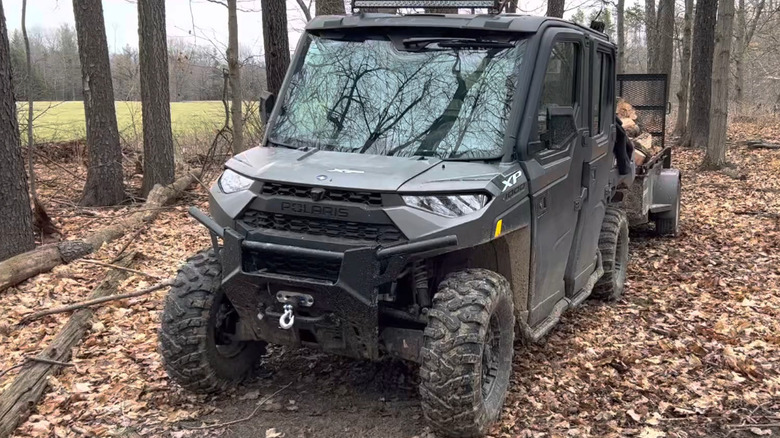
Comparing the towing capacities of mini trucks and side-by-sides is tricky because there aren't any official towing capacities published for Kei trucks. Japan's registration calculation caps the total weight of a brakeless trailer at half of the truck's curb weight. That puts the limit for an unbraked trailer at around 700 to 800 pounds for an older Kei truck, including the trailer.
That's as close as you can get without a written capacity from the manufacturer. You will find people online who insist they can tow more with their Kei truck, but just because some random person claims to have regularly towed over 1,000 pounds without wrecking their Kei truck doesn't mean that you should try it with yours. Nor should you go by the rated capacity of an aftermarket tow hitch. That is the rating of the tow hitch, not of your vehicle. Overall, it's best to stick to light towing when it comes to Kei trucks.
On the other hand, the towing capacities of UTVs are typically straightforward. You'll find the capacities listed in their specs, and those specs vary from model to model. For example, the Polaris Ranger XD 1500 NorthStar is rated to tow 3,500 pounds, while the Honda Pioneer 520 is rated to tow 1,000 pounds. If your towing needs involve heavy loads, UTVs are probably the way to go.
Off-road capability
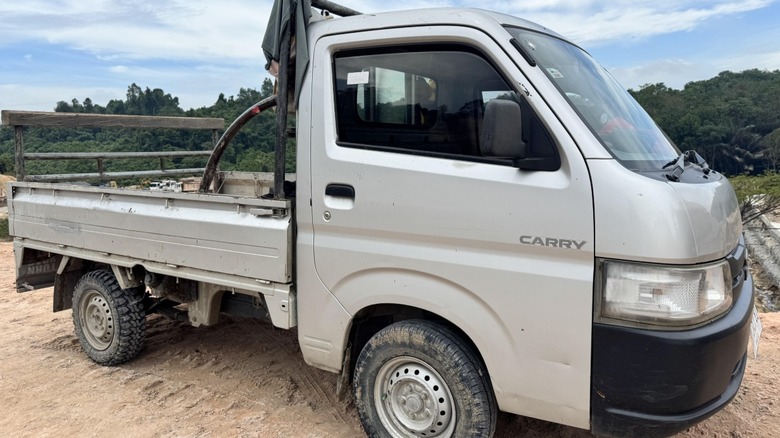
You can use either type of vehicle off-road. This is where side-by-sides shine, though, as they were designed specifically for handling rough terrain. Let's start with the tires. You can see from pictures of Kei trucks that they usually come fitted with small street tires that look like they belong on a compact car. UTV tires, on the other hand, often look like tractor tires or tires that go on an ATV. They are made to kick up mud and to laugh at messy terrain.
Clearance is another difference between mini trucks and side-by-sides. The Suzuki Carry mini truck has a ground clearance of around 6 inches. However, the ground clearance for the Honda Pioneer 520 side-by-side is 8.7 inches. The ground clearance for the Polaris Ranger XP 1000 is 14 inches. Of course, the drivetrain is also important when it comes to handling off-road terrain. It's not hard to find a used Kei truck with 4WD. UTVs are typically equipped with AWD, and some can switch between multiple drive modes.
While UTVs excel at off-road performance, we can't say that Kei trucks have to stick to the street. The inclusion of 4WD allows them to hold their own. They are well suited for hard-packed soil, gravel roads, some construction sites, and level ground. But if you have really rough, uneven ground, deep muddy ruts, large rocks, and other obstacles to deal with, our money is on the UTVs.
Street legality
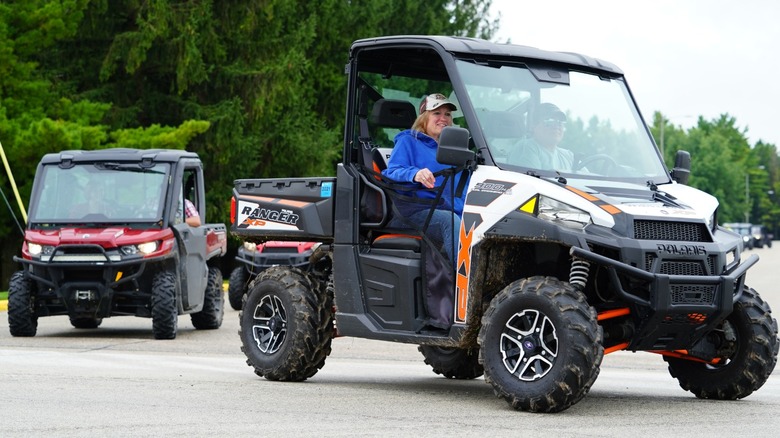
It probably seems obvious that mini trucks would hold the advantage when it comes to street legality. After all, Kei trucks were made for streets, while side-by-sides were made for off-roading. It's not that simple, though. Sure, the federal government allows Kei trucks that are at least 25 years old to be imported, but that doesn't mean they are road-legal in your state.
Colorado, for example, does not currently allow Kei vehicles to be registered or titled, but that changes on January 1, 2028. After that, Kei vehicles will be allowed on Colorado roads that have a speed limit of 55 miles per hour or less. Pennsylvania allows mini trucks to be registered only with an off-road title, with a farm exemption, or with an antique registration, unless the owner holds a grandfathered registration from 2021. Imported Kei vehicles at least 25 years old are now fully road-legal in Alaska.
Side-by-sides are actually street-legal in certain states. Arizona will issue a motorcycle-style plate to UTVs that have been specifically modified for street use. South Dakota has a similar law. In Colorado, counties and towns decide whether side-by-sides can use their roads, and some towns allow them only during certain hours. Trails are a different matter. The controlling authority for each patch of land that has trails determines which kinds of vehicles are allowed on them. The bottom line is to check the laws of your locality before deciding which vehicle to purchase.
Maintenance
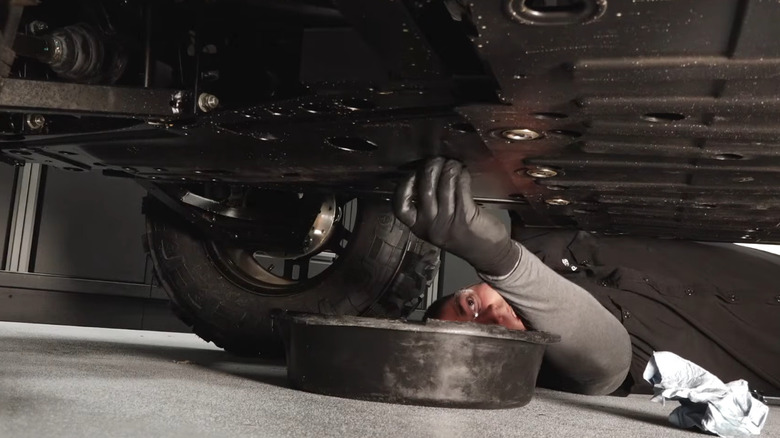
In all of the excitement of finding a mini truck or buying a new side-by-side, it's easy to forget to think about the cost and time that need to go into maintaining these vehicles. Fortunately, maintenance isn't that hard for either type of vehicle. There are some things you want to consider, however.
The recommended frequency of maintenance for side-by-sides is similar to that of motorcycles. Polaris, for example, recommends that the first service for a new Ranger 1000 happen around the 25-hour or 500-mile mark and that the oil and filter then be changed every 200 hours, 2,000 miles, or year, whichever comes first. It's recommended to service the vehicle twice as frequently if it's been exposed to a lot of mud, water, or sand, which is kind of odd, considering that's exactly what side-by-sides are usually exposed to. One of the advantages of UTVs, though, is that you can buy one that is new enough to be under warranty.
The service schedule for Kei trucks is generally not quite as frequent, and their simple engines are easy to work on. But we are talking about a 25-year-old vehicle here. Expect things to go wrong, like worn-out cooling systems, rusted parts of the frame, and vacuum lines that need replacing. Parts are surprisingly easy to find, though you may have to order some of them online. But most of us who work on our own cars have often done that, anyway.
Pricing
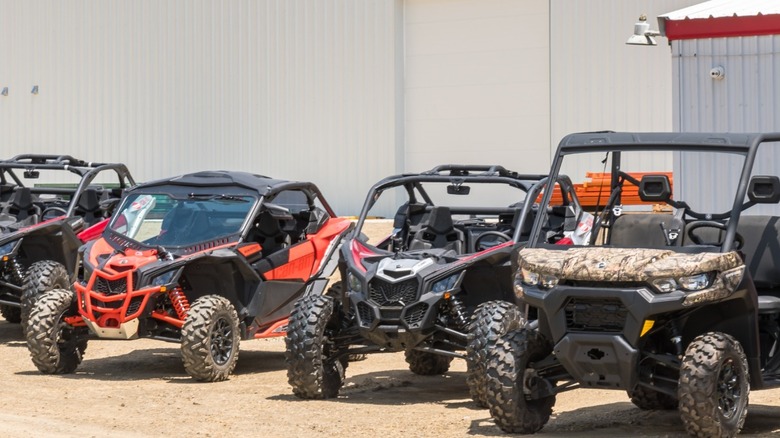
It's hard to compare apples to apples when we talk about the pricing for these vehicles. Any road-legal Kei truck you purchase in the U.S. will be at least 25 years old. It's not likely that you're going to look for a side-by-side that is that old. They are also built for different uses on different terrains.
You can find 25- to nearly 40-year-old Suzuki Carry trucks on Autotrader for anywhere from $7,000 to over $12,000. That's wild, considering you could get a brand-new Carry in Japan for around $7,500 to $10,000. On top of that, you're likely to have to make repairs right off the bat, since the truck is so old. A brand-new Polaris Ranger 1000 UTV costs more, starting around $15,000. But that comes with a 12-month warranty. We found late-model used UTVs on Autotrader and ATV Trader that were priced about the same as much older Kei trucks.
So, which is the better deal? Who's to say? If you're just looking at age and wear and how it lines up with total cost, side-by-sides have a definite advantage. But that doesn't mean they represent the better deal for you personally. Paying a little more for a vehicle that is ideally suited for your uses is a better deal than paying less for a vehicle that doesn't quite fit your needs. Do your research, evaluate how and where you'll use the vehicle, and then make the purchase that's right for you.