

Is Using Launch Control Hard On Your Car, Especially If You Use It A Lot?
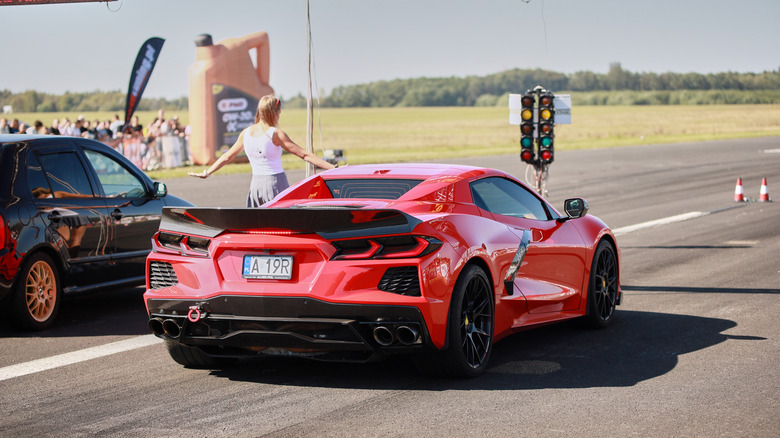
The sheer breadth of ability in modern performance cars is staggering. Take the seventh generation of the monstrous BMW M5. Critics love to point out that the plug-in hybrid super sedan is a bit porky, yet it still hits 60 mph in 3 seconds, pulls 0.98 g on the skidpad, and runs the quarter-mile in under 11 seconds in Car and Driver's testing. When it's done embarrassing sports cars, it'll carry five adults in comfort, and it's wrapped in more tech and safety kit than most of us will ever learn to use.
That kind of performance doesn't come down to silly power and no control. A big part of how heavy machines like the M5 get off the line so violently is launch control. In a combustion car, the system caps the revs while you hold the brake, then distributes power so the tires don't go up in smoke once you let go.
The idea behind launch control is to balance the power delivery with traction, so you can go as fast as possible without spinning the wheels. So, is launch control hard on your car? The short answer is that the system itself isn't.
Every full-throttle start puts a heavy load on the drivetrain, axles, and tires all at once. Do that over and over, and the clutch, transmission, and the rest of the drivetrain take the brunt of it. None of those parts are cheap, so if you've made a habit of launching at every green light, it's worth knowing what it's actually doing to your car.
What automakers say
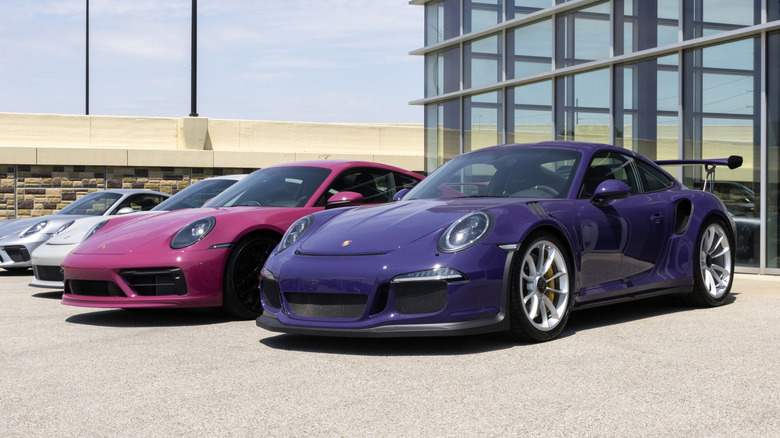
Automakers are aware that repeated launches can be a problem, and that is why they advise you on how to use the feature. The BMW M4 owner's manual (available on ManualsLib) bluntly warns: "The use of Launch Control causes premature component wear." Kia's Stinger manual adds that leaning on it constantly "can put enormous stress on transmission, engine, and drive shafts." Both BMW and Kia also want owners to hold off until a new car's break-in period is done.
The Stinger disables launch control once its transmission fluid gets too hot, and BMW M won't allow repeated launches under certain conditions — you have to drive a bit for it to function again. Even the wait at the line is capped, with exhaust temperature restricting launch control to five seconds on the manual M3 and M4. Lexus caps how many times the LFA's launch control can be used, and the car's manual (hosted on ManualsLib) tells owners to "cruise at a normal speed for approximately 10 minutes" before launching again.
For the M3 and M4, though, BMW M says there's "no limitation of the launch control's availability over its lifetime." Porsche Livermore, a Porsche dealership, says launch control is "engineered for thrills, not daily commutes." The quickest factory cars that can hit 60 mph in 3 seconds or less usually rely on launch control to reach those silly numbers. Without it, acceleration can be noticeably slower. The Porsche 911 Carrera GTS T-Hybrid, for example, reached 60 mph in 2.5 seconds with launch control in Car and Driver's testing, compared with 3.1 seconds when accelerating from a 5-mph crawl.
Can launch control really damage the transmission?
Let's use a 2009 Nissan GT-R as an example. According to Cars.com, with stability control off and launch control on, one owner ended up with a $20,000 repair bill the warranty didn't cover. Though transmission failures were very rare, Nissan released new launch-control software that went easier on the transaxle.
At one point, a Nissan executive told Edmunds the 2009 GT-R would be the only one of its generation with launch control, but the 2010 car kept a reprogrammed version instead. Owners also sued, and the class-action case ended with 2009 cars getting new transmission software. By 2011, the GT-R launched at 3,300 rpm using controlled clutch slip, with stability control left on.
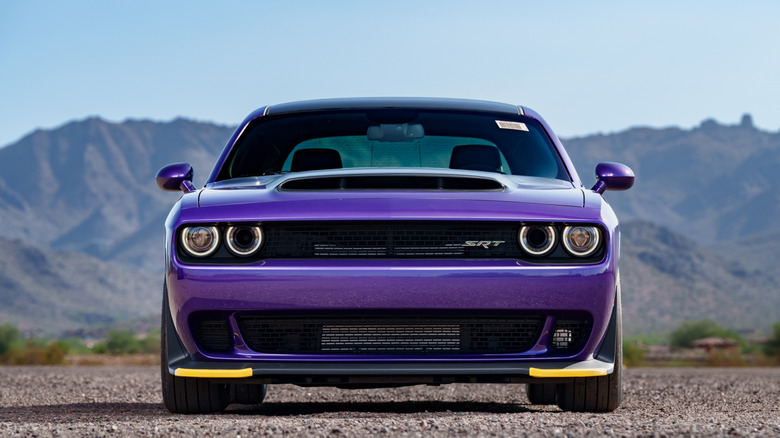
Things can go wrong in an instant, too. In 2018, a tuned GT-R that had been sitting cold at a car meet in Birmingham, England, lost its transmission on launch, all of it caught on video and reported by The Drive. Wheel hop is the violent shudder that occurs when a car launches with more power than its tires can handle, and it's a driveline killer. Dodge tackled it on the Challenger SRT Demon with a system called Launch Assist, which cuts the resulting driveline loads by up to 20%.
The Demon's follow-up, the Demon 170, claimed the quickest 0-to-60 time ever set by a production car, so you know the forces at play are serious. In most of these cases, something else stacked the odds against the car, whether it was a disabled safety net, a cold drivetrain, or a modified engine.