

Is There Any Point In Upgrading Exhaust Tips Beyond Appearance?
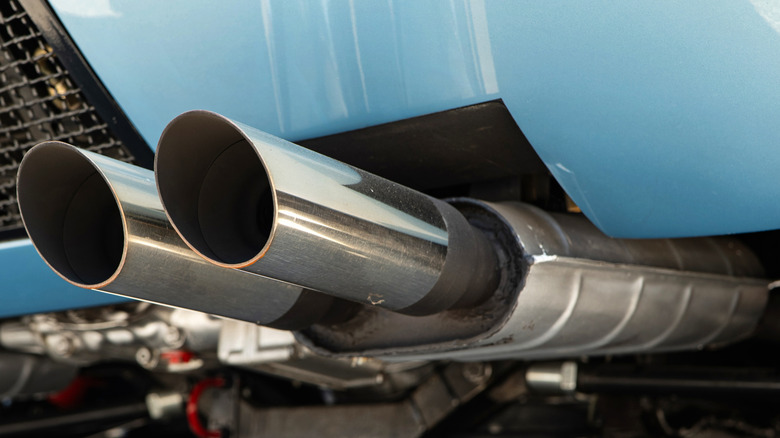
Exhaust tips are the most visible parts of a car's exhaust system, making them a worthwhile option if you want to personalize your ride without spending a big chunk of cash on a complete aftermarket exhaust setup — especially if you don't want to risk voiding your warranty and ruining the mental peace of your neighbors. Available in different shapes, sizes, materials, and finishes, aftermarket exhaust tips can lend a sportier or more premium appearance to the car they're fitted to.
That said, some believe that in addition to the aesthetic uplift, aftermarket tips can produce a deeper or louder exhaust note, help direct hot exhaust gases away from the rear bumper, and even improve your car's performance by reducing backpressure. What's fact, what's fiction, and do these benefits justify upgrading your car's factory exhaust tips?
The short answer is that aftermarket exhaust tips can offer some practical advantages, but they have next to no impact on performance and only a subtle effect on sound, at best. To understand what you gain from replacing them, it is important to distinguish between the exhaust tip and the components that actually determine how an exhaust system works.
Aftermarket exhaust tips can improve appearance and slightly affect sound
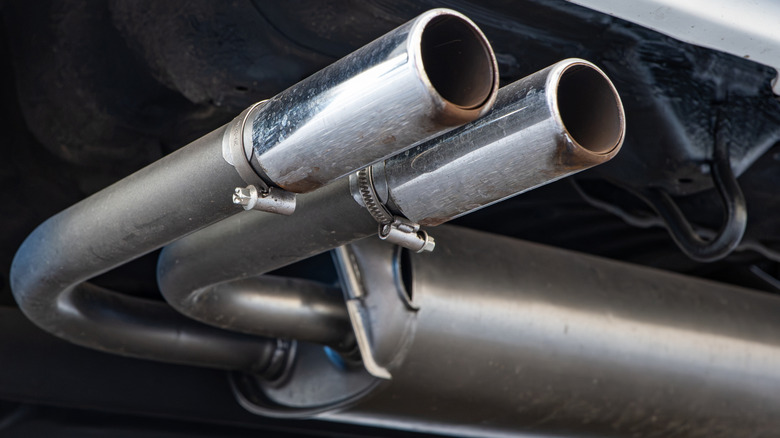
Unlike the muffler, resonator, or catalytic converter, the exhaust tip doesn't really play a big role in controlling exhaust noise, emissions, or gas flow through your car's exhaust system. Its primary purpose is to finish the exhaust outlet, which is why aftermarket tips are available in several designs. These include straight-cut, angle-cut, rolled-edge, dual-exit, turndown, resonated, and dual-wall tips. Owners can also choose between finishes like polished stainless steel, chrome, matte black, and carbonfiber-like materials. Most aftermarket exhaust tips are pretty straightforward to install, with clamp-on and slip-on designs that directly attach to the existing tailpipe.
There can be a minor change in exhaust sound, depending on the tip's diameter, length, shape, and the material used. A larger outlet may produce a somewhat deeper tone, while a longer tip can make your exhaust sound a little bit softer. A turndown tip directs exhaust gases and sound toward the ground, whereas a resonated tip can help reduce raspiness. To sum up, don't expect an aftermarket exhaust tip to make your daily-driver Toyota Camry sound like a V8-powered Lexus RC F.
One possible practical upside to an aftermarket exhaust tip is that it can help direct hot exhaust gases away from the bumper and surrounding body panels, and reduce soot accumulation around the outlet (particularly if you drive a diesel car), provided it is correctly sized and positioned. Stainless steel tips can additionally offer better rust resistance than some factory exhaust tips.
Nope, no performance gains
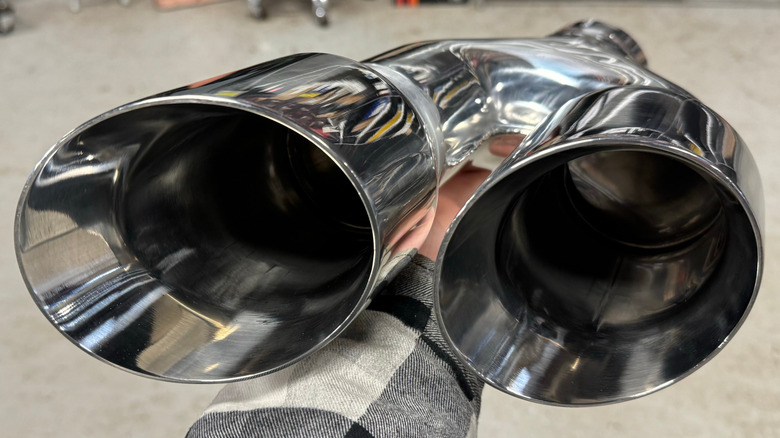
Despite what the marketing for some aftermarket exhaust tips may suggest, using them does not deliver a noticeable increase in power, torque, or overall performance. A common misconception is that a larger-diameter tip reduces exhaust backpressure, reducing the strain on the engine and thereby producing more power. However, since the tip is only the final outlet of the exhaust system, it has no effect on the system's overall flow characteristics. The diameter, length, and layout of the exhaust pipes, along with the design of the catalytic converter, muffler, and resonator, have a much greater impact.
If you're looking for more noticeable changes in sound or performance, your best bet is to upgrade other components of the exhaust system. A performance muffler can deliver a more aggressive exhaust note and reduce backpressure, while an aftermarket resonator can give you finer control over sound. A cat-back exhaust system replaces the components from the catalytic converter to the tailpipe and can also offer a substantial change in sound and performance by dialing up the exhaust flow. Upgraded headers and high-flow catalytic converters are a couple more viable options to get a more aggressive exhaust note and boost performance.
That said, these modifications are considerably more expensive than an aftermarket exhaust tip, and may affect emissions compliance and noise levels, possibly even put you in trouble with the law. On the other hand, an exhaust tip is relatively cheap (prices start at around $20) and easy to install, and worth the effort if you want a better-looking rear end, a more durable exhaust outlet, or a minor change in sound. Just don't expect it to deliver the performance and aural benefits of a proper aftermarket exhaust system.