

These 8 Modern Pony Cars Deliver Supercar Performance
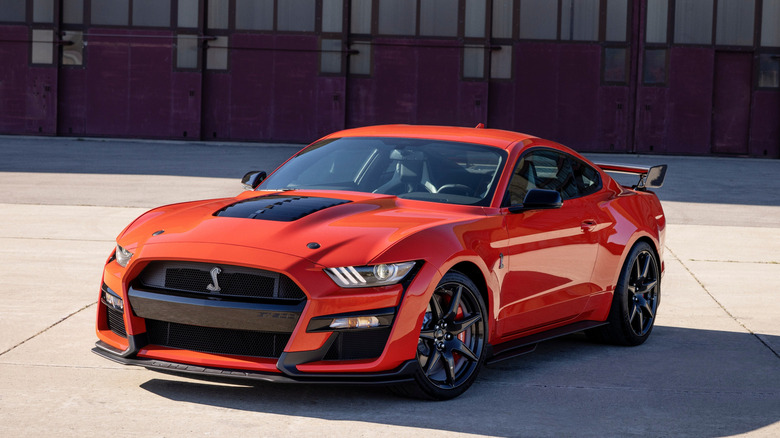
It is not easy to define some automobile categories. What's the difference between a pony car and a muscle car? When does a sports car become a supercar, and when does the supercar become a hypercar? There are guidelines but also plenty of gray areas left up to interpretation. It is a bit like when Supreme Court Justice Potter Stewart tried to define obscenity by using the phrase "I know it when I see it."
We are not here to attempt to come up with indisputable definitions for the pony car and the supercar. That would be futile and just lead to arguments. Instead, we decided to simply go with the most widely accepted definition of those types of automobiles.
The Ford Mustang is generally credited with ushering in the pony car era. The pony car category even gets its name thanks to the Mustang. It is an American car with a long hood, short deck, a stylish design, and sporty performance.
Speaking of supercars, the Lamborghini Miura is generally accepted as the original. When it was revealed at the Geneva Motor Show on March 10, 1966, it introduced to the world a whole new class of automobile for the street. The V12 engine is mounted transversely behind the driver. It has an intoxicating design, and with a top speed of 163 mph, it was the world's fastest production car.
Historically, a supercar carried a higher price but offered greater performance in exchange. The price gap is still there, but the performance gap has narrowed dramatically in recent years. The Camaro Z/28, Challenger SRT Demon 170, and Shelby GT350R are all capable of supercar-humbling performance. And they are not alone. Here's a closer look at eight pony cars that can keep supercar owners up at night.
2014 to 2015 Chevrolet Camaro Z/28
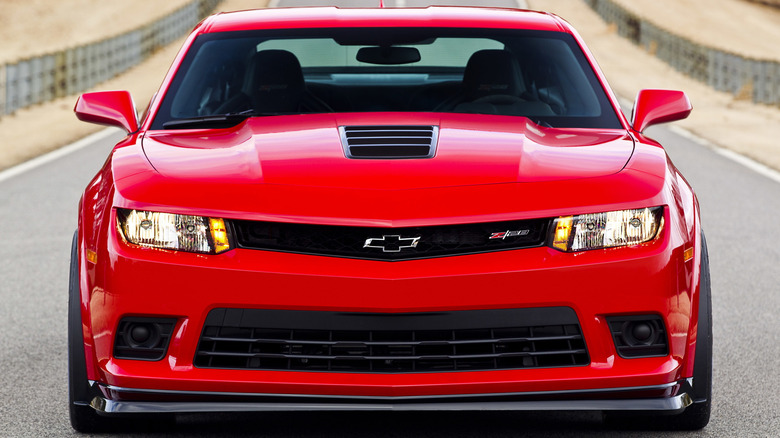
A fifth-generation Camaro Z/28 isn't going to grab the attention of bystanders the same way a Ferrari F12 will. In fact, most people on the street probably could not even tell the difference between a 2015 Z/28 and a rental car-spec Camaro LS. But that somewhat pedestrian-looking Camaro Z/28 will run nearly neck and neck around Virginia International Raceway's 4.1-mile Grand Course with the V12 Ferrari.
That is because lurking under the hood is the same LS7 V8 engine that is found in the C6 Corvette Z06. That means that you can control 505 horsepower with your right foot. But perhaps even more impressive than the raw power are the components that GM engineers added to make the car a legitimate track weapon. Remember, the original 1967 Z/28 was developed to compete in the SCCA's Trans-Am series. The Z/28 has a reputation to protect.
One way to protect it was to install Mulitmatic-developed dynamic suspension spool valve (DSSV) dampers. That suspension combined with sticky Pirelli PZero Trofeo R tires give this car incredible grip and control. Combine that with the LS7 power and you have a $76,000 Camaro that can lap a racetrack as quickly as a $320,000 Ferrari. The Camaro Z/28 may be a pony car, but it has supercar performance.
2016 to 2020 Shelby GT350/GT350R
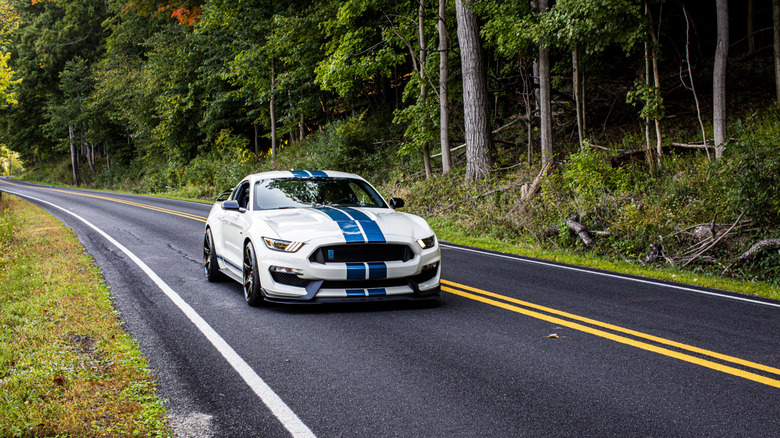
Ford might have invented the pony car with the Mustang back in 1964, but in 2016, it reinvented it with the Shelby GT350/GT350R. Like most pony cars, the star of the show is under the hood. For the first time in its history, Ford put a flat-plane crank V8 engine in a production car. Known as the Voodoo engine, the 5.2-liter V8 produces 526 horsepower and 429 pound-feet of torque and has a redline north of 8,000 rpm. Thanks to that incredible engine, the GT350 and GT350R may sound more like supercars than any of the others on this list.
Of course, engine sound alone doesn't get you mentioned in the same breath as supercars. For that, you need supercar-like equipment and supercar-rivaling performance. The GT350 is no slouch around a track, but the GT350R takes things a step further. The GT350R was the first mass-produced car in history to come standard with carbon fiber wheels. They shave 60 pounds of weight compared with traditional aluminum wheels and reduce rotational mass by 40%. It is details like that that help the Shelby do battle with more upmarket models.
MagneRide adaptive dampers, Brembo brakes, and other performance goodies such as an air-to-oil engine oil cooler, a limited-slip differential, and aggressive aerodynamics help the powerful Shelby compete against the world's best. The GT350R reportedly lapped the Nürburgring in 7:32.19. That makes it a couple of tenths quicker than the Pagani Zonda F. It also beats the McLaren 650 S Spider by nearly three seconds. The GT350R sounds like an exotic car and is quicker than some of them, too.
2018 to 2024 Chevrolet Camaro ZL1 1LE
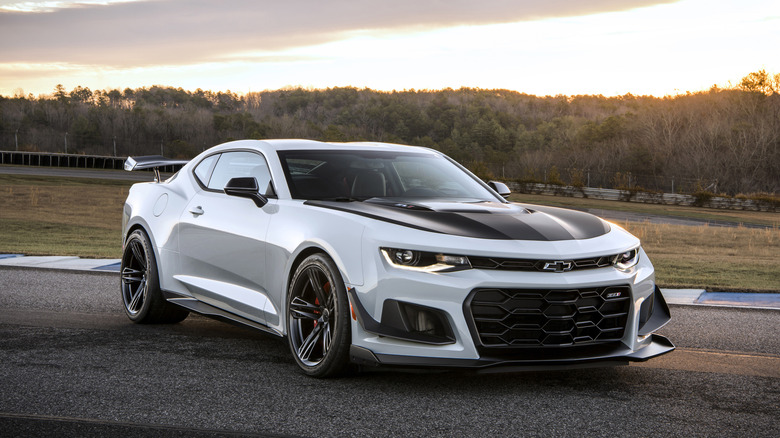
As impressive as the fifth-generation Camaro Z/28 is, the sixth-generation Camaro ZL1 1LE is even better. Like the Z/28, the ZL1 1LE uses Corvette power. This time it is the supercharged LT4 V8, which makes a staggering 650 horsepower and, to please those that love symmetry, a matching 650 pound-feet of torque. To put that in perspective, that is more than a contemporary Lamborghini Huracán Performante. And the Lambo costs roughly four times as much as the Chevy.
Chevrolet didn't just give the Camaro ZL1 1LE one of the most powerful engines you could buy in a new car or truck. Like the Z/28 before it, the ZL1 1LE is dialed in for road courses more than drag strips. The large carbon fiber rear wing was tested in a Formula 1 wind tunnel. Aluminum-bodied spool-valve dampers, an adjustable rear anti-roll bar, and other upgrades help this car lap the Nürburgring more than 20 seconds quicker than the already quick Z/28.
Being quicker than another Camaro is one thing, but the ZL1 1LE Nürburgring time of 7:16.04 is faster than a Ferrari 488 GTB, a Lamborghini Aventador LP 700-4, and even a Ferrari Enzo. And all this performance comes from a car that costs less than a base Porsche 911 from the same era.
The valet at a fancy restaurant may not give the Camaro the prime parking spot reserved for those other cars. But when dinner is over, the Camaro is going to be the first one home.
2020 to 2022 Shelby GT500
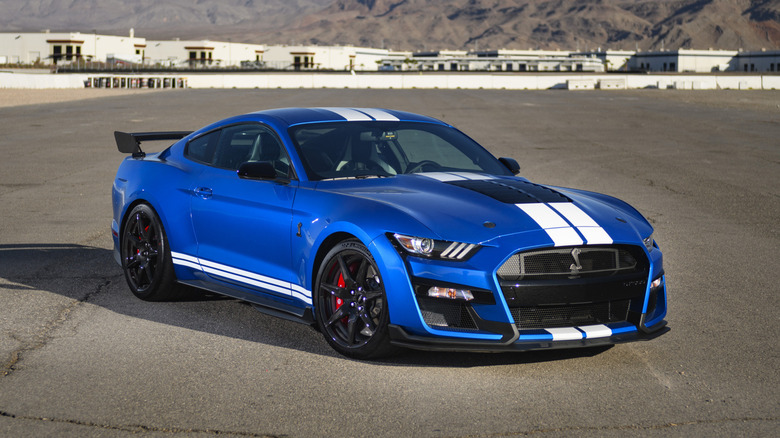
The Shelby GT500 looks like a Mustang. Sure, it has more aggressive styling, but the Mustang base is still clearly evident. However, this is no regular Mustang with a body kit like the GTD clone that was kicked out of SEMA a few years ago. That becomes clear the moment you open the hood. Staring back at you is a supercharged 5.2-liter V8. The aptly named Predator engine is rated at 760 horsepower and 625 pound-feet of torque. While the power figures grab your attention, this is no one-trick pony. This car is quicker around VIR's Grand Course than a Lamborghini Huracán EVO.
Unlike the GT350's six-speed manual, the GT500 uses a seven-speed Tremec dual-clutch transmission in pursuit of lightning-fast shifts and quicker lap times. Ford even purposely limited the top speed to only 180 mph so it could strike a balance between a high top speed and enough downforce to make it a track weapon.
When this car was released in 2020, $18,500 could almost get you a pair of nice pre-owned SN95-generation Mustang GTs. Or, you could add the Carbon Fiber Track Pack to the GT500. That would get you the most track-ready version of the GT500 that you could buy. Carbon fiber wheels, adjustable strut top mounts, splitter wickers, and a large carbon fiber GT4 rear wing are some of the package highlights. The result would be a Mustang Shelby GT500 with a price flirting with six figures but performance that can shame Lamborghinis.
2023 Dodge Challenger SRT Demon 170
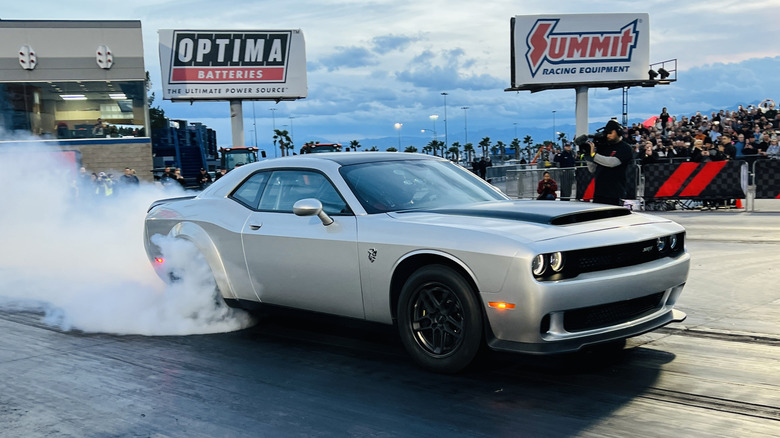
The Dodge Challenger SRT Demon 170 is more of a straight-line performance car than others on this list. However, it does that straight-line thing shockingly well. Dodge quoted a 0-to-60-mph time on a prepped surface of less than 2 seconds. It is so quick in the quarter mile that the National Hot Rod Association (NHRA) banned it from competing because it didn't have a roll cage or a parachute.
Fill the tank with 91-octane pump gas, and the supercharged 6.2-liter V-8 is rated at 900 horsepower and 810 pound-feet of torque. But fill her up with E85, and you are rewarded with a Bugatti Veyron-topping 1,025 horsepower, 945 pound-feet of torque, and 8-second quarter mile runs — assuming, of course, you have that roll cage and parachute to keep you safe.
Production was limited to 3,300 units worldwide. It was the first production car ever built with staggered drag radials and fender flares. Carbon fiber wheels were optional. Each Demon 170 was also sold with special decanter set.
Limited production, industry firsts, exotic materials, serialized commemorative content, and devastating quickness — that sounds supercar-like to us. The Demon 170 proves that supercar performance doesn't always have to include record-setting Nürburgring lap times by production cars.
2025+ Ford Mustang GTD
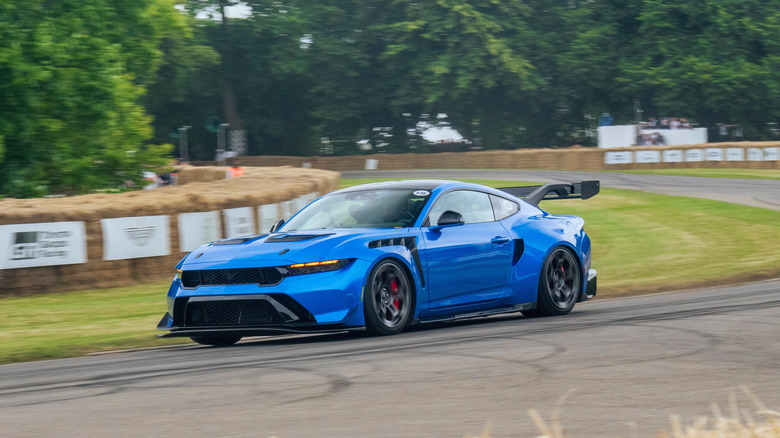
An argument can be made that the Mustang GTD actually is a supercar. It carries an astronomical starting price of more than $300,000. And even if you have the money, you still can't simply buy a Mustang GTD. You have to fill out an application, submit it to Ford, and hope the company finds you impressive enough to grant you an allocation. The GTD even has an advanced pushrod rear suspension that you can see from inside the car. That all sounds like supercar territory to us.
However, the GTD is still based on the S650-generation Mustang. And if you plop down in the driver's seat, you could easily mistake the GTD for a $35,000 EcoBoost model. The GTD may be the most advanced, and with 815 horsepower, the most powerful Mustang to ever roll out of the Ford factory. But it is still a Mustang. Perhaps no other car on this list illustrates just how far we have come since the original pony car.
In 2024, the GTD set the record as the quickest American car around the Nürburgring. Challenging weather conditions meant Ford knew it could do better. The company returned the next year and put down a time of 6:52.07, roughly 5.5 seconds quicker than the year before. Chevrolet then beat it when the ZR1X lapped the course in 6:49.275. Ford wasn't happy with that, so it returned with a GTD that had a bit more power, better aero, and less weight. This GTD Competition model threw down a 6:40.835 lap time. That is the second-quickest lap time ever for a production car. The Lamborghini Aventador LP 770-4 SVJ, Porsche GT2 RS, Ferrari 296 GTB, and others are all slower. The Mustang GTD is the ultimate evolution of the pony car.
2026+ Ford Mustang Dark Horse SC
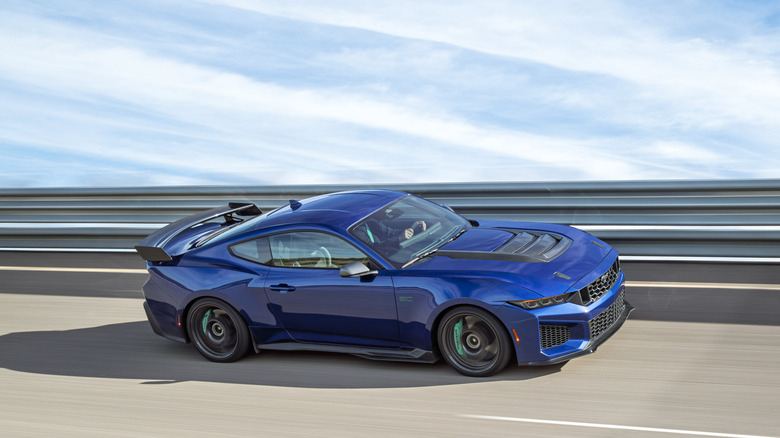
To create the Dark Horse SC, Ford basically took everything it learned from the GTD project and applied it to the Dark Horse model to arrive at the Dark Horse SC. The SC stands for supercharged, but it could just as well stand for supercar.
Think of it as the Shelby GT500 successor, but since Ford didn't want to pay for the Shelby name, it went with Dark Horse SC instead. No matter what you call it, with 795 horsepower under the hood, it is just 20 horses shy of the mighty GTD and about a quarter of a million dollars less expensive.
At the Ford Nationals in Carlisle this past June, I asked Ford Racing Production Vehicle Chief Engineer Carl Widmann about the team's philosophy when developing the Dark Horse SC. He told me the team used the phrase "flatter the novice, reward the expert" to describe the type of car they wanted to build. In other words, build a car that is approachable and fun for less experienced drivers, yet deliver the performance that experts would demand.
Ford did this by examining everything, right down to the tires. Widmann explained to me that the Michelin Pilot Sport Cup 2 R tires were developed specifically for the Dark Horse SC. He also noted that the engine was tested using the same test cell that Ford Racing uses for the GT3 racing engines. They ran the engine for 24 hours straight. And they did it over and over again.
This car is so new that lap times are not yet available. However, we would expect this car to be quicker than the Shelby GT500 in every environment. And we know how quick that car is.
2026+ Shelby Super Snake-R
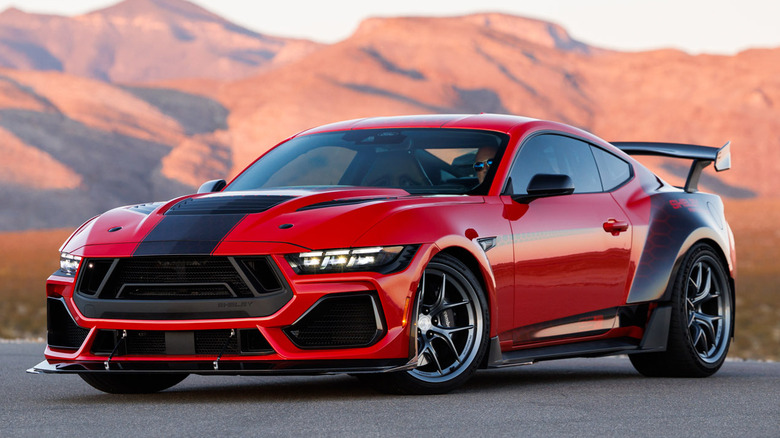
At $225,000, the Shelby Super Snake-R slots between the Dark Horse SC and the GTD pricewise. Although, with 850 horsepower, it is more powerful than both of them. It may be hard to think of the Super Snake-R of a bargain, until you dive into the details and consider the prices of the supercars it will battle with.
The Super Snake-R is a unique entry on this list because it's more of a tuner car than a factory product. A Mustang Dark Horse is shipped to Shelby American, and the company works its magic until the Super Snake-R is born. It essentially takes the stock Dark Horse and throws every performance upgrade you can think of at it. That includes a Whipple supercharger, forged magnesium wheels, adjustable coil-over suspension, massive 335-mm tires, carbon fiber everywhere, and a lot more.
It is an excellent illustration of just how much performance you can squeeze out of a modern pony car by using aftermarket parts. Instrumented test results are not yet available, so we can't yet say for certain just how much performance we are talking about. However, given the specs, we fully expect it to embarrass more than a few unsuspecting supercars.
Supercars still offer prestige, exclusivity, and nicer interiors. But when it comes to pure performance, several modern pony cars have caught up.