

Why It's Hard To Pin Down What Kinds Of Cars Actually Qualify As 'Exotics'
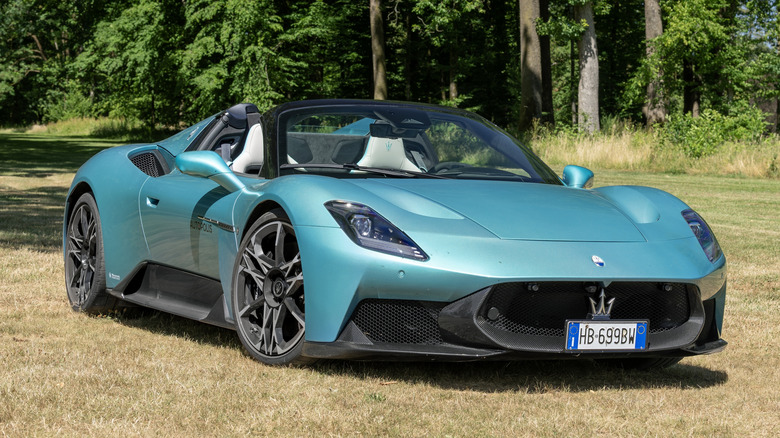
Humans love to label and categorize everything because it helps us make sense of the world. Cars are no exception. In many people's eyes, the Porsche 911 Turbo S, for example, is a sports car, not a supercar, and the same goes for the Corvette C8 Z06. Meanwhile, the Ferrari F430 and McLaren 570S are supercars, and the McLaren F1 is a hypercar. Yet looking at the actual numbers, the 911 and the ZR1 are both quicker than the aforementioned supercar and hypercar, which makes no sense.
The Lamborghini Miura is often credited as the car that popularized the term "supercar," but the word itself existed long before the Miura. So, even pinning down the first supercar is a mess, which tells you everything about how these labels work. And that's exactly why nailing down what qualifies as exotic is just as messy.
There are no strict definitions, because this isn't science — it's pop culture. A car becomes exotic once enough people who shape the conversation decide it is. The answer is also different depending on whom you ask. Some tie the label to a car's rarity, performance, and how loaded it is with luxury touches, while others say a car can earn the label through small production runs, hand-built construction, or a tie to a meaningful moment in automotive history.
Materials and shape matter too – heavy use of exclusive materials such as carbon fiber and titanium, wrapped in a body that sits low and narrow, only add to the case. Hagerty, meanwhile, treats the term "exotic" as an insurance-industry catch-all rather than a strict definition — one wide enough to cover everything from an entry-level luxury sports car like the BMW M6 to a full-blown hypercar like the McLaren Senna.
Exotic or not? There are no right answers
As an example, take the Porsche 911 Turbo S. Plenty of people call it just a very fast sports car, not an exotic – Car and Driver even called it "supercar-adjacent." Others argue its performance alone earns it the title. The Corvette C8 Z06 gets the same treatment from the other side. Some see it as America's answer to a European supercar. Others can't get past the fact that it's still a Corvette. Even the people who define these categories for a living can't seem to agree. Take Timothy Burton, better known as Shmee150 — while driving the range-topping, 1,250-horsepower ZR1X alongside a convoy of C8s, he asked out loud on camera, "Are we a sports car?" before settling on "sports car with hypercar performance" as the only way to describe it.
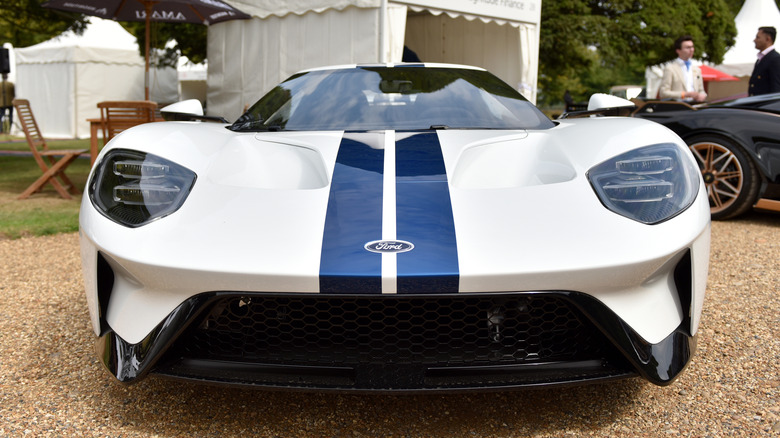
In his YouTube video aptly titled "Exotic Cars You're Wrong About," Doug DeMuro pointed out that Acura built fewer than 3,000 units of the second-generation NSX, calling it "a smaller production run than the Ford GT, which is a car that everybody thinks is such an iconic, special, amazing vehicle." By that logic, the NSX is rarer. Yet the NSX's exotic status is up for debate, while the Ford GT's mostly isn't.
Enthusiasts are also divided. In a FerrariChat debate about the V10 Audi R8, one person argued that mass carmakers couldn't build exotics; others pointed to the Ford GT as a counterexample. A Reddit discussion even split over the Porsche 918, with one commenter excluding every Porsche and another insisting the 918 qualified. These arguments suggest the disagreement never ends. Some judge the individual car's merits; others give more weight to the badge.
What is definitely not an exotic car
To help us understand what an exotic car might be, we can also try to look at it from a different direction — by telling you what it isn't. For starters, an exotic car is clearly not your run-of-the-mill economy car like the Nissan Altima, Honda Odyssey, or RAV4. These cars are built in massive numbers, are always accessible, offer adequate performance for daily driving, and most importantly, they don't try to be exotic in any way.
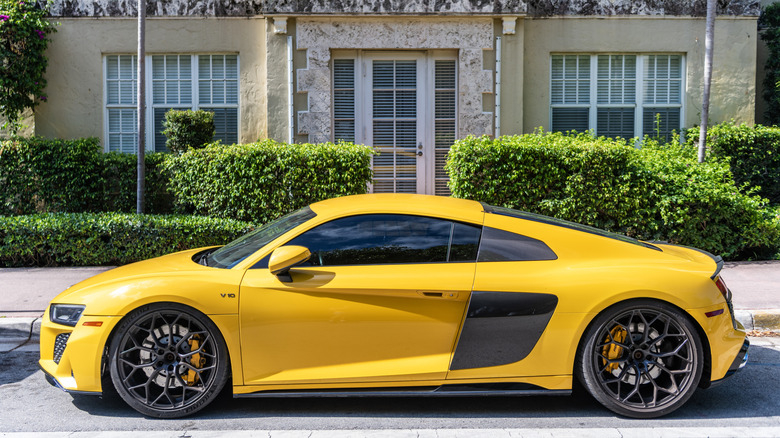
One step above these are your performance versions of regular production cars. Think the BMW M3 or a Scat Pack Challenger. These do have elements of exotic cars on them, but as a whole, most people would agree that they are not exotics. Then we get to cars like the Porsche 911, the Chevy Corvette, and most interestingly, the Audi R8. The R8 features a naturally aspirated mid-engined V10 and shares both its engine and its platform with the Lamborghini Huracan. However, the Lamborghini will usually be considered as exotic because it is a Lamborghini, while the Audi is, well, an Audi. Even the most expensive exotics can share parts with cheap normie cars, but the R8 is no normie car. But once again, it can't be considered an exotic if this reputation does not stick.
On the other hand, it is reasonable to assume that the higher the performance metric, the greater the chance the car in question is exotic. However, that is also not always the case since you have EVs like the Tesla Model X Plaid that can outrun a Huracan in a straight line, although no one would consider a six-seater family car an exotic. Ultimately, "exotic" may not have a clear definition, but a car that isn't one is usually obvious – until it isn't.